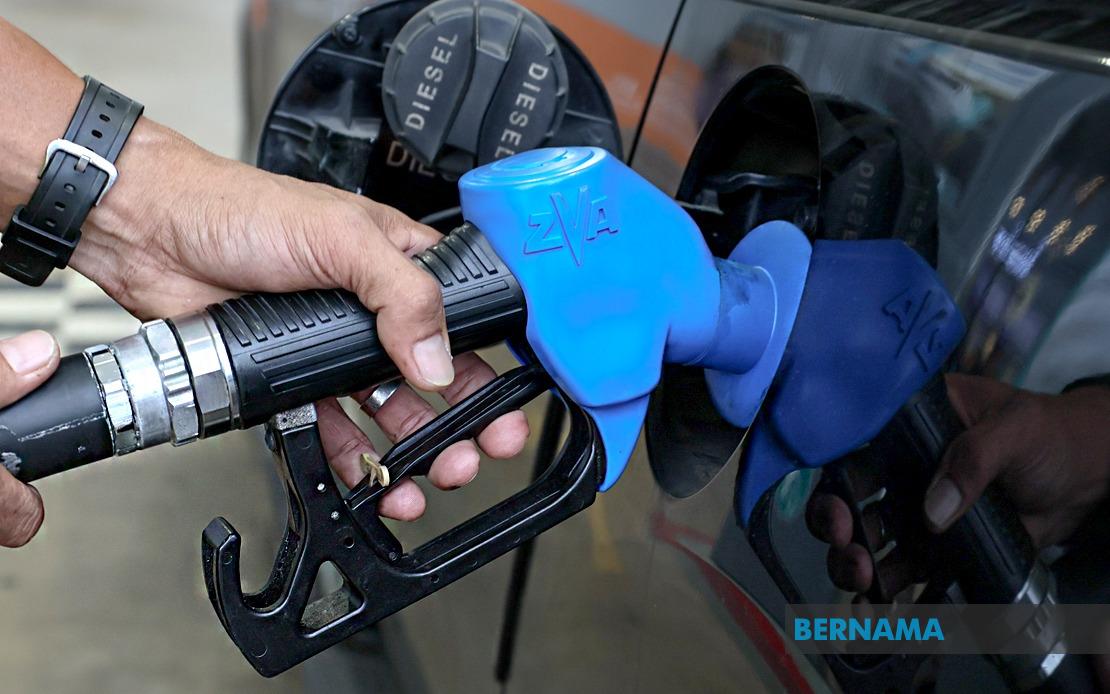
Prime Minister Datuk Seri Anwar Ibrahim's announcement of a reduction in subsidised diesel to RM2.10 per litre starting from July signals a significant shift in Malaysia's fuel subsidy framework. The new pricing structure, which will be implemented through the BUDI95 programme with MyKad verification, represents a meaningful adjustment from the current RM2.15 per litre in Sabah and Sarawak, and represents a notable policy harmonisation across the country's different regions.
Economists widely anticipate that this pricing adjustment will reverberate through Malaysia's logistics and transport sectors, creating conditions for broader cost reductions in consumer goods. According to Dr Nanthakumar Loganathan, an economics professor at Universiti Teknologi Malaysia's Faculty of Management, fuel expenses form a critical component of operational costs for businesses throughout the food supply chain. Businesses in the agricultural distribution network, cold chain logistics, and retail transport have consistently cited diesel costs as a primary driver of price increases at the point of sale. The diesel reduction therefore addresses one of the fundamental cost pressures that traders have used to justify price escalations.
The most visible impact of the subsidy cut will likely manifest in fresh produce markets and perishable goods distribution. Vegetables transported by pickup trucks through Malaysia's road networks, fruits brought from rural farming regions, and other essentials that depend on diesel-powered vehicles should theoretically experience downward price pressure. However, realising this benefit depends critically on the behaviour of traders and distributors, who must choose to pass savings forward rather than retain them as margin improvements. Dr Loganathan emphasised that traders' associations across Malaysia will play a pivotal role in determining whether this policy translates into genuine consumer relief or merely strengthens business profitability without public benefit.
The sustainability of the RM2.10 price point represents a secondary concern that extends beyond immediate policy implementation. International oil market volatility means that maintaining this subsidised rate requires ongoing government commitment and budgetary allocation. Should global crude prices spike unexpectedly, Malaysia faces a choice between absorbing escalating subsidy costs or adjusting the programme's parameters. Dr Loganathan noted that the government may need to explore alternative supply arrangements—potentially including sources outside traditional Middle Eastern suppliers such as Russia—to secure price stability and ensure the subsidy programme remains economically viable over the medium term.
A significant dimension of this policy involves the unprecedented coordination of subsidised diesel pricing across Peninsular Malaysia, Sabah, and Sarawak. Historically, Sabah and Sarawak enjoyed lower diesel prices due to geographical factors, higher inland transport dependency, and regional logistics complexities. The current move toward a uniform national subsidy structure reflects broader governance objectives beyond simple price management. According to Dr Novel Lyndon, a political sociology professor at Universiti Kebangsaan Malaysia's Centre for Development, Social and Environmental Studies, this harmonisation represents an effort to create more coherent and standardised subsidy mechanisms while simultaneously addressing regional dissatisfaction caused by previous pricing disparities.
However, this standardisation approach carries potential downsides that require careful monitoring, particularly in Sabah and Sarawak where economic structures and infrastructure patterns differ markedly from Peninsular Malaysia. Rural communities in these states depend disproportionately on diesel-powered transport for agricultural operations, fishing activities, and goods movement. Without complementary targeted assistance mechanisms specifically designed for these regions' particular challenges, the uniform pricing policy could inadvertently increase operating costs for small-scale farmers, fishermen, and rural entrepreneurs. The risk exists that cost savings intended to benefit consumers could instead burden rural producers with higher expense structures, ultimately increasing the cost of living in peripheral regions.
The government's adoption of MyKad-based verification for diesel subsidy distribution marks a technological and administrative evolution in Malaysia's subsidy delivery system. Dr Mohd Afzanizam Abdul Rashid, chief economist at Bank Muamalat Malaysia Bhd, characterised this mechanism as essential for strengthening subsidy programme effectiveness. Experience with MyKad verification under the existing RON95 subsidy programme demonstrates that the system functions reliably and captures comprehensive usage data. This targeted approach simultaneously addresses subsidy leakage—a chronic challenge in Malaysia's subsidy frameworks—and enables accurate monitoring of fuel consumption patterns, thereby reducing opportunities for illegal activities such as fuel smuggling.
The subsidy leakage problem has plagued Malaysia's fuel support system for decades, with unintended beneficiaries and parallel market diversion consuming resources intended for genuine assistance. The MyKad mechanism creates a traceable, accountable distribution pathway that theoretically ensures subsidies reach intended recipients. This represents progress in subsidy programme architecture, though successful implementation will depend on adequate technology infrastructure, efficient data processing, and robust compliance monitoring across the nation's petrol station network.
From a broader fiscal perspective, the government frames this policy as part of a rationalisation initiative designed to reduce overall subsidy expenditure while improving targeting efficiency. This logic suggests that by preventing leakage and restricting subsidy access to verified Malaysian residents, the government can maintain similar benefit levels for legitimate recipients whilst reducing total budgetary outlays. The savings generated theoretically become available for reallocation toward other priority areas such as infrastructure development, education, or healthcare services. However, this aspirational framework depends entirely on the government's demonstrated commitment to redirecting freed resources toward visible public benefit.
Public perception and political sustainability of the diesel subsidy reduction will ultimately hinge on transparent communication and demonstrated commitment to broader developmental improvements. Dr Novel Lyndon emphasised that Malaysian citizens will assess this policy not merely through the lens of diesel prices themselves, but through observation of whether subsidy programme savings translate into tangible infrastructure improvements, enhanced public facilities, educational advancement, or healthcare expansion. The government's credibility regarding subsidy reform depends fundamentally on building a coherent narrative around fiscal responsibility and demonstrating that public resources liberated through improved efficiency genuinely return to the population in recognisable forms.
For Malaysia's broader economic outlook, this diesel subsidy recalibration signals movement toward more sophisticated, technology-enabled, and regionally-conscious policy design. The recognition that uniform national pricing requires contextualised implementation approaches suggests evolving administrative sophistication. Nevertheless, successful policy outcomes will require coordinated effort across multiple stakeholder groups—including traders' associations, rural entrepreneurs, logistics operators, and government agencies responsible for subsidy programme administration. The coming months will reveal whether this well-intentioned policy adjustment generates the anticipated economic benefits or encounters implementation friction that limits its real-world impact on consumer prices and business operations.

