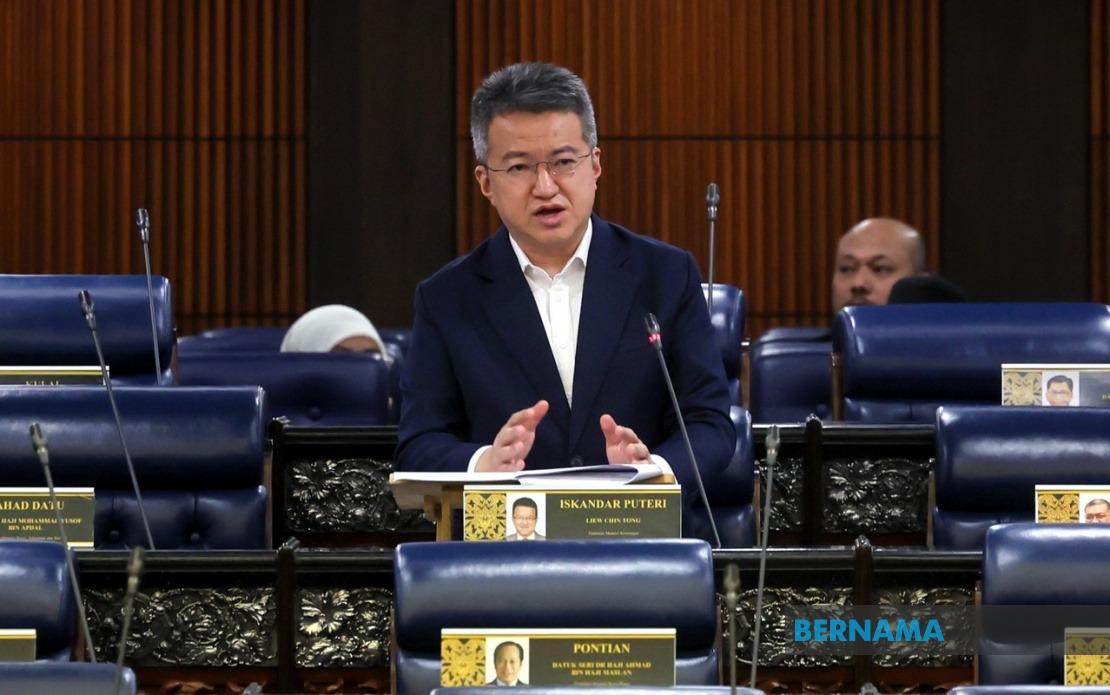
Malaysia's Deputy Finance Minister has firmly denied persistent allegations that fugitive businessman Low Taek Jho, commonly known as Jho Low, slipped into the country last year as part of a Chinese delegation to conduct clandestine negotiations over resolving the sprawling 1Malaysia Development Berhad scandal. Liew Chin Tong's terse denial came during parliamentary Question Time when pressed by Syed Saddiq Syed Abdul Rahman, the MUDA representative for Muar, who had cited media reports of the purported secret meeting aimed at hammering out a repayment arrangement involving Malaysia's Ministry of Finance.
The allegation surfaced in response to an original parliamentary inquiry from Chong Chieng Jen, the Pakatan Harapan member for Stampin, who questioned the government's handling of 1MDB debts and its progress in recovering misappropriated funds. The timing of the rumoured meeting—positioned in late 2024—has fuelled speculation about potential behind-the-scenes settlements even as criminal proceedings against key figures continue to grind through the courts. The persistent circulation of such claims, whether accurate or not, underscores the enduring sensitivity surrounding the 1MDB affair in Malaysian politics and public discourse, particularly as recovery efforts remain a cornerstone of the government's accountability agenda.
Liew outlined the government's multifaceted legal assault on the scandal's architects, revealing the sustained intensity of both criminal and civil recovery operations. The landscape of prosecutions has shifted notably since former Prime Minister Datuk Seri Najib Tun Razak's December 26, 2025 High Court conviction, which saw him sentenced to 15 years' imprisonment and handed a RM11.38 billion fine after being found guilty on 25 charges encompassing money laundering and abuse of power to secure bribes tied to 1MDB. This milestone judgment represented a significant legal victory after years of complex litigation, though observers note that Najib's conviction—however decisive—cannot recover the trillions in public funds at stake.
Beyond Najib, the government has pursued parallel civil action targeting Datin Seri Rosmah Mansor, seeking recovery of approximately US$380 million (roughly RM1.56 billion) in damages for 1MDB monies allegedly channelled toward acquiring luxury items including high-end handbags and designer jewellery. These civil suits reflect authorities' determination to pursue family members and associates implicated in the fund's diversion, recognising that criminal convictions alone cannot restore public assets. The focus on Rosmah's spending patterns demonstrates how investigators have painstakingly traced the flow of pilfered funds into consumption by connected individuals.
Jho Low himself remains the centrepiece of ongoing legal action, with authorities pursuing criminal and civil cases that together represent a staggering financial claim of US$3.78 billion—approximately RM15.4 billion. Liew identified Low as the alleged mastermind orchestrating the 1MDB misappropriation, positioning him as the primary architect rather than a mere participant in the scheme. This framing underscores official insistence that the scandal's origins trace to Low's alleged central role, though the fugitive businessman has consistently evaded arrest and prosecution, reportedly sheltering beyond Malaysia's jurisdiction.
The broader damage assessment provided by Liew encapsulates the multidimensional harm inflicted by the scandal, categorised into four major loss categories. Direct financial losses represent the most immediately quantifiable damage—the actual missing funds. Opportunity costs encompass the foregone benefits Malaysia might have realised had those resources been deployed productively toward infrastructure, education, or healthcare. Irrecoverable losses acknowledge the reality that certain stolen assets may never be retrieved. Perhaps most significantly for Malaysia's long-term interests, the scandal precipitated substantial damage to the nation's international reputation, complicating diplomatic relations and investor confidence during a period when regional competition for capital and talent was intensifying.
For Malaysian readers, the deputy minister's categorical denial carries particular resonance given the scandal's historical centrality to recent political upheaval. The 2018 electoral victory of Pakatan Harapan was substantially propelled by public anger over 1MDB corruption, making the government's demonstrated commitment to pursuing recovery efforts politically essential. The vigorous pursuit of multiple legal tracks—both criminal and civil, against both primary perpetrators and beneficiaries—reflects recognition that comprehensive accountability requires attacking the issue from multiple angles simultaneously.
The speculation about potential settlement negotiations, whether rooted in fact or rumour, highlights an uncomfortable reality: as years pass, public interest in resolution intensifies. If such negotiations were genuinely occurring, they would suggest either serious movement toward asset recovery or alternatively, backroom compromises that might disappoint those demanding full accountability. The government's emphatic denial suggests authorities view any hint of behind-the-scenes deal-making as politically damaging, preferring to maintain the appearance of uncompromising pursuit through conventional legal channels.
Regionally, the 1MDB saga continues resonating as Southeast Asia's largest financial scandal, with implications for cross-border asset recovery and international financial governance. The complexity of pursuing a fugitive across multiple jurisdictions, coupled with the challenge of recovering funds potentially dispersed globally, illustrates the institutional weaknesses that high-net-worth individuals can exploit. Malaysia's experience has prompted closer regional cooperation on illicit financial flows, though success remains elusive given the sophistication of modern money laundering techniques and the legal jurisdictional barriers that fragment enforcement efforts.
As the government continues calibrating its recovery strategy, the denial of Jho Low's alleged return signals commitment to institutional pathways rather than private settlements. Yet the persistent rumours themselves reflect broader public cynicism about whether the system can deliver comprehensive accountability or whether political considerations might eventually supersede justice. For Malaysia's credibility—both domestically and internationally—demonstrating tangible recovery results will ultimately matter far more than parliamentary denials.

