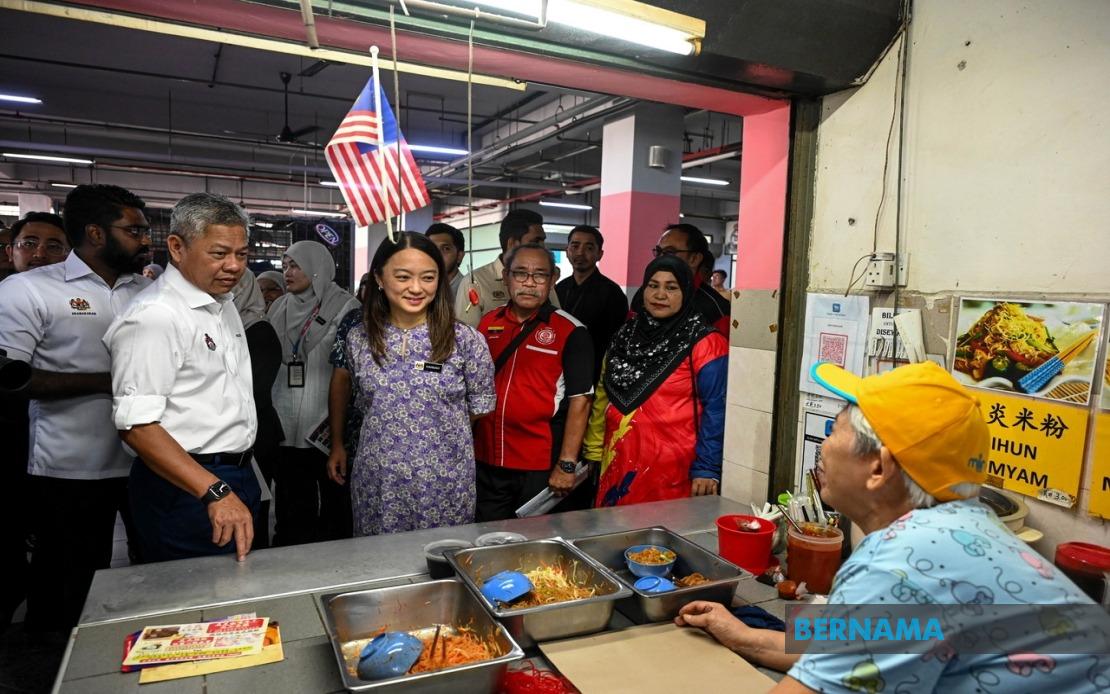
The Kuala Lumpur City Hall (DBKL) is undertaking an ambitious modernisation programme targeting 287 hawker sites across the city, with a dedicated budget of RM200 million. Announced under the Lestari Niaga @ Kuala Lumpur 2026 initiative, this large-scale project represents one of the most significant urban hawker sector investments in recent years, positioning itself to directly improve operating conditions for more than 11,000 street traders and small business operators throughout the federal territory.
Minister in the Prime Minister's Department (Federal Territories) Hannah Yeoh emphasised during the project launch that the initiative prioritises creating safer, better-organised trading environments where hawkers can conduct business with improved facilities and infrastructure. Rather than adopting a top-down approach, DBKL has committed to engaging multiple stakeholder groups—including residents concerned about traffic congestion, traders seeking better working conditions, and building tenants operating commercial establishments—to shape implementation strategies that balance competing interests. This consultative framework reflects growing recognition among Malaysian urban authorities that sustainable hawker sector modernisation requires buy-in from all affected parties, not merely administrative mandate.
The programme's initial rollout focuses on simultaneously upgrading multiple locations across Kuala Lumpur, with particular attention to the UTC Sentul hawker site, which recently gained public visibility. The UTC Sentul upgrade project, launched on June 15, carries a RM1.6 million budget and represents a smaller model within the broader initiative. This specific project will replace existing makeshift structures with 20 modern, modular kiosks designed for completion within three months, targeting completion before October. The modernised kiosks incorporate improved sanitation facilities, better ventilation, organised layout, and enhanced safety features—addressing common complaints from both traders and customers regarding traditional hawker site conditions.
A significant innovation within this programme is DBKL's introduction of temporary financial relief for traders affected during construction phases. Rather than establishing temporary trading sites—an approach the city hall views as inefficient and often counterproductive—the council is providing affected traders with monthly financial assistance of RM1,500 during the upgrade period. This approach acknowledges the genuine income loss traders face during construction and represents a pragmatic recognition that displaced traders operating from poorly located temporary sites experience reduced customer footfall and business disruption. By providing direct cash support, DBKL enables traders to maintain financial stability while their permanent facilities undergo transformation.
The broader Lestari Niaga initiative encompasses three distinct categories of hawkers operating under DBKL jurisdiction. The programme initially focuses on 224 locations across various hawker categories. Approximately 4,000 traders operate as street hawkers without fixed establishments, while another 5,000 conduct business from permanent structures classified as mayor's assets—such as formal hawker centres and markets. An additional 1,000 traders fall within a reapplication category, representing those seeking formalisation or relocation within DBKL's regulated hawker ecosystem. This segmentation enables tailored upgrade approaches reflecting the different infrastructure needs and operational characteristics of each trader group.
The expansion strategy already identifies several locations beyond UTC Sentul receiving similar treatment with accompanying financial incentives. These include Jalan Dato Senu, Pudu Ulu, and Bandar Tun Razak, all receiving simultaneous investment under the broader modernisation programme. This phased approach allows DBKL to manage implementation systematically while generating visible improvements across multiple neighbourhoods, potentially building public and trader confidence in the programme's genuine commitment to upgrading rather than merely displacing the informal economy.
For Malaysian cities grappling with balancing urban development with informal sector preservation, the Lestari Niaga initiative offers instructive lessons. Kuala Lumpur's approach—combining infrastructure investment with temporary income support and stakeholder consultation—contrasts with historical relocation programmes that often prioritised city aesthetics or formalisation without adequately addressing trader livelihoods. The RM200 million commitment demonstrates that meaningful hawker sector modernisation requires substantial financial investment beyond administrative reorganisation. This fiscal commitment signals that improving informal trading conditions forms a legitimate budgetary priority rather than a peripheral concern.
The programme also reflects evolving understanding regarding hawker traders' role within urban economies across Southeast Asia. Rather than viewing street hawkers and informal traders as urban problems requiring elimination, increasingly Malaysian authorities recognise them as essential economic actors providing affordable food, employment, and neighbourhood vitality. The Lestari Niaga framework attempts to formalise this relationship by offering traders improved facilities in exchange for compliance with safety, hygiene, and organisational standards. This represents a middle path between forcing traders into the formal retail economy—an option inaccessible to many due to capital and skill barriers—and perpetuating poor working conditions under the guise of informal sector preservation.
The three-month construction timeline at UTC Sentul demonstrates DBKL's ambition to deliver visible results relatively quickly, though traders and residents will carefully monitor whether completion targets are met. Construction delays in Malaysian urban projects remain common, and any extended timelines could strain the effectiveness of the temporary RM1,500 monthly assistance in sustaining trader operations. The success of this flagship project will likely influence trader confidence in subsequent phases and overall programme credibility.
Longer-term implications extend beyond Kuala Lumpur's boundaries. If the Lestari Niaga initiative successfully modernises hawker infrastructure while maintaining trader viability, it could provide a replicable model for other Malaysian cities and Southeast Asian urban centres facing similar informal sector management challenges. Penang, Johor Bahru, and other major cities already grappling with hawker sector congestion and complaints regarding hygiene and organisation may look toward DBKL's approach for guidance on balancing modernisation with trader support.
The RM1.6 million UTC Sentul investment in 20 modular kiosks suggests unit costs around RM80,000 per kiosk—a figure providing insight into scaling calculations across the entire 287-site programme. If similar cost ratios apply across the broader initiative, the RM200 million budget indicates average investment per site of approximately RM697,000, suggesting varied investment levels reflecting different site sizes and existing infrastructure conditions. This financial depth suggests DBKL intends genuine upgrading rather than superficial cosmetic improvements, though final outcomes will depend on design quality, maintenance frameworks, and trader satisfaction with modernised facilities.
The initiative's success ultimately rests on whether modernised facilities genuinely enhance trader experiences and customer satisfaction. Many previous hawker formalisation and relocation attempts foundered when traders found new facilities isolated from established customer bases, or when regularisation requirements imposed unrealistic compliance burdens. DBKL's emphasis on stakeholder consultation during planning phases and its willingness to provide financial support during transition periods suggests awareness of these pitfalls. However, the true measure of the programme's impact will emerge during the coming months as individual upgrade projects complete and operational patterns stabilise around modernised facilities.

