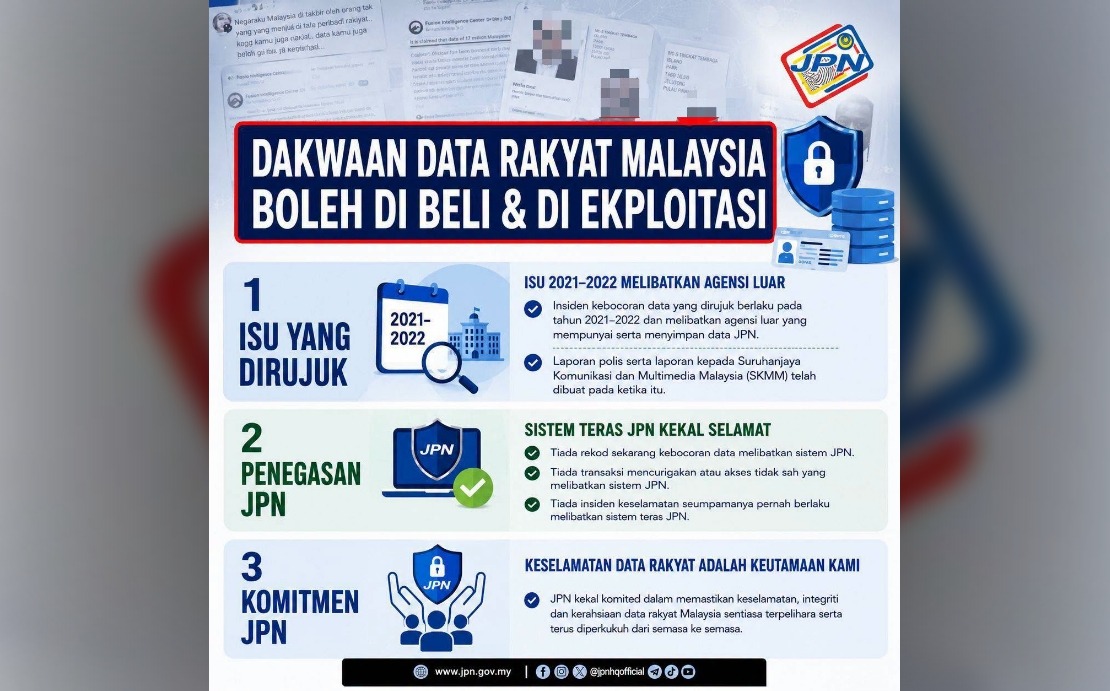
Malaysia's National Security Council has moved to quell concerns about a data leak that has been circulating across social media, clarifying that the information in question originates from cybersecurity breaches that occurred prior to 2022 rather than compromising any currently operational systems. The National Cyber Security Agency, operating under the council's oversight, indicated that the data now being redistributed online had been obtained illegally through cyber intrusions targeting various systems years ago and is being shared without proper authorisation.
The distinction between old and new breaches carries significant weight for Malaysian internet users and businesses. While historical data compromises present their own risks, the timing of this particular incident is less concerning from a current infrastructure standpoint. However, the fact that decade-old material continues to circulate and gain traction on social platforms highlights the persistent nature of data security challenges in the digital age. Cyber criminals and threat actors continue to monetise and weaponise information long after the initial breach, transforming old compromises into ongoing threats.
Malaysian authorities have taken a multilayered enforcement approach to address the issue. The National Cyber Security Agency, working alongside MyNIC and the Personal Data Protection Department, has engaged international service providers to locate and eliminate the websites hosting this leaked information. Simultaneously, the Royal Malaysia Police have launched digital forensic investigations aimed at tracking down those responsible for obtaining and disseminating the data without authorisation. This coordinated response demonstrates the government's commitment to pursuing perpetrators across jurisdictional boundaries, recognising that cyber threats routinely operate across international networks.
Under Malaysian law, the simple act of accessing, using, or obtaining services that provide unlawfully acquired information constitutes a criminal offence, regardless of whether the hosting service operates outside the country's borders. This principle reflects a broader evolution in how nations define cyber responsibility. The National Security Council explicitly cautioned Malaysians against engaging with platforms offering unauthorised data access, emphasising that participation in such activities perpetuates cybercrime ecosystems and violates domestic legislation. Public compliance with these warnings remains crucial to disrupting the financial incentives that drive data trafficking.
The incident has reignited discussions about Malaysia's cybersecurity legislative framework, particularly the pending Cyber Crime Bill expected to be presented to Parliament. This proposed legislation introduces substantially expanded definitions and harsher penalties for various cybercriminal activities, including unauthorised system access and data theft. The bill also specifically addresses identity theft by criminalising the fraudulent use of another person's identity when undertaken with criminal intent. These provisions aim to create a more cohesive legal structure that encompasses the evolving tactics employed by modern threat actors.
Complementing legislative reforms, the Cyber Security Act 2024, which became operational in August 2024, has already begun reshaping Malaysia's protective landscape. This statute requires all entities operating as National Critical Information Infrastructure to establish comprehensive security measures encompassing compliance with industry codes of practice, rigorous risk assessments, and regular security audits. Critical sectors including finance, energy, and telecommunications now operate under enhanced oversight designed to elevate the nation's overall cyber resilience and create standards that cascade through supply chains and business ecosystems.
A particular point of concern for many Malaysians has centred on MyDigital ID, a government-backed digital identity platform that has achieved over 16 million registrations. The National Security Council clarified that this system does not function as a storage repository for personal data. Instead, it operates as an identity verification mechanism that authenticates users in real-time by directly consulting the National Registration Department's databases. This architecture significantly reduces the attack surface compared to centralised data storage models, as there is no single massive repository of personal information that could be compromised in a single breach.
The widespread integration of MyDigital ID across both governmental and private sector applications, spanning telecommunications, banking, and other services, aims to strengthen the security posture of Malaysia's digital transaction environment. By verifying identity through a trusted governmental source rather than relying on individual organisations to maintain accurate personal records, the system theoretically reduces instances of fraudulent transactions and identity theft. This distributed verification model represents a different approach to digital security compared to traditional centralised databases that have historically proven attractive targets for cybercriminals.
Malaysia's broader strategy for managing cybersecurity risks reflects recognition that digital transformation, while economically essential and user-convenient, requires simultaneous investment in protective infrastructure. The National Security Council and the National Cyber Security Agency have positioned cybersecurity as a foundational element rather than an afterthought in the country's digital development. This prioritisation suggests policymakers understand that public confidence in digital services directly correlates with actual and perceived security measures, and that erosion of trust can hinder adoption of beneficial technologies.
For Southeast Asian observers, Malaysia's approach offers instructive examples of how mid-sized developing economies can address cybersecurity challenges. The coordination between government agencies, engagement with international service providers, parallel legislative reform, and public communication about digital risks collectively create a more resilient framework. Many countries in the region face similar challenges balancing rapid digitalisation with security concerns, and Malaysia's experience demonstrates that comprehensive responses require legal, technical, and investigative components working in concert.
Moving forward, the effectiveness of Malaysia's response will depend on successful prosecution of those identified through ongoing investigations and demonstrated improvements in the security practices of critical infrastructure operators. The National Cyber Security Agency's emphasis on public education—advising against participation in unlawful data access services—suggests recognition that individual user behaviour contributes significantly to either enabling or disrupting cybercriminal networks. As digital services become increasingly central to Malaysian economic and social life, the interplay between regulatory frameworks, technological defences, and public awareness will determine whether the nation can realise the benefits of its digital transformation agenda while maintaining acceptable security standards.

