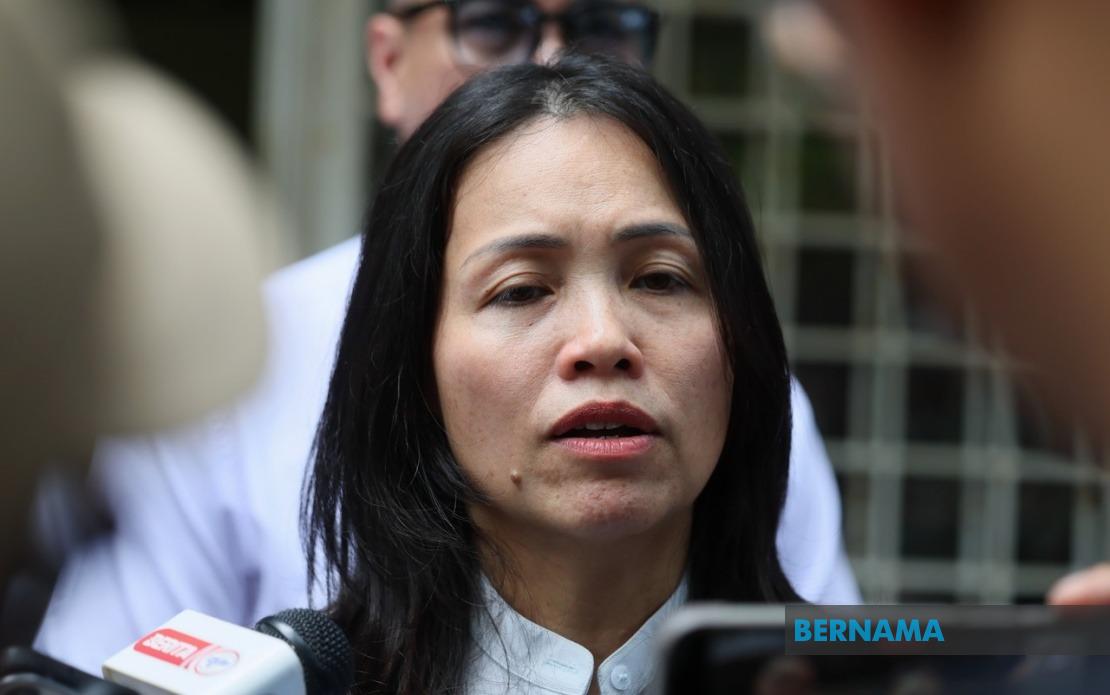
Johor's Democratic Action Party leadership has sounded an alarm over what it characterises as a coordinated misinformation effort aimed at undermining support for Pakatan Harapan in the upcoming state election. Johor DAP chairman Teo Nie Ching disclosed that opposition figures have been circulating deliberately falsified posters featuring potential DAP candidates, with the images altered to depict them wearing headscarves improperly. The manoeuvre represents a calculated attempt to exploit religious sensitivities and sow discord among the coalition's electoral base, she argued.
The fabricated imagery serves a dual purpose within the broader campaign narrative, according to Teo's assessment. By presenting non-Muslim candidates in modified religious attire, the posters aim to generate anxiety among non-Malay voters, particularly within the Chinese community, who form a significant portion of Pakatan Harapan's traditional support base in Johor. This form of digital manipulation trades on existing communal tensions and seeks to create confusion about party identity and values during a critical phase of campaigning. The Deputy Communications Minister emphasised that such tactics operate at the intersection of religious manipulation and community division, making them particularly pernicious in Malaysia's multi-ethnic context.
In her response, Teo articulated a defence of DAP's position on religious matters, stressing the party's demonstrated commitment to respecting all faith traditions. She specifically addressed the sensitivity surrounding the Islamic headscarf, or hijab, noting that the sacred significance of this religious symbol should never be weaponised for political advantage or trivialised through deceptive practices. The deliberate misuse of religious imagery in this manner, she contended, reflects not only bad faith campaign strategy but also a troubling disregard for the dignity of women, whose likenesses have been appropriated without consent.
Teo's statement reflected broader concerns within opposition ranks about the conduct of electoral competition in Malaysian politics. The incident illustrates how digital tools and image manipulation technology have become instruments of political warfare, allowing for the rapid dissemination of false content that can reach voters before fact-checking mechanisms take effect. For Pakatan Harapan, the episode underscores vulnerability to coordinated disinformation campaigns that exploit Malaysia's religious and ethnic fault lines. Such tactics prove particularly effective in state elections where voter engagement may be lower than in national contests, and where local media coverage might not immediately debunk false claims.
The timing of this controversy coincides with intensifying preparations for the Johor contest, one of Malaysia's largest state elections in terms of both voter population and political significance. The Election Commission has announced that nominations will proceed on June 27, with polling scheduled for July 11. This compressed timeline between the State Legislative Assembly's dissolution on June 1 and election day leaves limited opportunity for comprehensive public discourse to establish factual baselines. Candidates and parties must communicate their positions and platforms within an accelerated schedule, creating conditions in which unverified claims can flourish.
Johor's political landscape reflects the complexity of contemporary Malaysian electoral competition. Before the assembly's dissolution, Barisan Nasional controlled forty of the state's fifty-six seats, establishing it as the dominant force. Pakatan Harapan held twelve seats, while Perikatan Nasional and MUDA each retained minor representations with three and one seats respectively. This distribution suggests a highly competitive election in which relatively modest swings in voter sentiment could produce significant shifts in the assembly's composition. Parties contending for power face strong incentives to mobilise their bases aggressively, sometimes through methods that push ethical boundaries.
Teo's appeal to voters represents an attempt to shift the campaign conversation away from divisive tactics toward principled engagement with substantive policy questions. Her call for rejection of smear campaigns and embrace of harmony reflects Pakatan Harapan's broader positioning as a coalition committed to inclusive governance. However, the emergence of such tactics suggests that segments of the opposition view the Johor election as sufficiently consequential to justify deployment of hard-hitting propaganda methods. The effectiveness of Teo's counter-messaging will depend largely on whether mainstream media amplifies her concerns and whether voters themselves demonstrate resistance to manipulated content.
The incident also raises questions about platform accountability and content moderation. Social media and messaging applications have become primary vectors for political communication in Malaysia, yet enforcement of standards against misinformation remains inconsistent. Neither Facebook nor other platforms have demonstrated consistent capacity to identify and remove manipulated political content before it reaches audiences. This regulatory gap creates space for campaigns to exploit visual deception with relative impunity, particularly during compressed election periods when fact-checking resources are stretched thin.
For Malaysian voters, particularly those in Johor, the episode serves as a reminder of the necessity for critical media consumption during electoral periods. The ease with which digital images can be altered means that visual content should never be accepted at face value without verification. Voters would be wise to consult official party materials and established news sources before drawing conclusions based on circulating images. The responsibility for maintaining campaign integrity rests not only with regulators and platforms but also with the electorate itself, which must actively resist manipulation and demand factual accuracy from those seeking their support.

