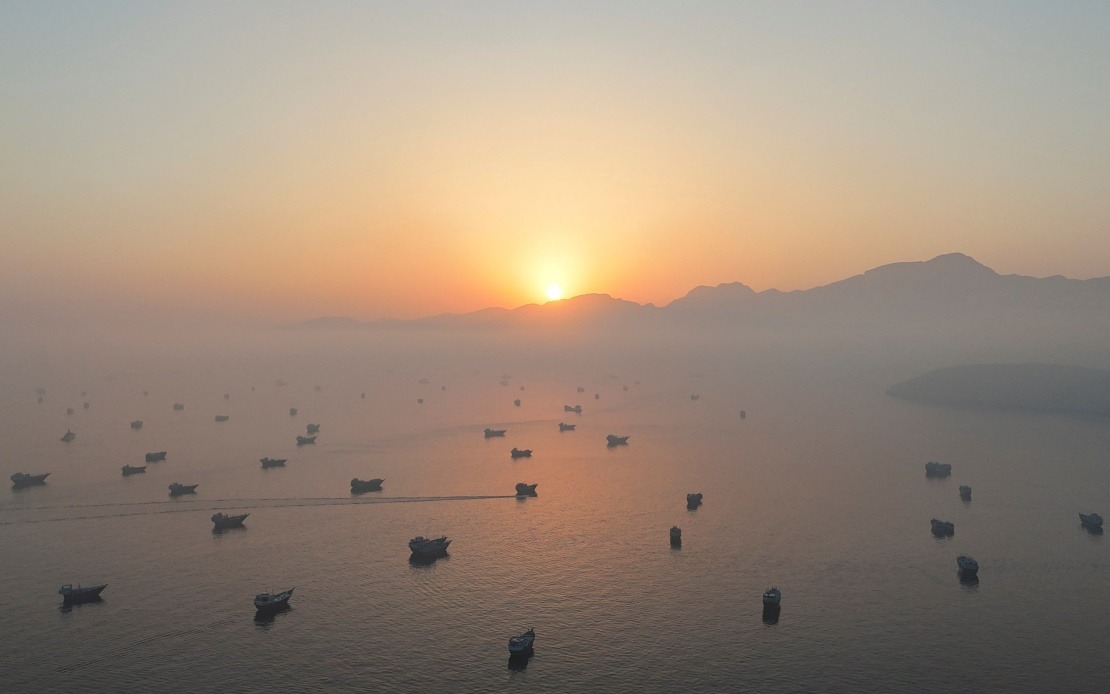
The Comprehensive and Progressive Agreement for Trans-Pacific Partnership (CPTPP) has thrown its collective weight behind the recent US-Iran agreement, signalling that the 12-member trade bloc sees the diplomatic breakthrough as essential to stabilising global commerce. During a virtual ministerial meeting held on Friday, the group issued a joint statement expressing relief at steps towards reopening the Strait of Hormuz and restoring unimpeded navigation through one of the world's most critical maritime corridors. The endorsement reflects deep anxiety within the trade bloc about the economic fallout from prolonged regional tensions that have disrupted energy flows and threatened the intricate supply chains upon which member economies depend.
At the heart of the ministers' concerns lies the vulnerability of global energy markets to geopolitical volatility. The statement specifically highlighted the strategic importance of maintaining stable trade in crude oil, petroleum products including diesel, natural gas, and petrochemical goods—commodities essential to industrial production and consumer welfare across the CPTPP member states. Beyond energy, the ministers recognised that disruptions to the Strait of Hormuz ripple through markets for fertilisers and other critical inputs that support agriculture and manufacturing throughout their economies. For Malaysia, which relies heavily on imported energy and serves as a regional manufacturing and petrochemical hub, such interruptions pose tangible risks to economic growth and price stability.
The statement's emphasis on the Strait of Hormuz as a vital international waterway reflects longstanding principles of maritime law and freedom of navigation. By explicitly invoking the United Nations Convention on the Law of the Sea (UNCLOS), the CPTPP members grounded their position in established international norms rather than narrow commercial interest. This framing is significant for Southeast Asian nations, where respect for maritime law and unimpeded passage through shared waters remain foundational to regional stability and prosperity. The ministers underscored that secure sea lanes and freedom of overflight are not luxuries but necessities for the functioning of rules-based international trade, a framework that has enabled smaller economies to participate in global markets on predictable terms.
Beyond the immediate Hormuz question, the joint statement revealed deeper concerns about the fragility of contemporary energy supply chains. The CPTPP bloc acknowledged that minimising disruptions to energy flows must occur in strict accordance with international law, positioning their stance as one that balances legitimate economic interests with legal obligations. This language suggests an attempt to discourage unilateral actions or economic coercion that might circumvent established mechanisms for dispute resolution. For Malaysian readers, this principle carries particular resonance given the country's historic advocacy for multilateralism and adherence to international legal frameworks as counterweights to the interests of larger powers.
The ministers collectively reaffirmed their commitment to maintaining open and competitive markets, explicitly rejecting unjustified trade restrictions and calling on other nations to do likewise. This statement carries implications beyond energy markets, signalling the bloc's broader determination to resist protectionism and preserve the liberal trading system that underpins member economies' prosperity. In the current geopolitical environment, where various powers have employed energy sanctions and trade restrictions as tools of statecraft, such declarations function as political anchors against escalating economic warfare. Malaysia and other Southeast Asian members benefit directly from this commitment, as their economies are too small to weather prolonged disruptions to global commodity flows and manufacturing networks.
Recognising that energy security challenges are not uniform across member nations, the statement specifically acknowledged the vulnerabilities of small-island developing countries, particularly in the Pacific. This inclusive language reflected awareness that the CPTPP's membership encompasses economies with vastly different geographical circumstances and strategic challenges. Island nations dependent on imported fuel face existential threats from supply disruptions in ways that continental economies do not. By highlighting this disparity, the statement moved beyond abstract principles to address concrete vulnerabilities that affect particular communities within the bloc.
The ministers also welcomed the Partnership On Wide Energy and Resources Resilience Asia (POWERR Asia) as a mechanism for building more resilient supply chains through closer coordination between energy-producing and energy-consuming nations. This initiative signals a shift toward proactive regional architecture designed to reduce vulnerability to external shocks rather than relying solely on hope that international tensions will remain manageable. Such partnerships align with Southeast Asia's broader strategic interest in developing indigenous capacity and fostering intraregional cooperation to reduce dependence on distant powers for essential commodities.
The virtual meeting brought together representatives from Australia, Brunei, Canada, Chile, Japan, Malaysia, Mexico, New Zealand, Peru, Singapore, the United Kingdom and Vietnam. This roster reflects the CPTPP's geographic span and ideological diversity, uniting developed and developing nations, established democracies and rising powers around common economic interests. The presence of both US allies like Australia, Japan and Canada alongside Vietnam—which maintains delicate relationships across the geopolitical spectrum—underscores how energy security transcends traditional Cold War alignments. For Malaysia, participation in such forums reinforces its role as a voice for moderate, rules-based regionalism.
The statement's emphasis on collective crisis response and resilience-building carried unmistakable echoes of pandemic-era lessons about the interconnectedness of global supply chains. Members had witnessed firsthand how disruptions in one sector cascade across borders, affecting everything from manufacturing to agriculture to energy infrastructure. The commitment to accelerate cooperation on resilience suggests that the CPTPP intends to move beyond reactive crisis management toward anticipatory policy frameworks that identify vulnerabilities before they become emergencies. This forward-looking approach appeals particularly to emerging economies like Malaysia that aspire to climb the value-added chain while remaining insulated from external shocks.
Ultimately, the CPTPP's endorsement of the US-Iran agreement should be understood not as a statement of political preference for either party but as institutional self-interest in maintaining the conditions necessary for trade. By voicing support for reopened shipping lanes and restored navigation through the Strait of Hormuz, the bloc demonstrated that even in an era of geopolitical competition, economic interdependence creates powerful incentives for de-escalation. For Malaysia and other Southeast Asian members, this solidarity offers reassurance that their larger trading partners recognise that prolonged conflict serves no one's interests. The statement essentially commits the CPTPP to using its collective influence to maintain the rules-based system upon which regional prosperity depends.

