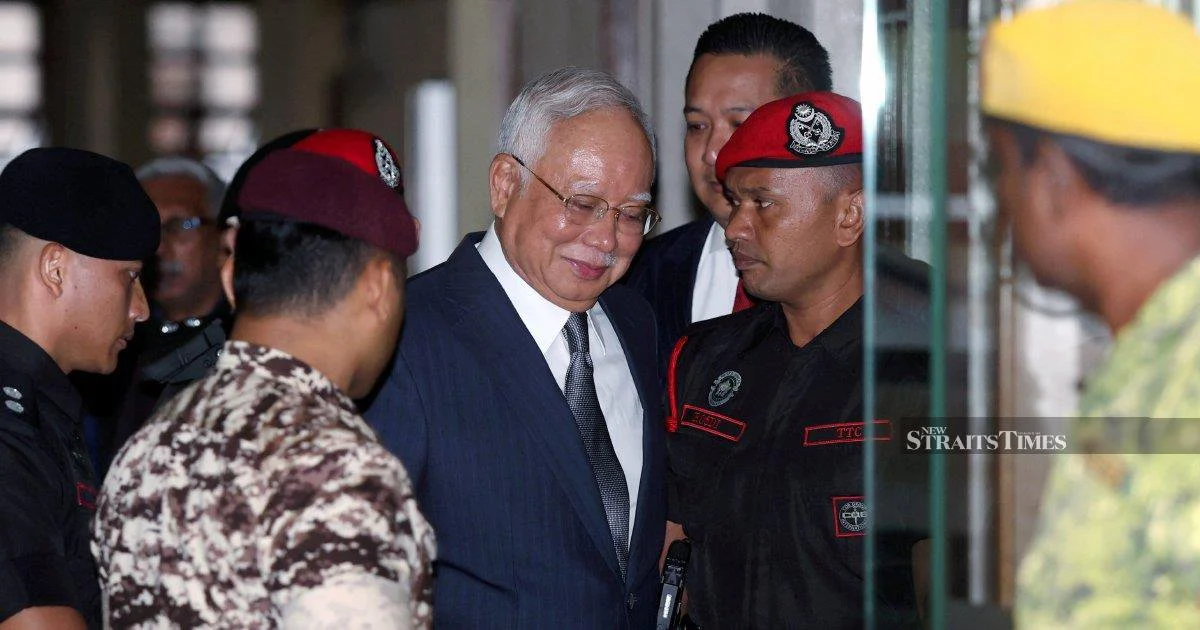
A Malaysian court has delivered a significant verdict establishing that former Prime Minister Datuk Seri Najib Razak and fugitive businessman Low Taek Jho functioned as a coordinated unit in the systematic extraction of massive sums from 1Malaysia Development Bhd (1MDB), the state investment vehicle that became the centrepiece of one of the world's largest financial scandals.
The judicial finding represents a watershed moment in the prolonged legal proceedings surrounding the fund's collapse, as it places on record that the two men operated in deliberate synchronisation rather than acting independently. This conclusion carries profound implications not merely for the individuals named but for broader understandings of how governance structures can be compromised when senior political figures align themselves with private interests.
The scale of the siphoning operation that flowed from this partnership extended into billions of ringgit. Over the course of 1MDB's existence as a functioning entity under Najib's stewardship as Prime Minister, the fund was designed ostensibly as a vehicle for Malaysian development initiatives. Instead, it became a conduit through which enormous sums disappeared, with investigators and prosecutors contending that the money transited through multiple jurisdictions and shell companies before settling in private accounts and being expended on luxury acquisitions globally.
Low Taek Jho, who accumulated formidable wealth during 1MDB's most active phase, has remained beyond Malaysian territorial reach, having fled the country as investigations intensified. His absence from the courtroom during proceedings represents a significant element of the scandal's ongoing dimensions. Despite international law enforcement cooperation, his whereabouts have remained elusive, frustrating efforts to bring him before Malaysian courts to face charges directly.
The court's articulation that Najib and Jho Low worked in tandem rather than in isolation strengthens prosecution arguments concerning the intentional and structured nature of the fund's misappropriation. This distinction matters considerably in legal terms, as it establishes premeditation and coordination rather than opportunistic individual misconduct by separate actors. The judgment suggests not merely that funds disappeared, but that their disappearance resulted from orchestrated action taken by individuals at multiple levels of influence and capability.
For Malaysia, the ruling underscores how vulnerability to large-scale financial misconduct can penetrate even the country's highest institutional echelons. The scandal has reverberated across Malaysian society, affecting national reputation in international financial circles and generating profound public disillusionment with governance. The fact that the Prime Minister of the nation was implicated in such a scheme struck at foundational assumptions about the integrity of Malaysia's political leadership.
The implications extend beyond accountability for the two individuals named. The 1MDB case has prompted substantial reforms in Malaysia's governance frameworks, oversight mechanisms, and financial regulation. Institutional responses have included enhanced scrutiny of fund management, strengthened requirements for transparency in major state investments, and recalibration of parliamentary oversight capacities. Yet the judicial confirmation of Najib and Jho Low's coordinated operation signals that structural vulnerabilities remain areas requiring continued vigilance.
Regionally, the scandal has influenced how Southeast Asian nations approach governance of state investment vehicles and the management of anti-corruption frameworks. The 1MDB episode demonstrated that even countries with established institutions could experience massive depletion of public resources if sufficient political will to circumvent controls coalesced. Other regional governments have absorbed lessons from the Malaysian experience in tightening oversight mechanisms governing sovereign wealth vehicles.
The court's findings also address questions about the nature of the relationship between Malaysia's political apex and private business actors. The characterisation of Najib and Jho Low as operating hand-in-hand illuminates how access to state mechanisms can be leveraged when political leaders and wealthy individuals converge on shared financial interests. Jho Low's ability to influence decisions affecting billions of ringgit from outside formal government positions raised critical questions about informal channels of influence operating parallel to official state structures.
International dimensions of the scandal remain actively pursued, with investigations in multiple jurisdictions examining how 1MDB funds traversed global financial systems. American authorities have pursued cases against individuals involved in moving and concealing the money, while regional financial authorities have worked to trace assets and recover funds. The complexity of tracking capital flows across borders has meant that while Malaysian courts have rendered judgments, the full financial archaeology of where 1MDB money ultimately settled remains incomplete.
Looking ahead, the court's ruling provides a foundation for ongoing legal proceedings and potential asset recovery initiatives. The explicit judicial finding of coordinated operation between Najib and Jho Low strengthens the evidentiary basis for pursuing related financial claims and investigating the full architecture of the scheme. For Malaysia's judicial system, delivering the verdict represents progress in a scandal that has consumed substantial institutional resources and public attention since investigations commenced.