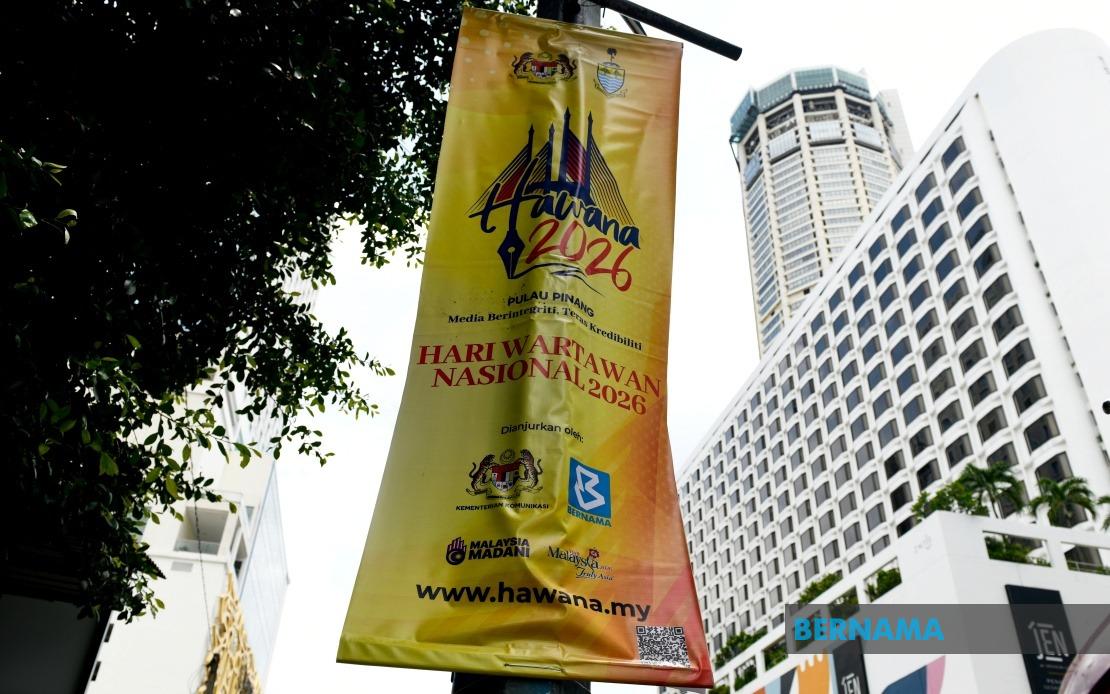
Communications Minister Datuk Fahmi Fadzil is in Penang for a strategically timed two-day working engagement that underscores the government's commitment to strengthening relationships with Malaysia's media fraternity and honouring their contributions to national discourse. The visit, beginning June 19, coincides with the culmination of HAWANA 2026, the country's flagship annual celebration of journalism excellence and media professionalism.
The minister's itinerary reflects a deliberate effort to engage multiple stakeholder groups within the media and creative sectors. His opening engagement comprises attendance at the Malaysia Media Retreat Programme 2.0 in Seberang Jaya, an initiative designed to foster professional development and strategic dialogue among practitioners. This is followed by a formal state dinner with Penang Yang Dipertua Negeri Tun Ramli Ngah Talib, signalling the collaborative nature of the celebration and the importance placed on regional engagement within the broader national framework.
These activities serve a dual purpose that extends beyond ceremonial acknowledgement. The retreat and dinner format provides structured opportunities for senior government officials to directly interface with media leadership, facilitating candid exchanges on contemporary challenges facing journalism and information dissemination in Southeast Asia's evolving media landscape. Such dialogue is particularly relevant given Malaysia's ongoing efforts to position itself as a regional hub for quality journalism and digital literacy.
The carnival component of HAWANA 2026, held at the PICCA Convention Centre at Butterworth Arena, represents an important shift in how the media industry engages with broader society. By integrating creative arts workshops, entrepreneurial showcases, and live performances, the three-day event transforms what might traditionally be a closed-door industry celebration into a public-facing demonstration of creativity and cultural vitality. The inclusion of over 24 local creative product brands, alongside 20 food and beverage vendors and 16 stage performances, creates an accessible entry point for ordinary Malaysians to appreciate the interconnected relationship between media, arts, and community enterprise.
The specific workshop offerings—cyanotype printmaking, albumen printing, and stone-carving—signal an interesting creative philosophy that values both traditional artisanal techniques and contemporary media practice. This blending of old and new reflects broader conversations within global journalism communities about preserving craft skills while embracing technological innovation. The free admission model is particularly significant for a country navigating questions about media accessibility and public engagement with news.
Fahmi's morning engagement at the Seberang Jaya Public Market Food Court for the Jiwa@Sembang Santai Special World Cup Edition programme represents an unconventional approach to ministerial communication. By situating himself within a casual, public marketplace setting rather than a formal auditorium, the minister demonstrates accessibility and willingness to engage with ordinary citizens in their daily spaces. This grassroots orientation reflects contemporary political communication strategies increasingly emphasised across the region.
The centrepiece event, the HAWANA 2026 Grand Finale, carries substantial symbolic weight beyond its immediate agenda. Themed "Media Integrity Strengthens Credibility," the gathering explicitly addresses concerns that have become increasingly pressing across Southeast Asia regarding trust in institutions, misinformation, and the role of professional journalism as a counterweight to the fragmented information ecosystem created by social media proliferation. The decision to theme the event around integrity suggests a government keen to position media professionalism as central to broader institutional legitimacy.
The participation of approximately 1,000 media practitioners from within Malaysia and internationally creates a significant professional convocation. This scale indicates HAWANA's evolution into a major regional event with capacity to influence journalism standards and practices across multiple markets. For Malaysian journalists, hosting international peers provides benchmarking opportunities and exposes local practitioners to evolving global best practices in an era when journalistic models are rapidly transforming.
Prime Minister Datuk Seri Anwar Ibrahim's role in officiating the grand finale underscores the government's prioritisation of this event within its broader agenda. Prime ministerial attendance at a journalists' celebration signals that the government views media engagement as a governance priority rather than a peripheral concern. For neighbouring countries in Southeast Asia watching Malaysia's approach to media relations, the PM's direct participation sends important signals about how democracies can maintain healthy government-media relationships despite inevitable tensions.
The Ministry of Communications' coordination through Bernama, the Malaysian National News Agency, institutionalises HAWANA within formal government structures. This organisational choice reflects a strategic approach where state news infrastructure plays an active convening role in building professional community standards. For Malaysia's media sector, this represents both opportunity and potential constraint—the benefit of institutional support coupled with inevitable questions about editorial independence.
The timing of these engagements during June, a mid-year point, positions them as a moment for the industry and government to assess progress and recalibrate direction. As Malaysia continues navigating digital transformation, global shifts in media economics, and regional developments in information governance, HAWANA 2026 provides a formal occasion to collectively examine journalism's trajectory and responsibilities in an increasingly complex information environment.

