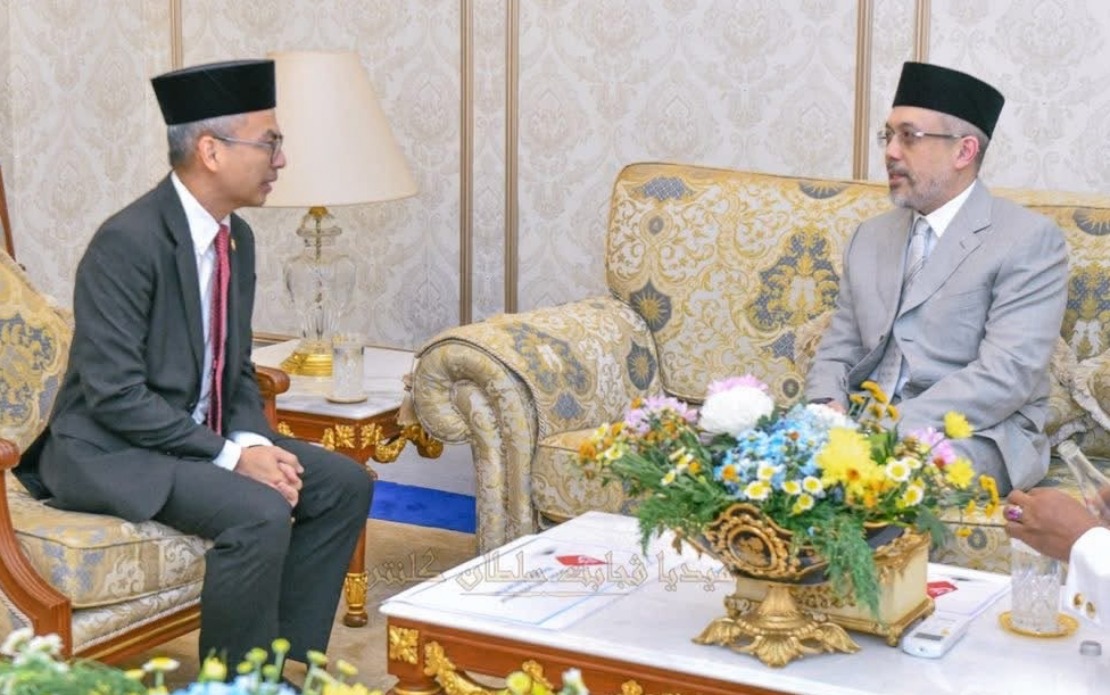
Communications Minister Datuk Fahmi Fadzil held an audience with the Regent of Kelantan, Tengku Muhammad Fakhry Petra, at Kota Lama Palace in Kota Bharu on June 17 to brief the royal office on the escalating problem of fraudulent online accounts and the spread of false information through social media platforms. The meeting, which commenced at 5 pm and lasted approximately one hour, represented a high-level engagement between the federal communications ministry and Kelantan's royal administration on matters of national digital security and institutional protection.
The primary purpose of the audience was to update the Regent on contemporary developments affecting the Ministry of Communications' operational mandate, with particular emphasis on the trajectory of recent policy initiatives and ongoing challenges in the digital information landscape. According to a statement from the Kelantan Sultan's Media Office, the discussion centred on two interconnected issues that have gained significant traction across Malaysia's online ecosystem: the proliferation of fraudulent accounts engaged in coordinated misinformation campaigns, and the deliberate dissemination of defamatory content targeting the Malaysian Royal Institution through various social platforms.
The problem of fake accounts represents an increasingly urgent concern for Malaysian authorities, as coordinated networks of inauthentic profiles facilitate the rapid amplification of false narratives and deliberately distorted information. These synthetic accounts operate with minimal accountability, often obscuring their origins while leveraging algorithmic recommendation systems to maximise reach and engagement. The challenge extends beyond simple fraud; fake accounts have emerged as primary vectors for attacking sensitive national institutions, with the Royal Institution proving a particularly vulnerable target due to its constitutional significance and the deep reverence it commands across Malaysian society.
The deliberate targeting of Malaysia's monarchy through coordinated online campaigns carries serious implications for national cohesion and institutional stability. Content designed to demean, ridicule, or spread falsehoods about the Royal Institution can inflame communal tensions and undermine public confidence in foundational national symbols. Such campaigns often operate across multiple platforms simultaneously, exploiting jurisdictional gaps and the difficulty of coordinating enforcement across different regulatory frameworks. The digital nature of these attacks means they can spread globally within minutes, reaching audiences far beyond Malaysia's borders and amplifying their potential impact on international perceptions of the nation.
Fahmi's decision to engage directly with Kelantan's Regent demonstrates the Ministry of Communications' recognition that addressing digital misinformation requires coordination across multiple levels of governance and stakeholder engagement with state-level authority structures. The Regent, as head of state during the Sultan's absence or incapacity, occupies a constitutionally significant position, and consulting the royal office on matters affecting institutional security reflects appropriate deference to traditional governance hierarchies. This diplomatic approach also signals the ministry's commitment to treating the problem as a matter of national importance rather than a purely technical administrative issue.
The delegation accompanying Fahmi included MohamadAsif Afifi Mohd Yusof, the Senior Private Secretary to the Minister, and Ahmad Afifi Hamdan Tuan Aziz, the Minister's accompanying officer, alongside additional ministry staff. This composition indicated that the ministry approached the meeting with formal institutional preparation, bringing personnel capable of engaging substantively on policy matters and implementation details. The inclusion of the minister's private secretariat staff also underscores the direct chain of communication being established between the federal ministry and the Kelantan royal office on these issues.
During the audience, Fahmi presented a memento to Tengku Muhammad Fakhry Petra as a gesture of respect and appreciation for the Regent's reception and attention to these matters. This exchange of gifts, while ceremonial, carries symbolic weight within Malaysian protocol, acknowledging the Regent's status and the importance accorded to the consultation. The formal nature of such exchanges reinforces the legitimacy of the ministry's concerns and positions the discussion within the context of proper inter-institutional dialogue rather than bureaucratic routine.
The meeting concluded with informal engagement between the attendees, including a social interaction and photographic documentation of the occasion. This transition from formal briefing to collegial interaction reflects standard protocol for high-level audiences in Malaysia and provided an opportunity for more candid discussion of practical implementation challenges. The presence of senior officers from the Kelantan Sultan's Office alongside ministry representatives created space for direct coordination on enforcement mechanisms that might be deployed at the state level.
For Malaysian policymakers and digital governance authorities, the prioritisation of this engagement reflects growing recognition that combating online misinformation requires comprehensive institutional coordination rather than siloed departmental responses. The Royal Institution's vulnerability to coordinated digital attacks represents a unique national security concern, given its constitutional role and symbolic significance. However, the broader challenge of fake accounts extends far beyond threats to institutional dignity; these networks facilitate electoral interference, spread of health misinformation, financial fraud, and the erosion of trust in public institutions across sectors.
The timing of this audience, several months into Fahmi's tenure as Communications Minister, suggests an evolving policy response to escalating problems that have accumulated despite existing regulatory frameworks. Malaysia's existing digital governance architecture, including provisions in the Communications and Multimedia Act and the Penal Code, provides legal tools for addressing certain manifestations of online abuse, yet enforcement has proven inconsistent and often reactive rather than preventative. The ministry's engagement with state-level authorities indicates possible consideration of more distributed enforcement models that leverage state administrative structures.
The discussion of misinformation targeting the monarchy also reflects broader regional concerns shared across Southeast Asia, where several nations contend with coordinated disinformation campaigns exploiting cultural sensitivities and institutional vulnerabilities. Thailand, Cambodia, and other neighbours have experienced comparable challenges, suggesting that the problem may involve transnational actors and coordinated networks operating across jurisdictional boundaries. Malaysia's response, emphasised through this high-level consultation, positions the nation as taking such threats seriously and pursuing sophisticated governance responses.
Looking forward, the ministry's engagement with royal institutions on digital security matters may presage more formal coordination mechanisms or task forces designed to identify and neutralise inauthentic account networks targeting sensitive institutions. The effectiveness of such initiatives will ultimately depend on the ministry's capacity to balance legitimate expression and privacy protections against the need to combat genuinely harmful coordinated campaigns. The challenge lies in distinguishing between authentic criticism and deliberate disinformation, a distinction that requires both technological sophistication and nuanced institutional judgment that extends beyond purely technical solutions.