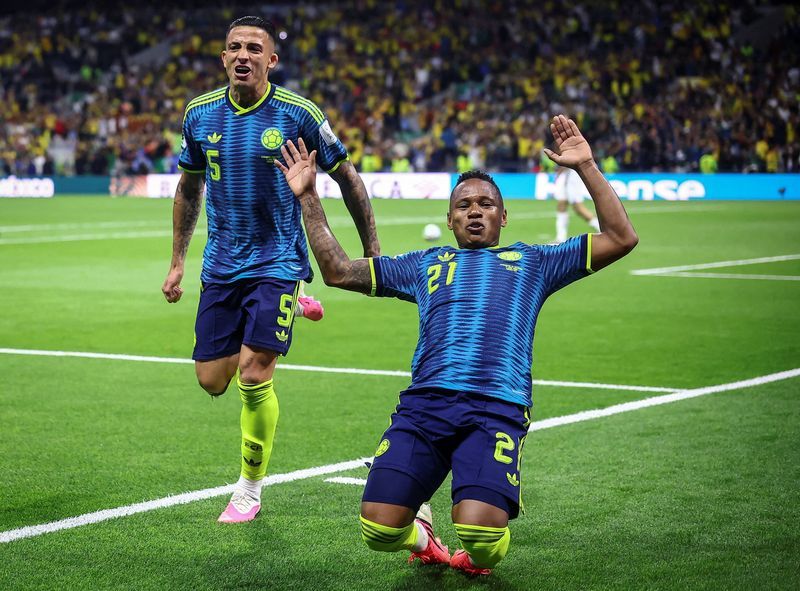
Colombia will attempt to build momentum in their World Cup Group K campaign when they take on DR Congo on Tuesday, though coach Nestor Lorenzo knows his side cannot underestimate opponents who have already demonstrated their capacity to trouble elite teams. The South American outfit made an impressive start by dispatching Uzbekistan 3-1 in their opening fixture, yet that scoreline belied a troubling second-half collapse during which Lorenzo's men revealed defensive weaknesses they must urgently correct before progressing deeper into the tournament.
A Colombian victory would guarantee passage to the Round of 32 and potentially clinch top spot in the group should Portugal stumble against Uzbekistan in their simultaneous fixture. However, Lorenzo has issued a cautionary tone regarding DR Congo's approach, recognising that the Central African nation arrives in a confident frame of mind after securing an unexpected 1-1 draw against one of the tournament favourites in their opening match. This result marked a significant milestone for DR Congo, who returned to the World Cup stage for the first time in nearly five decades, their last appearance coming as Zaire in 1974.
The burden of orchestrating Colombia's attacking play will again rest heavily upon Bayern Munich's Luis Diaz, whose explosive performance against Uzbekistan yielded both a goal and an assist while earning him player-of-the-match recognition. Diaz's direct running style and blistering pace proved difficult for Asian defenders to contain, yet this dependency on one player suggests Colombia lack the tactical depth needed to unlock more organised, defensively compact opponents. Lorenzo will be hoping that his captain James Rodriguez, who played a surprisingly subdued role in the opener, can elevate his influence and provide the creative spark that allows his attacking players greater freedom to operate effectively.
DR Congo's approach to the tournament reflects a philosophy built on disciplined defensive organisation and devastating transition play, a tactical blueprint that proved remarkably effective against Portugal. Yoane Wissa opened the African nation's World Cup account with a crucial equaliser, while coach Sebastien Desabre's defensive setup frustrated Portugal's superior possession throughout the encounter. The Congolese are likely to employ a similarly structured approach against Colombia, prioritising compactness at the back while seeking opportunities to exploit any lapses through rapid counter-attacking movements that could catch Colombian defenders in transit.
Lorenzo's post-match analysis of the Uzbekistan victory identified a concerning pattern where his side's dominance in possession inadvertently worked against them tactically. Colombia's tendency to retain the ball in midfield often disrupted the rhythm of their attacks, preventing them from maintaining sustained pressure in the final third and forcing them to recycle possession rather than complete attacking sequences. The coach acknowledged this shortcoming explicitly, noting that his players must demonstrate greater clinical finishing and more decisive execution when genuine goal-scoring opportunities materialise. Such improvements will prove essential against a DR Congo side whose defensive discipline already troubled a Portuguese team boasting significantly greater attacking resources.
The psychological dimension of this encounter cannot be overlooked, as DR Congo arrive brimming with confidence following their historic result against Portugal. The shock of holding one of the tournament's most technically gifted sides to a draw has energised Desabre's squad and presented them with genuine belief that they can upset another South American opponent. This confidence, combined with their proven ability to frustrate possession-based football through intelligent defensive positioning, creates a formidable challenge for Lorenzo's men despite Colombia's superior individual talent and experience at the tournament's highest level.
Colombia's tactical flexibility may prove decisive in this encounter, particularly regarding how Lorenzo chooses to manage the possession-versus-transition balance that caught his side out against Uzbekistan. Rather than dominating the ball as an end in itself, Colombia must ensure that their control of possession translates into clearer attacking patterns that utilise Diaz's pace and Rodriguez's creativity more effectively. The team's ability to shift between conservative, compact defending when out of possession and quick, incisive attacks when regaining the ball will largely determine whether they can overcome DR Congo's well-organised defensive structure.
Home advantage in Mexican territory continues to work substantially in Colombia's favour, with thousands of supporters once again expected to fill the stands at Estadio Azteca following the yellow-clad invasion during their Uzbekistan match. This vocal backing creates a genuine fortress mentality for Lorenzo's squad while simultaneously placing additional pressure on DR Congo to maintain their composure amid an intimidating atmosphere. Maintaining this momentum through the group stage represents a significant advantage for the South Americans as they bid to secure top position and navigate what could otherwise prove a competitive knockout-round draw.
The implications of this fixture extend beyond immediate qualification prospects, as the manner of Colombia's victory or defeat will substantially influence their tournament trajectory and confidence heading into subsequent matches. A dominant performance would signal that Lorenzo's side possess the attacking quality and defensive solidity required to challenge the tournament's elite teams, while a narrow victory or unconvincing display could raise questions about their ability to maintain their current trajectory under pressure. Conversely, DR Congo's ability to produce another upset result would further enhance their remarkable story and potentially open genuine possibilities for a genuine surprise run through the group stages, cementing their return to world football's grandest stage as a significant achievement rather than a mere historical footnote.

