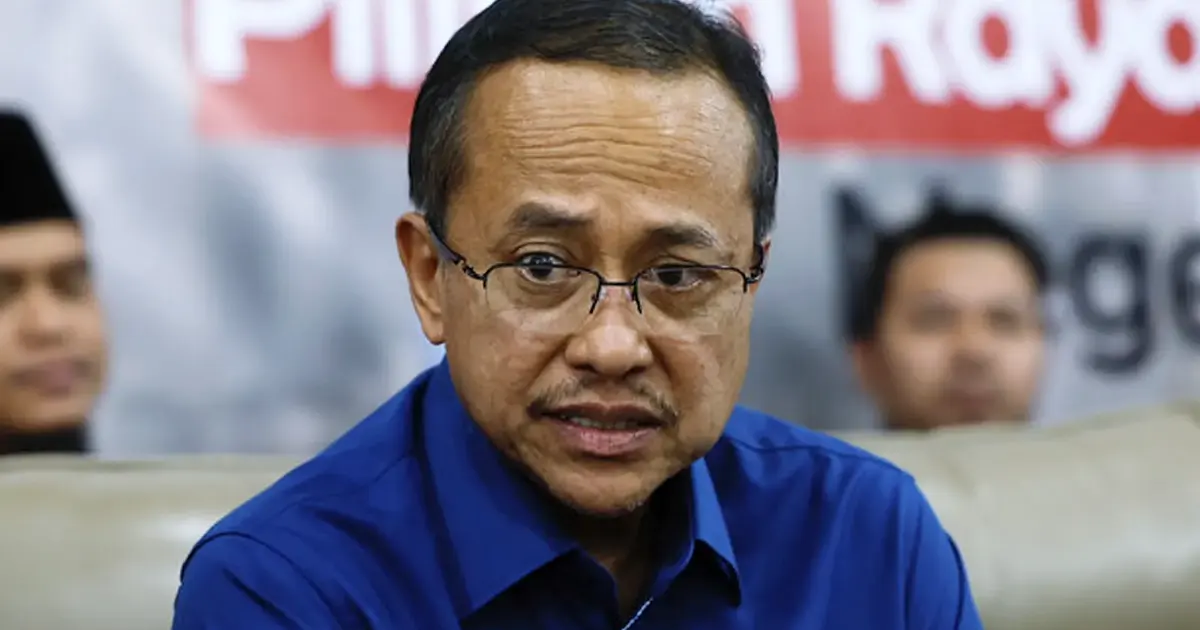
Perikatan Nasional (PN) chairman Samsuri Mohamad has moved to allay concerns over potential voter confusion following news that both constituent parties PAS and Bersatu will campaign under the coalition's unified logo. The assurance comes as the two Islamic-based parties continue deepening their integration within the broader PN framework, a development that has drawn scrutiny from observers questioning whether shared branding could muddy the electoral message for voters.
Samsuri's clarification rests on a straightforward operational argument: the two parties contest different parliamentary and state constituencies, thereby eliminating the risk of direct electoral confusion at the ballot box. This structural separation, he contends, provides sufficient distinction for voters to identify which candidate represents which party despite the identical PN logo appearing across campaign materials. The arrangement reflects the practical realities of Malaysian coalition politics, where multiple parties often share logos and branding to project unity and coherence to the electorate.
The decision to allow both PAS and Bersatu to use the PN logo represents a significant development in the coalition's evolution since its formation. Traditionally, coalition logos function as unifying symbols—much like how Barisan Nasional component parties display the BN logo alongside their own party symbols. However, the PN arrangement differs subtly, with both major constituent parties employing the coalition logo as their primary electoral brand rather than maintaining separate, dominant party symbols. This approach signals confidence in the PN brand's resonance with voters, particularly in constituencies where either party contests.
The territorial separation between PAS and Bersatu's electoral footprints becomes clearer when examining the parties' geographical strongholds and demographic appeal. PAS traditionally dominates in states with larger Malay-Muslim populations and has particular strength in the northern and east coast regions, where the party has built decades of grassroots infrastructure and ideological commitment among voters. Bersatu, by contrast, emerged more recently and has carved out influence in different regions, with particular strength in parts of Peninsular Malaysia and Sabah following the party's formation and subsequent political realignments.
For Malaysian voters evaluating the PN coalition during election campaigns, the distinction between party candidates becomes apparent through local campaigning, party officials' endorsements, and candidate profiles rather than logo differentiation alone. Campaign teams working at the constituency level traditionally emphasize candidate credentials, party affiliation statements, and direct community engagement to distinguish their representative from competitors. In this context, the shared logo functions less as an identifier between PAS and Bersatu and more as a statement of broader coalition solidarity and political direction.
The shared logo arrangement also carries implications for how PN projects its political identity to Malaysian voters. By allowing constituent parties to campaign under the coalition banner, PN leadership signals that the coalition represents a unified political force rather than a loose alliance of independent actors. This branding strategy mirrors approaches adopted by other multi-party coalitions globally, where coalition logos serve as umbrella symbols encompassing diverse political movements united by common objectives or platforms.
Samsuri's assurance reflects broader confidence within PN leadership regarding the coalition's organizational maturity and voter understanding. The coordination required to prevent confusion—ensuring parties contest different seats, communicating clear candidate information, and maintaining distinct party identities within a unified framework—demands sophisticated campaign infrastructure and political discipline. PN's ability to manage these arrangements without electoral confusion hinges partly on the experience of its leadership and the clarity of internal coordination mechanisms governing coalition operations.
However, the practical implementation of this strategy during actual election campaigns will ultimately determine whether confusion materializes among voters. Electoral history across multiple democracies demonstrates that shared branding can occasionally create voter uncertainty, particularly among less politically engaged segments of the electorate. In Malaysia's context, where some constituencies experience intense competition and where voters sometimes make voting decisions based on limited information, the effectiveness of Samsuri's assurance depends on ground-level execution during campaign periods.
The arrangement also carries strategic advantages beyond simple branding efficiency. By aligning campaign materials and messaging under the PN logo, both PAS and Bersatu benefit from consolidated campaign resources, unified messaging platforms, and collective fundraising efforts. This coordination allows smaller parties or those less established nationally to leverage the broader coalition's resources and visibility, enhancing their competitive position against rival coalitions in contested constituencies.
For regional observers tracking Malaysian coalition politics, the shared logo arrangement reflects broader trends toward tighter coalition integration in Southeast Asian political systems. As parties increasingly organize along coalition lines rather than pursuing purely independent electoral strategies, the mechanisms for managing multi-party coalitions have become more sophisticated. The PN experience, whether successful or problematic, provides insights into how Southeast Asian democracies balance coalition unity with party autonomy and voter clarity.
Samsuri's statement also suggests confidence that PN's electoral positioning remains sufficiently distinct from competing coalitions that internal party distinctions become secondary concerns. As long as voters clearly perceive PN as a coherent political force distinct from Barisan Nasional, Pakatan Harapan, or other rival groupings, the internal distinction between PAS and Bersatu candidates becomes manageable through constituency-level campaign activity rather than logo differentiation. This confidence reflects PN's assessment of its current standing in Malaysian political consciousness and the coalition's perceived performance record.

