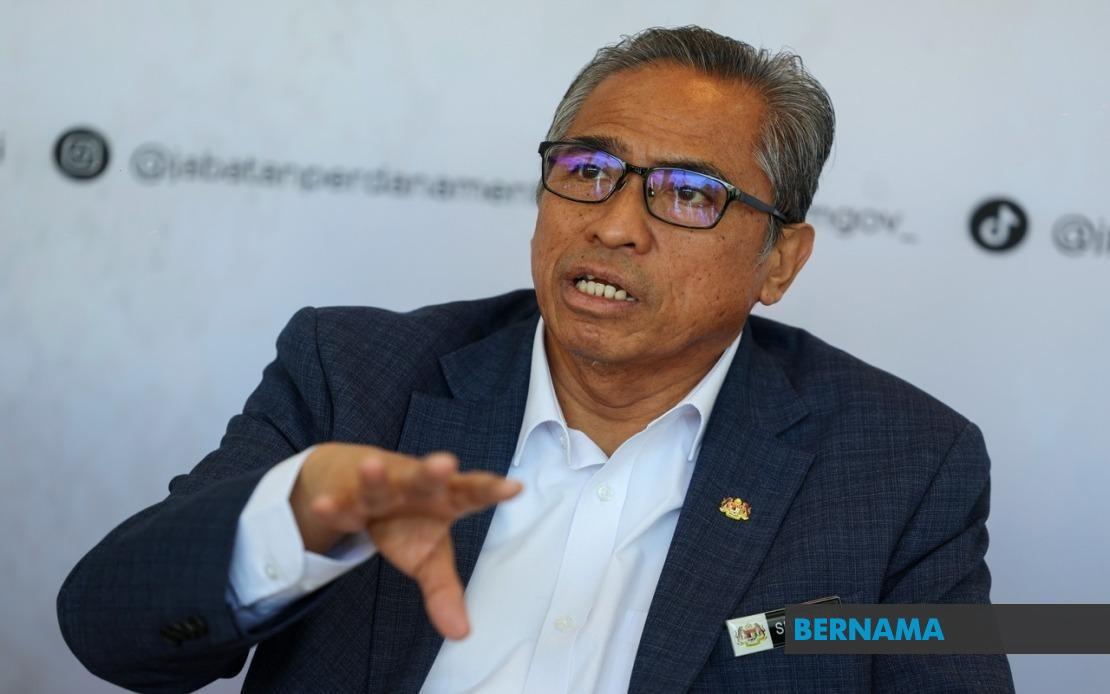
The machinery of government must pivot swiftly to capitalize on Malaysia's newly strengthened diplomatic position, according to Tan Sri Shamsul Azri Abu Bakar, the nation's Chief Secretary. Speaking in Kuala Lumpur on June 24, Shamsul Azri emphasized that public sector officials cannot treat recent high-level working visits as foreign policy achievements alone—they represent a genuine mandate to drive immediate economic advancement at home. Prime Minister Datuk Seri Anwar Ibrahim's recent diplomatic missions to Russia and Turkmenistan have positioned Malaysia strategically within evolving global trade networks, but only if the bureaucracy acts with sufficient speed and competence to translate those relationships into tangible outcomes.
The Chief Secretary's remarks underscore a fundamental challenge facing Malaysia as it navigates a rapidly shifting geopolitical landscape. While diplomatic channels establish frameworks and explore opportunities, the practical work of converting those connections into investment inflows, market access, and sustainable growth falls squarely on government agencies managing trade, commerce, and business facilitation. Shamsul Azri pointed out that ministries tasked with economic regulation face particular pressure to demonstrate agility and preparedness, requiring both institutional capacity and individual initiative from officials at all levels.
Critical to this transition is what officials are framing as the "Whole-of-Government" approach, a coordinated strategy that demands consistency across departments. Rather than operating in silos, each ministry must understand how its decisions affect Malaysia's broader appeal to foreign investors and trading partners. This requires public servants to cultivate what the Chief Secretary termed a "global mindset"—the ability to anticipate shifts in the international economic order and position Malaysia competitively within emerging patterns of trade and investment.
The government has identified the MADANI Diplomacy framework as central to this effort. This philosophy, which emphasizes inclusive and mutually beneficial partnerships, must extend beyond the rhetoric of official statements and shape how individual civil servants approach their daily responsibilities. For officials in customs, immigration, and business registration offices, adopting MADANI values means streamlining processes, reducing bureaucratic friction, and treating every international investor as a potential partner rather than simply a transaction to process.
The Ease of Doing Business initiative sits at the operational core of this strategy. Malaysia competes against neighboring economies in Southeast Asia and beyond to attract capital and talent. When investors consider establishing operations in Malaysia versus Thailand, Vietnam, or Indonesia, they evaluate not merely tax incentives and market size but the practical experience of navigating regulatory systems. Government efficiency directly translates into competitive advantage. Shamsul Azri indicated that this initiative now commands heightened focus, suggesting previous performance may have fallen short of international standards.
Investment facilitation represents another critical dimension. The Chief Secretary stressed that every international agreement must be realized promptly—a pointed reference to the need for bureaucratic systems that convert diplomatic commitments into actual projects, jobs, and economic activity. Delays in approvals, unclear regulatory frameworks, or inconsistent implementation of agreements can undermine diplomatic gains before they generate economic benefit. Public servants therefore function as strategic partners in Malaysia's development agenda, not merely administrators of existing policy.
The Public Service Reform Agenda (ARPA) has incorporated internationalization as a key enabler, reflecting government recognition that competing in the global economy demands different capabilities from traditional civil service roles. Building these capacities requires investment in training, recruitment of specialists with international experience, and organizational structures that facilitate rapid decision-making and cross-agency coordination. Shamsul Azri's emphasis on civil servants as "international-class strategic partners" suggests the government views capability gaps as a primary constraint on Malaysia's economic potential.
For Malaysian readers, the implications are both promising and contingent. A public service that functions effectively as an investment facilitator could accelerate job creation, particularly in high-income sectors that attract global capital and knowledge transfer. The emphasis on commodity supply security addresses concerns about cost-of-living pressures and supply chain vulnerabilities that affect ordinary Malaysians. Yet success depends entirely on whether bureaucratic systems can genuinely be modernized and whether officials at all levels internalize the expectation that their primary duty involves supporting Malaysia's international competitiveness.
Regionally, Malaysia's diplomatic repositioning reflects broader Southeast Asian dynamics as nations seek to balance relationships among great powers and diversify economic partnerships. The Russia and Turkmenistan visits signal Malaysia's willingness to engage partnerships beyond traditional Western alignments, potentially opening new markets and energy relationships. However, without domestic institutions capable of executing agreements effectively, such diplomatic outreach yields limited economic return. The Chief Secretary's message to the civil service essentially amounts to this: diplomatic opportunity remains sterile without bureaucratic competence to activate it.
Shamsul Azri's framing also reveals internal government recognition that Malaysia faces competitive disadvantage in attracting investment when compared to other Southeast Asian nations with more efficient regulatory systems. His call for agility and capacity-building is, implicitly, an acknowledgment that current institutional arrangements require substantial reform. The repeated emphasis on speed—from translating agreements to converting opportunities—suggests frustration within government circles about sluggish implementation of previous policy decisions.
The challenge before Malaysia's civil service is therefore not merely technical but cultural. Officials must embrace a mindset where every decision affects Malaysia's standing in the global economy. A customs officer's processing efficiency matters because delays damage Malaysia's reputation for business-friendliness. A trade ministry official's responsiveness influences whether investors prioritize Malaysia over competitors. This shift from viewing government employment as a stable, procedure-driven role toward conceiving it as participation in national economic competition represents substantial organizational change.
Success in this agenda would position Malaysia advantageously as the region continues its economic evolution. Failure would mean that diplomatic investments yield minimal returns while regional competitors capture increasingly sophisticated economic opportunities. The Chief Secretary's intervention suggests that government leadership views the current trajectory as insufficiently ambitious, requiring both affirmation of direction and renewed pressure on implementing agencies to deliver measurable results in translating Malaysia's international engagement into domestic prosperity.

