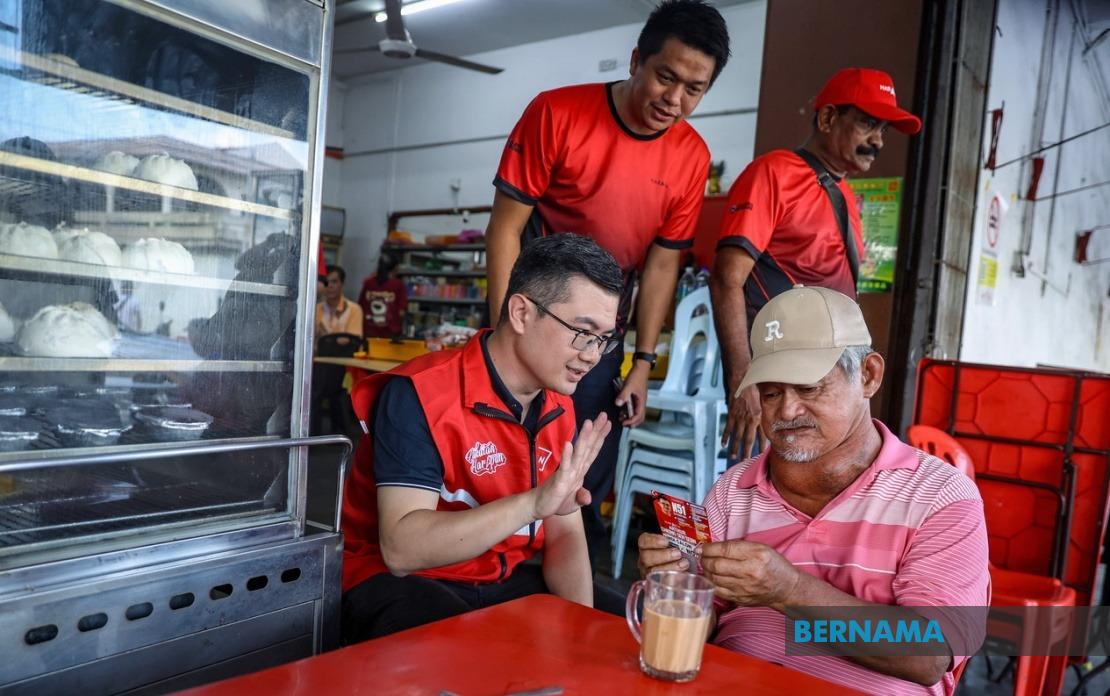
Arthur Chiong Sen Sern, the Pakatan Harapan representative for Bukit Batu, is approaching the 16th Johor State Election with confidence rooted in what he characterizes as a steady track record of community service since his narrow victory two years ago. The 36-year-old assemblyman is determined to convert his previous 137-vote majority into a more commanding mandate, having invested considerable effort in addressing constituent grievances across his diverse constituency since taking office in 2022.
Chiong's strategy centres on demonstrating tangible results from his tenure rather than making fresh campaign promises. Throughout his first term, he has prioritized ground-level problem-solving, attending to infrastructure deficiencies and environmental hazards that affect ordinary residents. His approach has deliberately transcended demographic boundaries, with the assemblyman emphasizing that his interventions benefit constituents regardless of their ethnic background, religious affiliation, or voting history. This inclusive stance reflects broader efforts within Pakatan Harapan to consolidate support across Malaysia's multicultural landscape, particularly in mixed urban-rural constituencies like Bukit Batu.
FeldaArea constituents have received particular attention from Chiong's office, reflecting the significant agricultural population within the constituency. Beyond direct constituency representation, he has extended financial support to non-governmental organizations operating within Bukit Batu, exemplifying his support through concrete funding mechanisms. A notable instance involved a RM20,000 allocation for installing lighting infrastructure at a futsal court, an intervention that continues benefiting younger residents today. Such targeted investments in youth facilities and community assets demonstrate a calculated approach to constituency development that extends beyond one-off announcements.
Flood management has emerged as a signature issue for Chiong's tenure, particularly regarding persistent water-logging in Kampung Rahmat and Kampung Seri Paya. Rather than leaving such matters to government departments alone, Chiong has cultivated direct collaboration with the Department of Irrigation and Drainage, positioning himself as an intermediary ensuring rapid response during emergency situations. His stated commitment to personally appearing at affected sites during flooding incidents reflects an understanding that visible leadership during crises builds lasting political capital among affected communities. The assemblyman contends that residents now recognize his presence during emergencies, suggesting that his interventions have translated into measurable improvements in drainage infrastructure and flood preparedness.
Chiong has publicly acknowledged his gratitude to Pakatan Harapan's national leadership, particularly Prime Minister Datuk Seri Anwar Ibrahim, for selecting him as the coalition's candidate to defend the seat. This public appreciation serves multiple purposes: it reinforces his alignment with the ruling coalition at a time when opposition parties contest PH's legitimacy, and it signals to voters that Bukit Batu maintains strong connections to the federal government—a consideration relevant for residents dependent on national infrastructure projects and development funding.
The Bukit Batu constituency, comprising 49,963 registered voters, presents a genuinely competitive electoral landscape. The contest features four primary contenders: Chiong for Pakatan Harapan, R. Kumaran representing the ruling Barisan Nasional coalition as PKR Kulai's chief, M. Premanand contesting for the relatively newer Ikatan Demokratik Malaysia (MUDA) coalition, G. Tamili running on the Bersama platform, and independent candidate Kamaruzaman Ali. This multi-cornered contest reflects the increasingly fractured nature of Malaysian state politics, where traditional two-bloc competition has given way to a more atomized political marketplace.
Chiong's margin of victory in 2022 was remarkably narrow, a circumstance that likely motivated his intensive focus on constituency development and grassroots engagement. Securing only 9,439 votes while his nearest rival, Datuk S. Suppayah of Barisan Nasional, garnered substantial support created an urgent imperative to consolidate his position. The presence of candidates from Perikatan Nasional (Tan Heng Choon) and Warisan (Lee Ming Wen) in the previous contest indicated that anti-incumbency or alternative political preferences existed within the constituency, necessitating Chiong's sustained effort to build broader support.
The entry of MUDA and Bersama as independent contenders in this election year introduces new variables to Chiong's re-election calculus. Both parties have cultivated significant youth support and advocate for alternative political narratives, potentially fragmenting the traditional opposition vote. However, they also risk splitting centrist and reform-minded votes that might otherwise consolidate around Pakatan Harapan, a dynamic that could inadvertently benefit the incumbent if he has successfully positioned himself as the development-focused, pragmatic choice for continuity.
Chiong's reliance on his service record and visible presence reflects a broader strategic choice within Pakatan Harapan to emphasize performance-based governance rather than ideological mobilization. In a mixed suburban-rural constituency like Bukit Batu, where residents include agricultural communities, younger urbanites, and established homeowners, such pragmatism may resonate more effectively than abstract political messaging. His documented investments in youth facilities, flood mitigation, and community support align with demonstrable priorities across this diverse electorate.
The election process itself follows a compressed schedule, with early voting scheduled for July 7 and general polling on July 11. This timeline provides Chiong approximately two weeks to consolidate support through final campaign activities, though his consistent on-ground presence throughout his tenure suggests that formal campaigning represents merely the visible culmination of year-long engagement. Many voters will have formed impressions based on their direct or indirect encounters with his constituent services long before official campaign activities commence.
For Pakatan Harapan's broader position in Johor, retaining Bukit Batu with an increased majority would constitute a significant symbolic achievement. The state remains economically vital and politically contested, with Barisan Nasional maintaining substantial presence. A convincing victory by Chiong would reinforce PH's narrative of growing support and effective governance, while a narrow repeat or loss would raise questions about the coalition's capacity to expand its footprint in the southern state.
Chiong's campaign ultimately hinges on whether his documented constituent service and visible accessibility translate into electoral support sufficient to overcome potential vote fragmentation and opposition consolidation. His confidence appears grounded in genuine feedback from community interactions rather than abstract polling data, suggesting that his assessment reflects real resonance with constituents he has served intensively over the past two years. The July 11 election will determine whether this ground-level investment strategy succeeds in expanding his mandate within Bukit Batu.

