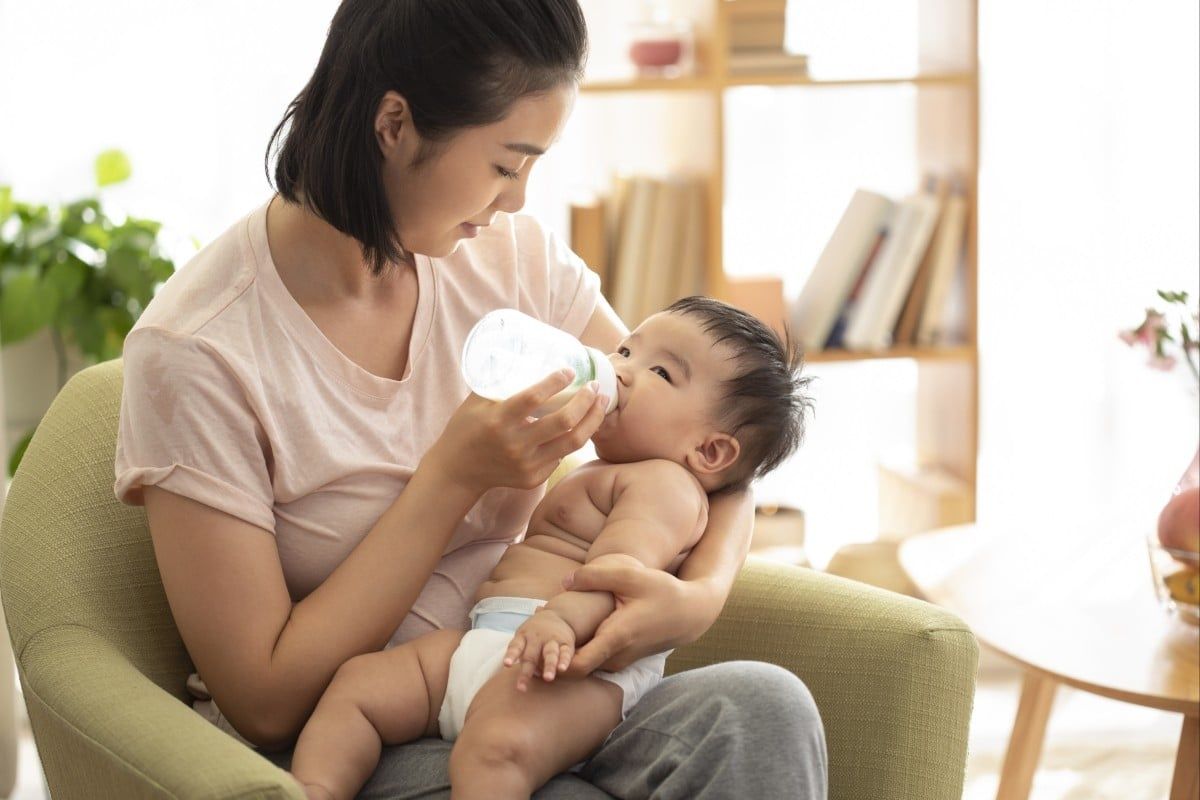
A three-month-old baby in Guangdong province required emergency intensive care after his parents unknowingly poisoned him by preparing infant formula with boiled vegetable juice. The child's body developed a purple discoloration, his lips turned a distinctive purplish-blue, and he began struggling to breathe—alarming symptoms that prompted his parents to rush him to Zhongshan Women and Children's Hospital for urgent treatment. The severity of his condition underscored how quickly nitrite toxicity can compromise an infant's vital functions.
The parents had made what they believed was a nutritious decision. Reasoning that vegetable juice would provide superior nutritional value compared to plain water, they incorporated home-prepared vegetable broth into their baby's milk formula. This well-intentioned but dangerously misguided approach reflected a common misconception among some caregivers that natural ingredients automatically confer greater health benefits than standard feeding protocols. What they did not understand was the chemical transformation that occurs during the cooking process.
Physicians at the hospital quickly identified nitrite poisoning as the underlying cause of the infant's distress. Nitrites are compounds that form when vegetables undergo extended boiling, a process that concentrates these naturally occurring chemicals to toxic levels. When such contaminated liquid enters a baby's digestive system and bloodstream, the consequences are swift and potentially life-threatening. The medical team's rapid diagnosis was crucial in preventing permanent organ damage or fatality.
The infant's physiological vulnerability proved central to understanding why this accident occurred. At three months of age, a baby's digestive tract and kidney function remain incompletely developed, rendering these systems incapable of processing or filtering out high concentrations of nitrates and nitrites. The immature kidneys cannot effectively eliminate these compounds, allowing them to accumulate in the bloodstream at dangerous levels. This developmental limitation means that substances considered safe for older children or adults can prove catastrophic for newborns and very young infants.
Once nitrite reaches the circulatory system, it interferes with the fundamental oxygen-delivery mechanism on which all human life depends. The compound binds to hemoglobin molecules within red blood cells, reducing the blood's capacity to carry oxygen throughout the body. This explains the distinctive purple and bluish discoloration that appeared across the baby's skin, mouth, and nail beds—visible evidence of oxygen-starved tissues struggling to maintain function. The respiratory distress the child experienced reflected his body's desperate attempt to compensate for this compromised oxygen transport.
After two days of hospital care and medical intervention, the baby was successfully discharged in mid-June. His recovery, while fortunate, underscores the narrow margin between a near-fatal outcome and a second chance. The case has prompted pediatricians across China to reiterate critical guidance about infant feeding practices. Medical professionals now emphasize that formula powder should be reconstituted using only warm water—no substitutes.
Dr. Cao Qi, a pediatrician at Nanning No 1 People's Hospital in Guangxi Zhuang autonomous region, issued a stark warning through social media channels, stressing that delays of even minutes in seeking emergency care for suspected nitrite poisoning can prove fatal. He advocated for parental awareness of the specific warning signs: cyanosis (skin discoloration), respiratory difficulty, and behavioral changes. Cao also addressed a broader cultural pattern in which parents sometimes experiment with non-standard feeding methods based on personal beliefs about optimal nutrition or perceived wellness trends.
The pediatrician cautioned against the assumption that natural foods automatically suit the delicate requirements of newborns and very young infants. This message carries particular resonance in markets where wellness trends and traditional folk remedies exercise significant influence over caregiving decisions. What works for adults or older children frequently poses serious risks to babies whose physiological systems operate under entirely different constraints. The line between nutritional enhancement and accidental poisoning can blur quickly when caregivers lack understanding of how cooking processes alter food chemistry.
China's social media ecosystem has periodically highlighted cases of parents adopting unconventional feeding approaches with dangerous consequences. A particularly alarming incident the previous year involved a 52-day-old infant in Henan province who was hospitalized after his grandmother added honey to his water. That child contracted botulism from Clostridium botulinum bacteria naturally present in raw honey—a substance known among medical professionals to pose serious risks to infants under one year of age yet misunderstood by many caregivers as a harmless natural sweetener.
These recurring incidents reflect a tension between parental desire to optimize their child's health through natural or enhanced nutrition and the medical reality that infant feeding requires adherence to specific, evidence-based protocols. The cases gaining attention on social platforms have prompted broader discussions about infant nutrition education and the importance of consulting healthcare providers before introducing non-standard ingredients or preparations. For Malaysian and Southeast Asian parents, these incidents serve as important reminders that pediatric guidance exists not through arbitrary restriction but through accumulated medical knowledge about what developing infants can safely tolerate.
The Guangdong case has reinvigorated calls for better parental education regarding which substances are genuinely appropriate for different developmental stages. Healthcare providers across the region emphasize that formula feeding protocols are designed specifically around the immature digestive and metabolic capacities of very young infants. Deviations from these protocols, regardless of perceived nutritional advantage, introduce uncontrollable risks. The baby's recovery provides a sobering but ultimately instructive lesson for families considering similar modifications to their infants' feeding routines.

