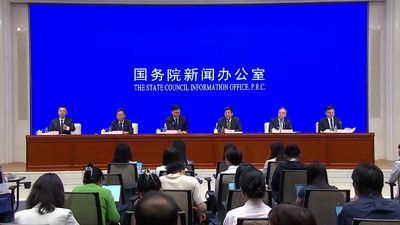
Beijing has categorically refuted allegations of coercive labour practices in the Xinjiang Uygur autonomous region, with senior government officials dismissing claims made by Western organisations and media outlets as unfounded. Chen Ruifeng, heading the National Ethnic Affairs Commission, delivered the statement on Wednesday, arguing that constitutional safeguards and a comprehensive legal framework explicitly prohibit such practices across the country.
The Chinese position rests partly on newly enacted legislation designed to reinforce worker protections. The Law on Promoting Ethnic Unity and Progress, adopted in March and set to take effect on July 1, introduces specific provisions governing cross-regional employment arrangements. These measures address rights protection and legal assistance mechanisms for workers moving between provinces, with particular emphasis on safeguarding the interests of labourers from ethnic minority communities. Officials contend that this legislative framework demonstrates Beijing's commitment to transparent, regulated employment practices rather than coercive systems.
According to Chen's account, individuals from Xinjiang who seek work outside their home region do so entirely by choice, driven by personal ambitions to enhance household finances and develop professional skills. The government characterises such labour mobility as a rational response to economic opportunity, arguing that rural workers and urban job-seekers exercise genuine agency in deciding whether and where to seek employment. This framing directly contradicts external reports suggesting that official pressure or administrative mechanisms compel participation in labour transfers.
The employment figures cited by Beijing paint a picture of rapid job expansion. Over the past five years, Xinjiang's urban employment sector has grown by more than 2.39 million positions through diverse policy initiatives. Agricultural workers, meanwhile, have undertaken approximately 16.1 million work trips outside their home communities during the same period. These statistics underpin the government's argument that economic opportunity, rather than coercion, drives labour movement in the region.
Income growth among Xinjiang residents provides additional context for the government's narrative. Urban residents' per capita disposable income has increased at an average annual rate of 5.3 per cent, whilst rural incomes have grown at 8.1 per cent annually over five years. Officials present these figures as evidence that employment programmes have tangibly improved living standards, particularly for rural populations traditionally facing limited economic opportunities. However, external observers have raised questions about whether such aggregate statistics adequately reflect conditions across all demographic groups or adequately measure worker agency and treatment.
The dispute over Xinjiang's labour practices represents a significant point of contention between Beijing and Western governments and human rights organisations. International bodies and media outlets have documented concerns regarding the scale of labour programmes, the degree of voluntary participation, and working conditions in certain industries. China's categorical denials and emphasis on economic gains reflect a fundamentally different framing of employment mobility—one centred on development and living standards rather than individual autonomy and monitoring of workers.
For Southeast Asian nations, this dispute carries particular relevance. The region hosts increasing numbers of Chinese investors and labour programmes, whilst several ASEAN countries themselves operate substantial cross-border labour systems. How international organisations assess labour practices in Xinjiang may influence regional standards and expectations regarding worker treatment and voluntary participation in employment schemes. Malaysia, Thailand, and other nations with significant migrant workforces face ongoing pressure to strengthen labour protections and ensure compliance with international standards.
The new legislation highlighted by Chen represents Beijing's attempt to create a regulatory framework that addresses both economic development and worker protections. By establishing what officials describe as a fair employment policy system alongside labour rights mechanisms, the government seeks to demonstrate that job creation and safeguards are not mutually exclusive. Whether such frameworks adequately protect workers from coercion, however, remains contested between Chinese authorities and international critics.
The timing of these statements and legislative changes reflects broader international scrutiny of Xinjiang policies. Western governments and advocacy organisations have maintained that serious concerns exist regarding labour practices and worker autonomy in the region. Beijing's repeated assertions of constitutional protections and economic benefits suggest a determination to reshape the narrative around Xinjiang through emphasis on legal frameworks and statistical achievements rather than engagement with specific allegations of coercion.
As this dispute continues, the characterisation of labour mobility remains central. China frames Xinjiang employment programmes as voluntary mechanisms delivering prosperity to workers of all ethnic backgrounds. External observers emphasise concerns about administrative pressure, limited alternatives, and inadequate worker protections. These competing narratives reflect broader disagreements about development models, state authority, and worker rights that extend beyond Xinjiang to encompass labour practices across China and the wider region.

