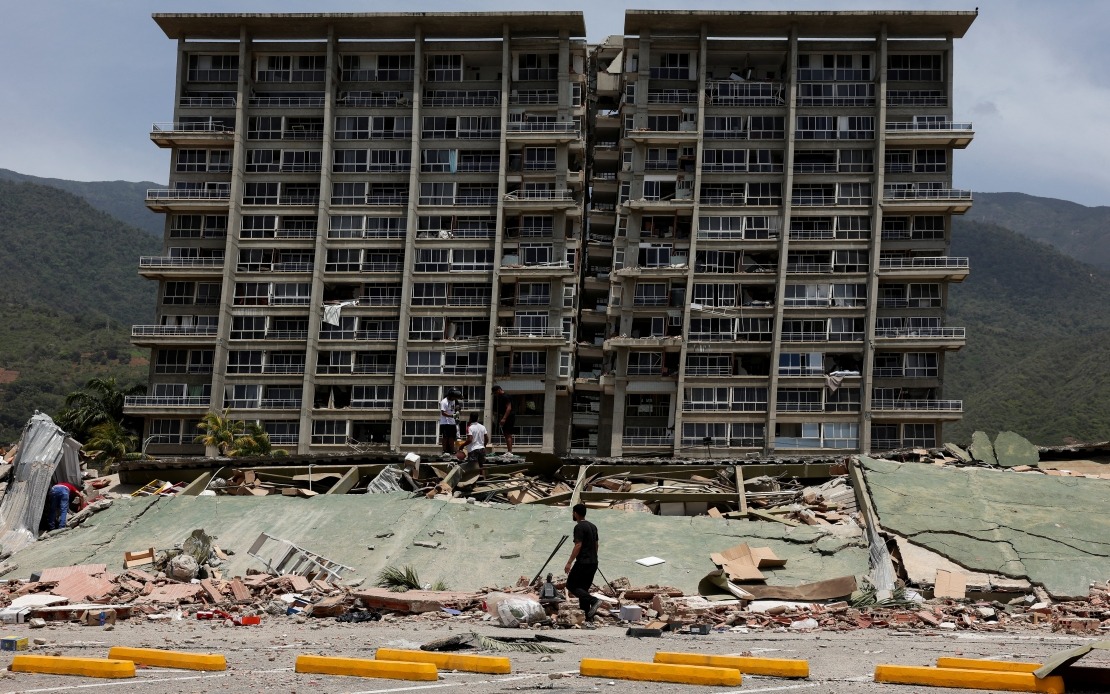
Canada has committed an additional US$5 million in humanitarian assistance to address the urgent crisis facing Venezuela following a series of devastating earthquakes, the country's Foreign Ministry announced on Thursday. The allocation represents a substantial portion of Canada's broader regional humanitarian engagement and underscores the scale of the emergency unfolding across Venezuelan communities.
The earthquakes have inflicted what officials describe as catastrophic damage across affected regions, with the full extent of casualties and destruction still emerging as rescue and assessment operations continue. Canadian officials have indicated that the toll in human lives has been considerable, and the physical destruction threatens to compound existing challenges facing Venezuela's already strained infrastructure and economy.
Canadian Foreign Minister Anita Anand characterised the devastation as heartbreaking, noting that families have suffered irreplaceable losses and that entire communities have been fractured by the disaster. Her statement emphasised Canada's solidarity with the Venezuelan people during this critical period, reflecting the humanitarian dimension of bilateral relations between the two nations.
The scale of displacement and vulnerability is expected to be substantial. Preliminary assessments suggest that hundreds of thousands of individuals may require assistance, ranging from emergency shelter to food security and access to clean water. This projection has prompted Canadian authorities and their humanitarian partners to prioritise rapid expansion of relief operations to reach the most vulnerable populations before conditions deteriorate further.
The newly announced funding will flow to experienced humanitarian organisations already operational in Venezuela, enabling them to deliver essential services including emergency food supplies, potable water distribution, sanitation infrastructure support, and medical services. Beyond these immediate needs, the assistance will support protection services for displaced persons and logistics coordination to ensure aid reaches remote or severely affected areas where access may be compromised.
This contribution builds upon nearly US$4.5 million allocated earlier in 2024 specifically to address humanitarian needs within Venezuela. The combined commitment of approximately US$9.5 million reflects Canada's sustained engagement with Venezuelan humanitarian challenges beyond this earthquake crisis, acknowledging pre-existing vulnerabilities and displacement issues affecting the nation.
For Malaysian and Southeast Asian observers, Canada's rapid deployment of humanitarian resources offers perspective on international response mechanisms to natural disasters within the Western Hemisphere. The commitment demonstrates how developed nations mobilise resources when allies and regional partners face catastrophic events, providing potential lessons for regional coordination frameworks across Asia-Pacific nations frequently vulnerable to seismic and meteorological hazards.
Canadian officials have committed to ongoing monitoring of the situation as circumstances evolve, signalling that the US$5 million represents an initial response rather than a final assessment of required assistance. The ministry indicated that detailed information regarding fund allocation will be released within days, allowing humanitarian partners and affected populations to understand how resources will be distributed across priority sectors and geographic areas.
The coordination between Canadian authorities and regional partners alongside international humanitarian organisations reflects the complexity of disaster response in Venezuela, where political tensions and economic constraints have historically complicated aid delivery. Canada's engagement with both governmental and non-governmental actors suggests an attempt to navigate these complexities while ensuring assistance reaches those most desperately in need.
The earthquakes strike at a particularly vulnerable moment for Venezuela, where economic deterioration and political instability have already created significant humanitarian pressures. The natural disaster compounds existing food insecurity, healthcare access challenges, and infrastructure deficits, potentially accelerating migration pressures and displacement that could have regional implications across the Caribbean and Central America.
From a broader hemispheric perspective, the Canadian response reflects established protocols within the Organisation of American States and international humanitarian frameworks governing disaster response coordination. However, the particular configuration of Venezuelan governance challenges means that effective aid delivery requires sophisticated partnerships and diplomatic engagement beyond typical disaster relief operations.
Canadian officials remain in consultation with regional partners and humanitarian organisations to ensure aid mechanisms remain responsive to emerging needs. This flexibility acknowledges that initial assessments of disaster impact frequently underestimate actual requirements as damage surveys progress and displaced populations' needs become more apparent in the days and weeks following impact.

