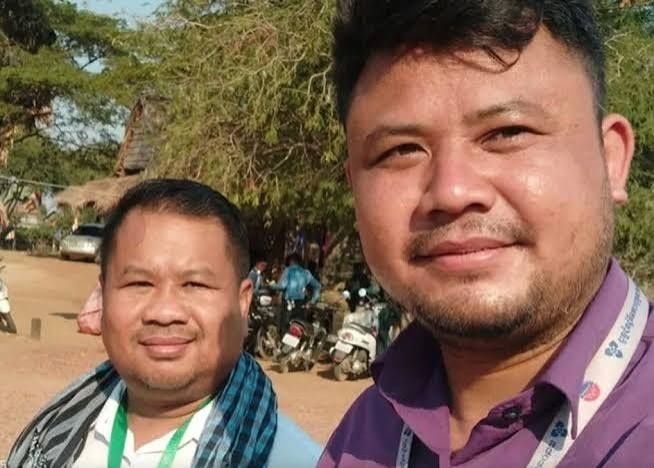
Cambodia's Supreme Court faced a consequential decision in late June regarding the treason convictions of two broadcast journalists who documented military activity near the kingdom's volatile eastern frontier with Thailand. The case of Phorn Sopheap from Battambang Post TV Online and Pheap Pheara of TSP 68 TV Online has become a focal point in broader concerns about judicial independence and press freedom in the Southeast Asian nation, occurring against a backdrop of heightened scrutiny over the government's approach to criticism and dissent.
The two men were arrested in July 2023 while returning from assignments covering border hostilities, accused of posting photographs taken within a restricted military zone to Facebook. Both maintained their innocence, asserting they possessed authorisation to access the location where they captured their images. They appealed to the Supreme Court seeking to reverse their convictions and 14-year sentences handed down by Siem Reap Provincial Court in December.
The photographs in question carried significant diplomatic weight. One image depicting land mines was subsequently circulated by Thai media organisations and appeared to substantiate Bangkok's assertions that Cambodian forces had recently deployed mines along the border, resulting in casualties among Thai military patrols. Cambodia's government had categorically denied deploying land mines, citing its adherence to international treaties prohibiting such weapons. Officials instead suggested that discovered mines were remnants from Cambodia's decades-long civil conflict, which concluded in the late 1990s.
Border violence between the two neighbours throughout 2023 proved devastating in scale. Clashes in July and December displaced several hundred thousand civilians across both Cambodia and Thailand, with approximately 100 soldiers and civilians killed in the conflict. A ceasefire implemented in December has largely held, though underlying tensions persist and periodic incidents continue to strain bilateral relations in a region already marked by historical territorial disputes.
The lower appellate court upheld the original convictions in March, after which international pressure mounted considerably. More than a dozen press freedom organisations from around the world issued a coordinated statement urging the government to abandon prosecution, citing concerns about fundamental principles of journalistic practice and freedom of expression.
The timing of the Supreme Court hearing underscored broader anxieties about Cambodia's judicial trajectory. The announcement came days after the same court confirmed the incitement conviction of Rong Chhun, a 56-year-old opposition figure, who was found guilty of fomenting social unrest following meetings with villagers displaced by state-backed development projects. International observers characterised the Rong Chhun case as emblematic of a pattern in which the government weaponises the legal system against opponents and activists.
These legal actions unfolded under the leadership of Prime Minister Hun Manet, who assumed office in August 2023 following his father Hun Sen's departure after nearly four decades in power. Despite expectations that Hun Manet's Western education and generational change might usher in political reform, Cambodia has demonstrated minimal movement toward greater pluralism or expanded civil liberties. The younger Hun Manet has largely maintained the governing approaches of his predecessor, raising questions about whether institutional constraints or deliberate policy choices underpin the continuity.
Human Rights Watch pointed to the cases as evidence of Cambodia's judicial system operating under political control rather than independence. The organisation argued that courts lack meaningful separation from the ruling party's interests. Government representatives defended the judiciary's autonomy, claiming the Supreme Court operates free from political interference—a position contradicted by consistent patterns documented by international observers over many years.
Global press advocacy groups have been particularly vocal in condemning Cambodia's handling of journalism-related prosecutions. The Committee to Protect Journalists characterised the government's approach as deploying deliberately vague national security legislation to criminalise routine reporting work, a tactic that enables authorities to suppress coverage they deem unfavourable while maintaining a veneer of legal justification. This mechanism reflects a common challenge across Southeast Asia, where governments frequently leverage ambiguous statutes to restrict media scrutiny.
Cambodia's international standing on press freedom has deteriorated substantially. The 2025 Reporters Without Borders World Press Freedom Index ranked the nation 161st among 180 countries and territories, placing it in the category of states experiencing "very serious" restrictions on media freedom. This positioning reflects decades of structural constraints on journalism, from legal harassment to resource limitations and self-censorship driven by fear of government retaliation.
The Supreme Court's anticipated decision carries significance extending beyond the two journalists themselves. The ruling will signal whether Cambodia's highest judicial institution can operate with sufficient independence to overturn convictions that international observers view as fundamentally incompatible with basic press freedom principles. For Malaysian and other regional observers, the outcome will demonstrate whether Hun Manet's government represents genuine reform or merely a continuation of authoritarian governance under new management. The case also illustrates how border conflicts can intersect with domestic political repression, with military operations providing justification for suppressing reporting and silencing critics.

