Cambodia is pursuing an ambitious economic transformation by actively courting South Korean investors in high-technology sectors, marking a deliberate shift away from the nation's decades-long dependence on garment production and labour-intensive manufacturing. Deputy Prime Minister Sun Chanthol recently led a high-level Cambodian delegation through South Korea, conducting a series of strategic company visits and hosting the 2026 Incheon-Cambodia Investment Roadshow on June 16, underlining the government's determination to diversify its industrial base into more sophisticated and value-added industries.
The visit demonstrated Cambodia's serious intent to reposition itself within regional supply chains that are rapidly evolving towards electric vehicles, advanced electronics, and digitalised services. During the roadshow, Chanthol emphasised that Cambodia's Royal Government stands ready to provide comprehensive facilitation and investment incentives to Korean companies willing to establish or expand operations in the Kingdom. This messaging signals a fundamental recognition among Cambodian policymakers that the country's future prosperity depends less on competing on labour costs alone and more on integrating into knowledge-intensive production networks where premium wages and skills development become possible.
The delegation's visit to Daejoo KC Group, a diversified South Korean conglomerate operating in metallurgy, chemicals, logistics, construction, automotive components and energy, highlighted Cambodia's existing capacity to anchor major regional manufacturing operations. Through its Cambodian subsidiaries Camko Motor and Camko Infracore, Daejoo KC already assembles Hyundai vehicles for domestic consumption and manufactures automotive wire harnesses for export, generating approximately 500 employment opportunities. Rather than view this as sufficient, Chanthol encouraged the group to expand further into sectors where it already possesses South Korean expertise, suggesting Cambodia sees itself as capable of absorbing increasingly complex manufacturing verticals.
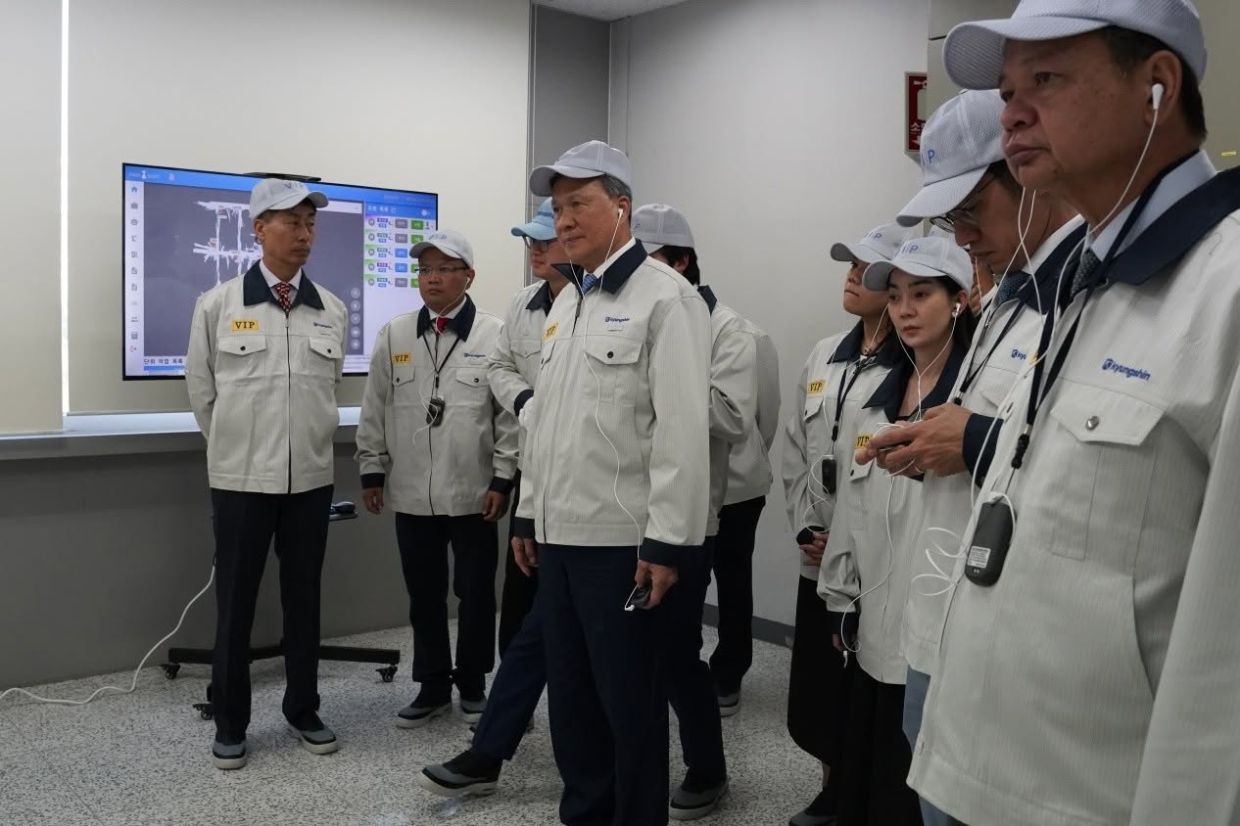
Particularly revealing was the deliberate focus on Kyungshin Co., Ltd., a company specialising in automotive electronic components and advanced wire harness manufacturing for electric vehicles. Kyungshin's established presence since 2012 in Kandal Province, where its facility employs 1,467 workers and represents some US$20 million in invested capital, demonstrates that Cambodia can successfully host sophisticated automotive supply operations. The company manufactures wiring harnesses, connectors, junction blocks and electrical systems specifically engineered for electric vehicles, placing it at the technological frontier of automotive innovation. By showcasing such operations to other Korean investors, Cambodia seeks to prove its credibility as a location for next-generation manufacturing that extends well beyond basic assembly.
The strategic rationale underlying Cambodia's pivot is compelling for Southeast Asia more broadly. As global automotive manufacturers accelerate their transition towards electric mobility, companies throughout the region are repositioning their supply chains to capture roles in EV component production, battery-related manufacturing, and sophisticated electronics integration. Cambodia's geographic proximity to existing Korean automotive clusters, combined with its lower labour costs relative to South Korea and improving infrastructure, positions it as an attractive alternative for Korean companies seeking to maintain regional production while managing cost structures. Moreover, Cambodian labour remains more affordable than in Thailand or Vietnam, creating a competitive advantage in labour-intensive assembly stages of high-tech manufacturing.
Beyond manufacturing, the Cambodian delegation's visit to Incheon Baek Hospital signalled that Cambodia's diversification strategy extends into services and technology sectors beyond physical production. Chanthol identified healthcare infrastructure and advanced medical technology as key government priorities, requesting technical assistance, knowledge transfer and training programme collaborations with the hospital. This dimension of the mission acknowledges that modern economic development increasingly depends on developing service sectors, training capabilities, and institutional capacities that support both private enterprise and public welfare. Digital healthcare systems, international medical standards, and specialist training create employment opportunities for educated workers while enhancing overall economic productivity.
Cambodia's investment law reforms feature prominently in the government's pitch to Korean investors. The Law on Investment of the Kingdom of Cambodia provides attractive fiscal incentives, macroeconomic stability guarantees, and investment protection mechanisms designed to reduce business risk for foreign operators. These legal frameworks are essential for Korean companies considering whether to relocate manufacturing capacity to Cambodia or establish new regional bases. The credibility of such commitments depends partly on Cambodia's demonstrated willingness to enforce them consistently and adapt them to investor needs, yet the explicit emphasis on these incentives during official missions suggests the government views legal certainty as a competitive differentiator.
The composition of the Cambodian delegation itself merits attention as a window into how the government is coordinating its investment promotion strategy. The inclusion of the Cambodian ambassador to South Korea, officials from the Council for the Development of Cambodia, representatives from the Ministry of Commerce, Korean Chamber of Commerce representatives in Cambodia, the Cambodian Oknha Association and the Cambodia Chamber of Commerce demonstrates an integrated approach linking diplomacy, regulatory policy, and private sector engagement. This coordinated effort suggests that Cambodia recognises investment attraction requires alignment across multiple institutional actors rather than relying on government alone to negotiate with foreign investors.
For Malaysia and the broader Southeast Asian region, Cambodia's strategic repositioning carries significant implications. As Cambodia succeeds in attracting more Korean automotive and electronics manufacturers, it effectively strengthens competitive pressure on other regional economies to similarly upgrade their industrial bases. Malaysian investors and manufacturers should monitor whether Cambodian developments create opportunities for value-chain partnerships, component sourcing, or technology licensing arrangements. Simultaneously, Malaysia's more advanced industrial base and superior infrastructure must continue demonstrating advantages that justify investment relative to lower-cost alternatives emerging throughout Southeast Asia.
The garment sector remains a substantial employment provider in Cambodia, likely accounting for tens of thousands of direct and indirect jobs. The government's pivot towards high-technology sectors does not imply abandonment of existing industries, but rather a deliberate strategy to develop new growth engines alongside traditional manufacturing. This dual-track approach acknowledges that transitioning entire workforces from garments to advanced manufacturing takes years and requires substantial worker retraining, capital investment, and infrastructure development. Cambodia's success in attracting automotive and electronics manufacturers will likely depend on whether it can simultaneously maintain social stability in regions historically dependent on garment exports while gradually building the skilled labour pools that high-tech sectors demand.
Cambodia's investment roadshow strategy reflects broader regional trends whereby Southeast Asian governments compete intensely for manufacturing investment displaced by rising Chinese labour costs and geopolitical considerations. South Korea's own experience diversifying beyond low-cost labour manufacturing provides a relevant model that Cambodian policymakers appear to be studying. However, success requires not merely policy announcements and company visits but sustained commitment to infrastructure development, human capital formation, and institutional capacity building. The visits to existing Korean operations like Kyungshin and Daejoo KC Group offer concrete examples of Cambodia's potential, yet attracting substantially expanded investment hinges on whether the Kingdom can deliver on its promises of macroeconomic stability, regulatory predictability, and adequate logistical capabilities.
Looking forward, Cambodia's deliberate movement towards electric vehicles, automotive electronics, healthcare technology and advanced manufacturing represents a calculated long-term bet on industrial upgrading. The success of this strategy will determine whether Cambodia can graduate from being primarily a low-cost manufacturing base to becoming an integrated node within sophisticated regional production networks. For Korean investors, Cambodia offers a compelling combination of geographic location, cost advantages, and improving governance frameworks. For Cambodia itself, this strategy offers a pathway to generating higher-wage employment, developing technical expertise, and attracting knowledge-intensive activities that create greater domestic value-added than traditional garment manufacturing has historically delivered.