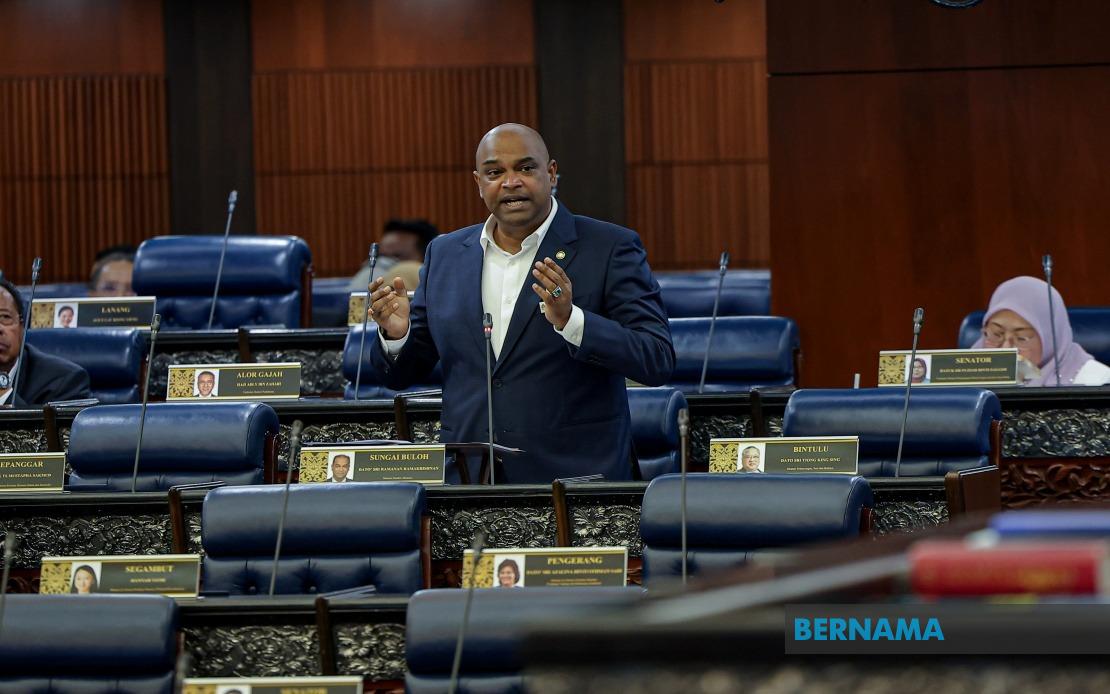
Malaysia experienced significant labour market disruption in the opening months of 2024, with 42,807 workers losing employment between January and June 12, according to Human Resources Minister Datuk Seri R. Ramanan. The figure, sourced from Social Security Organisation (SOCSO) records presented during parliamentary Question Time, underscores ongoing challenges in the employment landscape even as the economy continues its recovery phase.
The data reveals that operational challenges faced by Malaysian enterprises constitute the primary driver of these job losses. Business closures and company downsizing initiatives accounted for 17,485 retrenchments, representing 40.85 percent of the total displaced workers. This pattern highlights the vulnerability of smaller and medium-sized enterprises to economic headwinds, as well as the strategic restructuring occurring within larger corporations adapting to shifting market conditions. The concentration of retrenchment causes suggests that structural rather than cyclical factors are at play, with companies making permanent adjustments to their operations rather than temporary workforce reductions.
Geographic disparities in employment losses are pronounced across Malaysia's economic zones. Kuala Lumpur bore the brunt, accounting for 12,844 job losses or 30 percent of the nationwide total, reflecting the capital's concentration of corporate headquarters, financial services, and vulnerable retail sectors. Selangor followed with 12,360 displaced workers, demonstrating that the Klang Valley region—which encompasses both these federal territories—absorbed approximately 58 percent of all retrenchments during this period. Johor's 3,468 job losses, representing 8.1 percent, positioned the southern state as the third most affected jurisdiction. This concentration in Malaysia's economic heartland points to sector-specific vulnerabilities and the concentration of employment risk in urban commercial hubs.
The parliamentary inquiry specifically probed whether automation and artificial intelligence have accelerated business closures and downsizing, particularly in the Klang Valley's manufacturing and service sectors. This line of questioning reflects widespread public anxiety about technology-driven displacement and the perception that rapid digitalisation is fundamentally reshaping employment prospects. Ramanan's response, however, pivoted away from automation as the immediate culprit, instead positioning technological advancement as a future challenge rather than a present crisis.
The minister articulated a nuanced perspective on artificial intelligence's employment impact. Rather than characterising AI as an existential threat to current jobs, he emphasised that the technology presents an upskilling imperative. Workers must develop competency in AI-related functions to remain competitive as automation deepens across sectors. This framing positions technological displacement not as an inevitable consequence but as a preventable outcome contingent on workforce adaptation. The distinction matters significantly for policy responses and public expectations about managing the transition.
Ramanan challenged the prevailing narrative attributing job losses primarily to technological disruption. SOCSO data demonstrates that voluntary separation schemes, company downsizing, and business closures—rather than automation—drive the retrenchment statistics. This clarification carries important implications for understanding Malaysia's employment crisis. It suggests that immediate interventions should target business sustainability and structural economic challenges rather than solely focusing on reskilling for technological displacement. The distinction between technology-driven and economically-driven job losses indicates fundamentally different policy solutions.
Despite the substantial retrenchment figures, Malaysia's labour market exhibits resilience through sustained demand for workers. The MYFutureJobs portal recorded 605,168 job vacancies since January, substantially exceeding the 188,062 registered job seekers—a pool encompassing both retrenchment victims and new entrants. This significant vacancy surplus indicates persistent skill mismatches rather than aggregate labour shortage. Employers struggle to fill positions due to qualification gaps, geographic misalignment, or sectoral mismatch, suggesting that job availability exists for suitably prepared candidates. However, this dynamic also reveals a hidden challenge: displaced workers may lack qualifications that vacancies demand, creating a stranded pool of unemployed despite apparent labour shortage.
Looking beyond the immediate retrenchment crisis, technological transformation poses more substantial medium-term employment risks. A TalentCorp study identified approximately 697,000 positions potentially vulnerable to displacement through technological advancement and green economy transitions over the next three to five years. This projection, representing roughly 4.5 percent of Malaysia's current workforce, necessitates proactive intervention. Without systematic reskilling, this vulnerable cohort faces redundancy as industries transition toward sustainability and automation. The window for preventative action remains open but narrows annually as technological adoption accelerates across sectors.
The Human Resources Ministry's response encompasses multiple complementary initiatives addressing both immediate displacement and future-proofing. The Scheme for Training and Upskilling for Employability (SLaPB) and the Academy in Industry (ADI) program provide structured reskilling pathways for displaced workers and those seeking advancement. These initiatives move beyond classroom training toward industry-embedded learning models that enhance practical applicability. Crucially, these programs incorporate AI modules alongside traditional vocational content, equipping participants with both established and emerging competencies.
Digital platforms represent another component of the government's layered approach. The MyMAHIR.my platform and MyMahir SkillsLab program provide accessible training resources aligned with employer demands and future workplace requirements. These online tools democratise access to upskilling opportunities, reaching geographically dispersed workers who cannot attend centralised training facilities. By embedding AI education within broader skills development, these platforms acknowledge that future competitiveness requires familiarity with technological tools rather than specialisation in a single domain. The emphasis on platform-based learning also enables rapid curriculum adaptation as labour market demands evolve.
The broader policy challenge extends beyond individual worker preparation. The concentration of retrenchments in specific sectors and regions suggests that sectoral transformation and regional economic diversification require attention alongside workforce reskilling. Kuala Lumpur and Selangor's disproportionate job losses indicate that service sectors and commercial hubs face particular vulnerability, possibly reflecting structural changes in retail, corporate services, and finance. Supporting business viability in these sectors—through infrastructure, financing, or market access—may prove as important as reskilling displaced workers. Regional development initiatives that reduce economic concentration could distribute employment opportunities more broadly and enhance overall resilience.
For Malaysian workers navigating current employment uncertainty, the data presents both challenge and opportunity. The immediate retrenchment figures confirm real displacement risks, particularly in urban commercial centres. However, persistent labour shortages indicate that suitably trained workers remain in demand. The government's multiple reskilling initiatives, combined with strong job vacancy numbers, suggest viable pathways for displaced workers willing to invest in adaptation. The critical period extends over the coming years as technological adoption accelerates; workers who proactively develop emerging competencies will likely maintain employment security, while those resisting adaptation face mounting risks. This dynamic places responsibility simultaneously on individual workers to invest in continuous learning and on employers and government to provide accessible, relevant training platforms and supportive transition programs.

