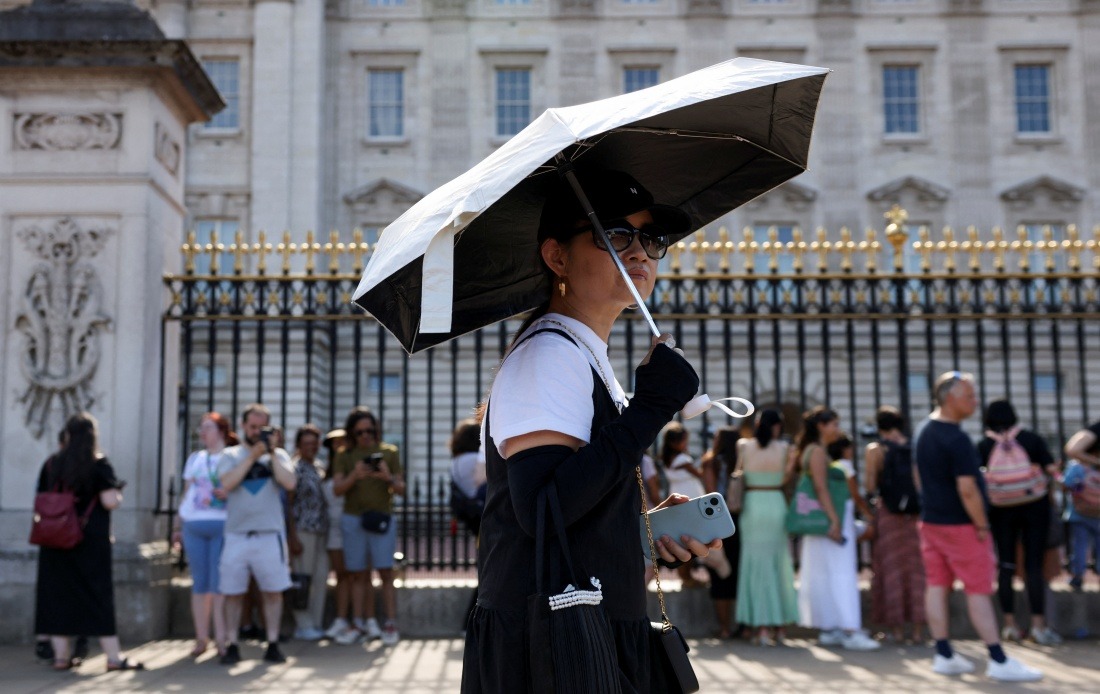
The United Kingdom's Household Division has suspended one of its most iconic ceremonial traditions this week, cancelling the famous Buckingham Palace guard change along with similar ceremonies in Windsor as the nation grapples with an exceptional heatwave. The decision, announced on Tuesday, marks a rare operational pause for these time-honoured military traditions that have captivated royal observers and tourists for generations. The move underscores the severity of the meteorological emergency unfolding across Britain, where forecasters have issued red weather warnings—the highest alert level—for multiple regions including London, Wales, and southern England.
The UK's Met Office triggered the extraordinary alert after determining that temperatures would likely shatter existing June records during the middle of the week. Projections indicate that Wednesday and Thursday will see mercury levels climb to 39 degrees Celsius, with some particularly exposed areas potentially recording even higher readings. This level of heat remains exceptionally unusual for June in Britain, a month when temperatures typically remain more moderate. The intensity and timing of this thermal event has prompted authorities across multiple sectors to fundamentally alter normal operations, with the guard ceremonial suspension representing just one among many significant disruptions to daily life.
The Household Division's statement explained that the wellbeing of its soldiers, military horses, and assembled crowds formed the core rationale for the unprecedented cancellation. Standing in full ceremonial dress under such extreme conditions poses genuine health risks, particularly for service personnel encumbered by heavy uniforms and regalia. The military working horses—integral to these ceremonies—face even greater vulnerability to heat stress. Public safety constituted an equally pressing concern; thousands of visitors typically congregate along the processional routes, and managing large crowds in dangerous heat conditions creates serious logistical and medical challenges. Rather than eliminating all ceremonial activity entirely, the division has opted for modified arrangements designed to minimise exposure while maintaining some level of tradition.
For Wednesday's Royal Horse Guards' ceremony, the Household Division announced that proceedings will occur substantially earlier in the day when temperatures remain comparatively lower, though the full ceremonial pageantry will be curtailed. Service personnel will be positioned in shaded locations whenever possible and rotated through duty assignments more frequently, reducing individual exposure duration. These adjustments represent pragmatic compromises that acknowledge both institutional heritage and contemporary health imperatives. The approach reflects institutional learning about heat management strategies, suggesting that such modifications might recur as climate patterns continue shifting toward greater temperature extremes.
The educational sector has experienced equally dramatic disruptions. Approximately 100 schools throughout Somerset have shuttered their buildings for the duration of the red alert period. Buckinghamshire has witnessed comparable closures affecting a similar number of institutions. Gloucestershire suspended classes in more than 80 schools, whilst London itself saw nearly 10 major educational establishments cancel in-person instruction. These closures span the precise geographic areas covered by the red weather warning, concentrated heavily in southern England where heat stress represents the most acute danger. Local authorities determined that operating schools without adequate cooling infrastructure during such temperatures posed unacceptable risks to student and staff health.
For Malaysian readers and Southeast Asian observers, these developments offer instructive parallels and contrasts worth considering. While tropical and equatorial regions routinely experience temperatures in this range, British infrastructure, building design, and public health systems have evolved under the assumption of markedly cooler climate norms. Air conditioning remains far less ubiquitous in British public buildings and transport compared to Malaysian facilities specifically engineered for tropical conditions. The British response—essentially shutting down activities rather than adapting through technological cooling—reflects both the novelty of such temperatures and the absence of heat-resilient infrastructure. As climate change drives more frequent and intense heat events globally, the disparities in adaptive capacity between differently-developed regions become increasingly apparent.
The cancellation carries symbolic weight beyond immediate operational concerns. The Buckingham Palace guard change represents quintessential British pageantry, photographed by millions annually and constituting a major tourist attraction. That such an iconic ceremony should be interrupted—even temporarily—signals to both domestic and international audiences the genuine severity of the meteorological crisis. This transparency about operational constraints contrasts sharply with historical institutional tendencies to maintain ceremonial schedules regardless of circumstance. The willingness to modify tradition demonstrates that even the most tradition-bound institutions will eventually defer to contemporary health and safety imperatives when circumstances demand.
The broader heatwave reflects patterns increasingly evident across the Northern Hemisphere, where climate models have predicted more frequent and intense thermal events. The timing of this particular episode—concentrated during late June when many citizens plan summer holidays, schools remain operational, and outdoor activities peak—amplifies its disruptive impact. Earlier heat events might affect fewer people; events aligned with peak activity seasons generate cascading consequences across multiple sectors simultaneously. Infrastructure failures, electricity grid strain, and public health emergencies often cluster during such periods, creating compounding crises that test governmental and institutional response capacities.
Looking forward, Britain's experience serves as a cautionary tale for how rapidly climate change can disrupt even the most stable and well-organised societies. A nation accustomed to temperate conditions must now contemplate more frequent days when operating normally becomes physically dangerous. The economic costs accumulate rapidly—from lost school days affecting working parents and children's education, to reduced tourism revenue when iconic ceremonies vanish from schedules, to increased healthcare expenditures for heat-related illnesses. These are not merely inconveniences but genuine economic and social disruptions that compound across a population and economy unprepared for such conditions. For developing nations in tropical regions already contending with chronic heat, the British experience underscores both their existing adaptive advantages and the reality that even wealthy nations lack complete insulation from climate impacts.
The Household Division's decision ultimately reflects a fundamental reordering of priorities in response to environmental extremity. When institutional continuity and public safety conflict, contemporary authorities increasingly privilege the latter. Whether such flexibility becomes normalised—with ceremonies regularly suspended during summer heat—remains uncertain. What appears certain is that rigid adherence to pre-climate-change operational norms will become increasingly untenable. The guard ceremony will resume when temperatures moderate, but the broader question of how Britain—and indeed all nations—will adapt governance, institutional practice, and daily life to escalating climate variability remains incompletely answered, with implications extending far beyond any single cancelled pageant.

