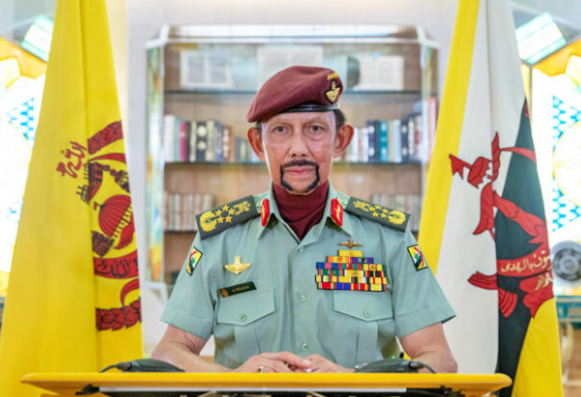
Sultan Hassanal Bolkiah has used Brunei's observance of the Islamic New Year 1448 Hijrah as an opportunity to reinvigorate national resolve around two interconnected pillars: sustained progress across economic and spiritual domains, and heightened social vigilance against emerging threats to national cohesion. The monarch's remarks underscore a governance philosophy that sees material advancement and religious commitment not as competing priorities, but as complementary dimensions requiring perpetual dedication and intentional renewal rather than passive drift into another calendar year.
The Sultan's framing of the new year carries particular weight in the Southeast Asian context, where transitions between lunar and Gregorian calendars often prompt reflection on national direction. Rather than treating the Hijrah New Year as a symbolic threshold inviting fresh starts, the monarch positioned it as a reaffirmation of ongoing obligations. He articulated that meaningful progress demands what he termed "continuous effort and commitment," a formulation that implicitly cautions against complacency even as Brunei enjoys relative stability compared to regional counterparts grappling with conflict and instability.
Central to the Sultan's message was a taxonomy of national priorities spanning both material and non-material spheres. Within the material domain, he identified economic vitality and physical infrastructure development as foundational pursuits requiring sustained attention. The spiritual dimension encompasses three interconnected elements: the deepening of Islamic knowledge, the strengthening of educational systems that transmit this knowledge across generations, and dakwah—the active promotion and teaching of Islamic principles throughout society. This holistic framework suggests the Sultan views neither economics nor spirituality as sufficient unto itself; rather, the nation's resilience depends on parallel advancement in both registers.
Gratitude formed an essential rhetorical anchor in the Sultan's remarks, reflecting the Brunei government's emphasis on acknowledging blessings before articulating further ambitions. He invited citizens and residents to collectively express appreciation for the opportunity to mark another Hijrah New Year, framing this gratitude as preceding requests for continued divine blessing. The specific invocation of hope that the coming year will generate "good deeds and beneficial efforts for ourselves, our families and our beloved country" reveals a three-tiered vision of religious observance that moves from individual piety through familial responsibility to national interest.
The monarch did not shy from acknowledging the turbulent global landscape, noting that the world remains fractured by numerous conflicts and challenges. His observation that warfare yields little beyond suffering and that no participant escapes its consequences demonstrates awareness of regional anxieties, particularly relevant given Southeast Asia's experience with terrorism, maritime disputes, and proxy conflicts. By contrasting Brunei's relative insulation from such turmoil with conditions elsewhere, the Sultan sought to foster appreciation for the nation's current peace and stability while avoiding complacency about external threats.
The Sultan attributed Brunei's freedom from conflict and natural disasters not to geography alone but to the spiritual practices embedded in national life—specifically prayers, zikir (remembrance of Allah), and Quranic recitation. This attribution carries implicit messaging about the relationship between religious devotion and national security, suggesting that spiritual wellness and physical safety are intimately intertwined. For Malaysian and broader Southeast Asian observers, this articulation reflects a governance approach that leverages Islam not merely as a faith tradition but as a foundational logic for state resilience and citizen wellbeing.
However, the Sultan pivoted sharply to identify internal security challenges that demand urgent collective action, particularly drug-related offences, theft, and other criminal activities. His characterization of these crimes as tarnishing national reputation and contradicting Islamic principles framed law enforcement not as a purely technical or administrative matter but as a religious and patriotic imperative. This positioning proves significant for Malaysia and other Muslim-majority nations wrestling with similar challenges; the Sultan's approach suggests that confronting crime requires not just enforcement capacity but active religious education that builds intrinsic individual motivation toward lawful conduct.
The monarch explicitly tasked security agencies and religious authorities with coordinated, swift action against criminal elements, implying that conventional policing alone proves insufficient without parallel strengthening of religious education and dakwah efforts. By assigning responsibility for crime prevention to religious institutions, the Sultan acknowledged that sustainable security rests on reshaping individual values and community norms rather than relying solely on deterrence through punishment. This framework carries implications for how Malaysia and neighbouring states approach religious authority's role in public order and citizen formation.
The Sultan's call for Muslims to intensify prayer for national protection while remaining vigilant against complacency reflects a philosophical tension he sought to resolve: how to balance trust in divine providence with active human responsibility. His formulation—that protection comes through prayer and remembrance of Allah while requiring heightened alertness and rejection of negligence—avoids fatalism while grounding security efforts in spiritual practice. He presented safeguarding the ummah (Islamic community) and the nation as collective responsibilities that can succeed only through the convergence of divine blessing and sustained human vigilance.
For Malaysian policymakers and analysts, the Sultan's address offers a compressed case study in Islamic governance that attempts to integrate economic ambition, spiritual depth, and security imperatives within a single coherent vision. The challenge implicit in his remarks—maintaining simultaneous attention to material progress, religious renewal, and crime prevention—mirrors difficulties Kuala Lumpur confronts as it navigates post-pandemic economic recovery, demands for greater Islamic accountability, and persistent criminal and security threats. Brunei's smaller scale and distinct governance structure do not render the tensions irrelevant; rather, they illuminate the difficulties of simultaneously advancing multiple national priorities when resources and public attention remain limited.
The Sultan's New Year message also signalled continuity of Brunei's Islamic governance model during a period when both Malaysia and Singapore navigate questions about the proper relationship between religious institutions and state authority. By explicitly enlisting religious education and dakwah as tools for combating criminality, the Sultan implied that contemporary governance challenges require religious dimensions—a position that resonates across the region even as specific implementations vary. His emphasis on shared responsibility and collective vigilance positioned citizens not as passive beneficiaries of state protection but as active participants in maintaining national integrity.
In extending New Year wishes from the palace to all citizens and residents alike, the Sultan bridged formal governance with popular religiosity, acknowledging that Brunei's stability depends on inclusive social cohesion. The recognition of both citizens and residents—categories that often experience distinct relationships to state authority—suggests an integrative vision of national community. This concluding gesture underscores that while the Sultan articulated demanding expectations around vigilance and effort, these demands extend to and depend upon all segments of Brunei's population, a principle that carries weight as Malaysia and Singapore similarly grapple with questions about belonging and shared national purpose in demographically complex societies.