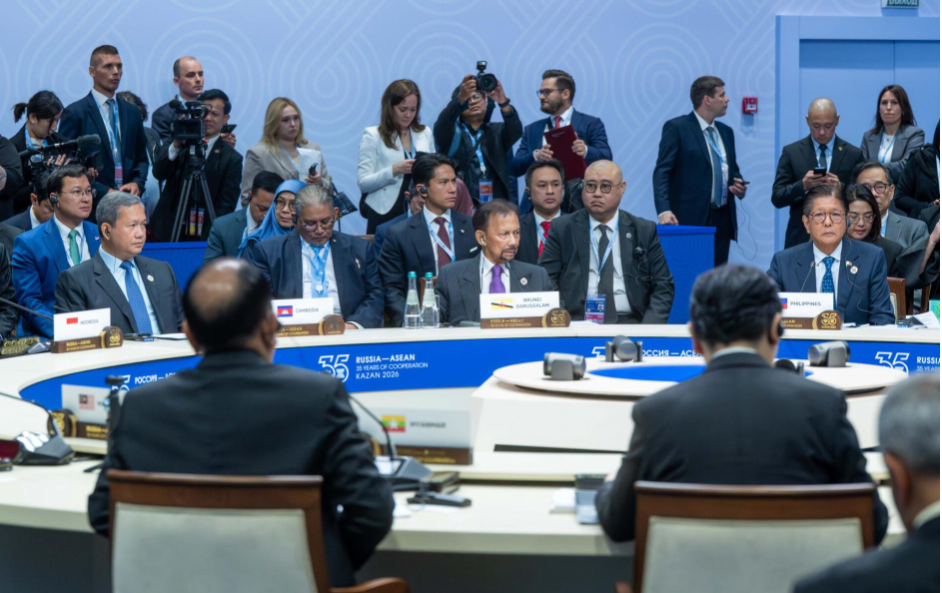
Brunei's Sultan Hassanal Bolkiah has thrown his weight behind closer ties with Russia, using a major regional summit in Kazan to spotlight the enduring partnership between Southeast Asia's main bloc and Moscow. Speaking at the Asean-Russia Commemorative Summit at the Kazan Expo International Exhibition Centre on Thursday, June 18, the Sultan expressed gratitude to Russian President Vladimir Putin for hosting the gathering of regional leaders and emphasised that the relationship had matured into a crucial pillar of regional stability.
The three-and-a-half-decade bond between Asean and Russia has proven resilient despite shifting geopolitical landscapes, the Sultan noted, adding that cooperation had broadened meaningfully across all three pillars of the Asean Community framework—political-security, economic, and socio-cultural dimensions. This observation carries particular weight given the region's navigation of competing great-power interests and the need for Asean to maintain strategic autonomy. The Sultan's remarks suggest Brunei views the Russian partnership not as a counterbalance to other powers but as a legitimate avenue for pursuing regional interests independently.
Institutional engagement between the two sides has yielded tangible outcomes in areas ranging from trade and investment to cultural exchanges and educational partnerships. The Sultan highlighted how people-to-people connections have strengthened, fostering mutual understanding and creating foundations for sustained cooperation beyond government-level interactions. This emphasis on human capital and grassroots ties reflects an understanding that durable partnerships require deep social and cultural roots, not merely transactional governmental arrangements.
Looking ahead to Asean's Vision 2045 roadmap, the Sultan positioned Russia as a necessary collaborator in tackling transnational challenges that transcend bilateral or regional boundaries. Political tensions, economic fragmentation, climate change and technological disruption represent existential threats that require coordinated multilateral responses. Asean's engagement with Russia on these fronts demonstrates the bloc's commitment to inclusive rather than exclusive frameworks, a positioning crucial for maintaining its relevance as an independent voice in global affairs.
The Sultan's particular emphasis on energy security reflects Southeast Asia's vulnerability to global supply shocks and geopolitical disruptions affecting fuel supplies and prices. Russia, as a major energy producer, occupies a significant position in discussions around regional energy resilience. Similarly, food security concerns—driven by climate variability and supply chain fragilities exposed by recent global crises—feature prominently in Asean-Russia deliberations. These practical cooperation areas ground the partnership in concrete mutual benefits rather than ideological alignment.
Disaster management and non-traditional security challenges, including transnational crime, pandemic preparedness and cyber threats, represent domains where Asean and Russia can pool expertise and resources. The region's exposure to natural disasters and its geographical position along key maritime routes make such cooperation strategically rational. Brunei's advocacy for these areas reflects Southeast Asia's pragmatic approach to threat assessment and multilateral problem-solving.
Educational and training initiatives underpin the Sultan's vision for the next phase of partnership development. Building professional networks, facilitating student exchanges and developing technical expertise across sectors from energy to disaster response creates institutional memory and interpersonal relationships that transcend political cycles. This long-term investment in human capital indicates both sides are committed to sustainable rather than episodic cooperation.
The formal adoption of the Kazan Declaration 2026 and supplementary documents—including a strategic partnership roadmap through 2030 and joint statements on energy and cultural cooperation—translates the Sultan's rhetoric into binding commitments. These frameworks provide structure and measurable objectives, enabling bureaucracies and private sectors to operationalise stated intentions. For Malaysian observers, these developments signal that Asean's largest neighbours and dialogue partners are deepening institutional ties in ways that could influence regional dynamics.
The second plenary session, organised around Eurasian integration processes, broadened the summit's scope beyond bilateral Asean-Russia matters. Participation from the Shanghai Cooperation Organisation and Eurasian Economic Commission underscored how regional integration movements across Eurasia intersect with Southeast Asia's interests. This wider aperture acknowledges that regional development in one part of the continent inevitably affects others, requiring awareness and coordination.
The concurrent Asean-Russia Business Forum, held on June 17, reflected recognition that sustainable partnerships require private-sector engagement and commercial dynamism. Business networks often prove more resilient and adaptive than governmental channels alone, creating parallel pathways for cooperation that survive diplomatic tensions. The Sultan's welcoming remarks toward business outcomes indicate Brunei's interest in economic diversification and commercial opportunities within the partnership framework.
For Malaysia and other Asean members, Brunei's advocacy at Kazan carries implications for how the bloc positions itself as it navigates great-power competition without sacrificing principles of non-alignment and pragmatic flexibility. The Sultan's framing—emphasising shared challenges, mutual benefits and institutional strengthening—offers a template for engagement that respects sovereignty while pursuing collective interests. This approach potentially insulates Asean from pressure to choose sides in geopolitical rivalries while maintaining relationships with all major powers.
The visit by Minister of Foreign Affairs Prince 'Abdul Mateen alongside the Sultan underscored the diplomatic significance assigned to the summit, positioning the engagement as a matter of state rather than routine functional cooperation. Brunei's active role in championing Asean-Russia ties, combined with its recent Asean chairmanship experience, positions the sultanate as a thoughtful voice advocating for balanced, institutionalised regional partnerships that serve collective Southeast Asian interests while respecting global diversity.

