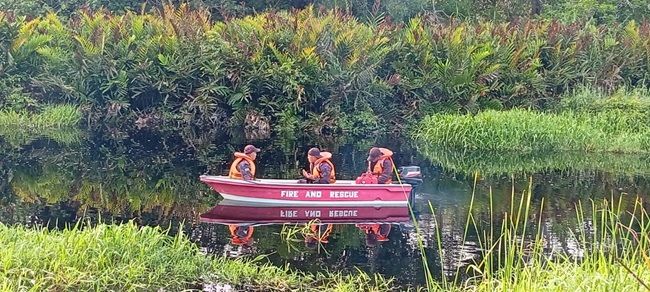
Authorities in Brunei are pressing ahead with an intensive search operation for a missing fisherman feared to have fallen victim to a crocodile attack in the waters of Kampong Baru Sungai Bera. The operation, now in its third consecutive day, has so far yielded no sign of the victim despite coordinated efforts involving multiple government agencies and specialized search equipment. The incident underscores the persistent wildlife hazards that residents and visitors to Brunei face when venturing into the sultanate's river systems, a concern that carries weight across Southeast Asia where crocodile encounters remain a recurring danger.
The incident came to light when emergency services received a distress call on Wednesday, June 24, alerting them to a potential crocodile attack in progress. The Fire and Rescue Department (FRD) responded swiftly by dispatching two fire engines carrying nine personnel under the direction of Acting Station Officer Mohd Zulkifli Md Tahir. Initial interviews with family members of the victim at the scene confirmed that the man had been fishing in the river when the suspected attack occurred, providing rescuers with critical information to guide their search strategy.
The scope of the rescue operation reflects the seriousness with which Brunei's authorities are treating the incident. Rather than relying solely on ground-based search teams, the FRD has deployed a multi-pronged approach that leverages modern technology and manpower. River patrols by FRD boats continue to comb the waterway where the attack is believed to have taken place, while specialized drone units equipped with surveillance capabilities have been mobilized to scan areas that would be difficult or dangerous for personnel to access on foot. The combination of aerial reconnaissance and ground-level riverbank searches creates overlapping coverage designed to maximize the likelihood of locating any evidence or trace of the victim.
Command and coordination of the operation has been assigned to Senior Superintendent Amirul Hadi Junaidi, the Commanding Officer of the Operations Branch, ensuring that response efforts are unified and strategically directed. This centralized leadership structure is particularly important in complex search and rescue situations where multiple agencies must work in tandem without duplication of effort or gaps in coverage. The decision to establish a Tactical Command Post at the scene further demonstrates the depth of institutional response mobilized to address this emergency.
Support for the FRD's efforts extends beyond fire and rescue personnel into law enforcement and specialized wildlife expertise. The Royal Brunei Police Force (RBPF) has committed personnel to the operation, including officers from Seria Police Station and the dedicated marine police unit known as POLMAR, which brings particular experience in responding to incidents on and around waterways. The Wildlife Division, a crucial component of any animal-related emergency response, has also been integrated into the search, providing knowledge about crocodile behavior and habitat that could help predict where the victim or remains might be found.
The participation of the Wildlife Division is particularly significant given the ecological complexity of the situation. Crocodiles in Brunei's river systems are not invading predators but native inhabitants of their natural habitat. Understanding crocodile behavior following an attack—where they typically move, what conditions might draw them to specific locations, and how they interact with their environment—can dramatically improve search effectiveness. The Wildlife Division can advise rescue teams on environmental factors that might assist in locating either the victim or evidence of the incident, bridging the gap between emergency response protocols and wildlife science.
Sungai Bera, the river where the attack occurred, is part of Brunei's river network that has historically been home to saltwater and freshwater crocodiles. The presence of these apex predators is a natural characteristic of the region's ecosystem, though incidents involving human victims remain relatively uncommon when considering the volume of river usage. Nevertheless, each such event serves as a reminder to residents and visitors about the importance of water safety and awareness of wildlife risks, particularly during activities like fishing that involve prolonged exposure to water's edge.
The three-day duration of the search operation highlights both the commitment of rescue services and the challenges inherent in locating a victim in a river environment. Unlike terrestrial settings where footprints and physical signs remain relatively stable, river environments are dynamic and constantly changing. Water currents, tidal movements in areas near the coast, and the ability of water to obscure or carry away evidence create persistent difficulties for rescue operations. The deployment of drones represents an effort to overcome these environmental obstacles through technology that can cover large areas quickly and observe patterns or anomalies invisible to ground-level searchers.
The incident resonates across Southeast Asia, where similar crocodile encounters have occurred in neighboring countries. Indonesia, Malaysia, and Thailand have all reported crocodile-related incidents in recent years, underscoring that this is a regional issue rather than an isolated occurrence. Brunei's structured and well-resourced response to this incident demonstrates the institutional capacity of the sultanate's emergency services, though it also illustrates the universal challenge that crocodile encounters present to authorities and communities throughout the region.
As the search continues into its third day, the combined resources of Brunei's fire, police, and wildlife authorities remain mobilized and committed to the operation. Whether the search yields the outcome that family members and rescue teams are hoping for, the incident will likely inform discussions about water safety protocols, community awareness programs regarding wildlife hazards, and the preparedness of emergency response systems for wildlife-related emergencies. The comprehensive nature of the current operation demonstrates that Brunei takes such incidents with utmost gravity and commits substantial resources to search and rescue efforts when lives are potentially at stake.

