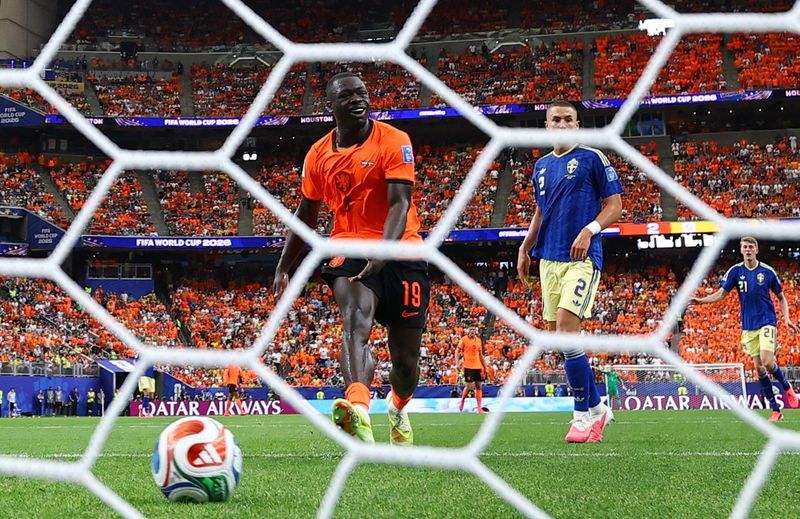
Ronald Koeman's tactical decisions in leading the Netherlands to a commanding 5-1 demolition of Sweden have largely vindicated the Dutch coach, who faced considerable criticism just days earlier for his substitution strategy during his side's opening World Cup fixture. The contrast in fortunes illustrates the razor-thin margin between coaching triumph and condemnation in international football, where a single match can dramatically shift perceptions of a manager's competence and vision.
The foundation of Saturday's emphatic victory was Koeman's selection of 24-year-old Brian Brobbey to lead the Dutch attack, a choice that proved inspired beyond question. Brobbey's immediate impact was decisive, with the striker finding the back of the net twice within the opening 17 minutes, establishing a commanding platform from which the Netherlands controlled the remainder of the contest. This clinical finishing proved to be precisely what the Dutch required to build momentum in their Group F campaign.
Koeman's preference for Brobbey stood in sharp contrast to his earlier game management during the opening match against Japan in Dallas. The Dutch drew 2-2 in that Group F opener, a result that disappointed many observers given the expectation surrounding Netherlands' performance at the tournament. The coach subsequently acknowledged that his in-game adjustments had failed to yield the tactical improvements he sought, a candid admission that underscored the pressures facing international managers when outcomes fall short of expectations.
The elevation of Brobbey to the central attacking role carries significant implications for the Netherlands' forward planning beyond this tournament. For several years, the Dutch have grappled with the challenge of identifying a successor to Memphis Depay, who has been their record goalscorer and primary attacking focal point. Depay's recent injury layoff has left a considerable void in the side's attacking setup, creating an opening for an alternative candidate to stake a claim on the position.
Brobbey's journey to this moment reflects the unpredictable nature of footballer development and squad selection. Following a period of marginalisation during the qualifying campaign for the 2026 World Cup, the striker found himself absent from international consideration for an entire year before his recall to the squad in March. This extended absence could have permanently derailed his international prospects, yet he has used the opportunity to prove his worth through both his club performances and his contribution at tournament level.
The striker's improved capabilities emerged during a season with Sunderland in the English Premier League, an experience that appears to have developed his all-around game substantially. Brobbey himself articulated these improvements in candid terms during discussions with reporters at the Dutch training base earlier in the month, emphasising that his development extended well beyond his traditional strengths. Where previously his game revolved around physical battles with opposing defenders, he has refined his positioning, movement off the ball, and capacity to operate in deeper areas of the pitch, expanding his tactical utility to the team.
The supporting cast surrounding the striker has been carefully constructed to optimise attacking opportunities. Cody Gakpo's presence on the left flank provides creative width and direct threat, while the overlapping runs of fullback Denzel Dumfries on the right side add further dimensions to the Netherlands' attacking play. The introduction of Crysencio Summerville as an additional attacking weapon furnishes Koeman with further flexibility in how he structures his offensive approach, ensuring that whoever occupies the lead striker position benefits from consistent supply and varied attacking angles.
Brobbey's clinical finishing against Sweden demonstrated that he possesses the essential predatory instincts required to perform at the highest level of international football. The sharpness and timing he displayed in his two finishes contrasted markedly with some of the imprecision that has occasionally characterised Depay's contribution during his return from injury. For a player stepping into a significant role following an extended spell on the international periphery, the calmness and composure evident in his finishing was particularly impressive.
The broader context surrounding the Netherlands' forward selection reflects the evolution of the team's tactical approach under Koeman's stewardship. The Dutch have recognised that the traditional centre-forward role must be filled by someone capable of contributing to build-up play, movement creation, and positional fluidity rather than simply being a static target for aerial bombardment. Brobbey's demonstrated capacity to operate across these multiple dimensions positions him favourably within this tactical framework.
With the group stage progressing and knockout football approaching, Brobbey's performance against Sweden has fundamentally altered the conversation surrounding the Netherlands' attacking options. The question is no longer whether he deserves consideration for the lead striker position but rather whether he has sufficiently impressed to become the primary choice ahead of more established options. His two-goal contribution has provided Koeman with compelling evidence that he can be trusted with the responsibility of spearheading Dutch attacks in increasingly high-pressure fixtures.
The implications for Southeast Asian football observers extend beyond mere interest in Dutch fortunes. The pathway Brobbey has taken—marginalisation, exile, redemption through club football, and sudden elevation to prominence—mirrors patterns seen repeatedly in regional football contexts where players must navigate political selection processes and shifting tactical priorities. His story provides a cautionary and encouraging narrative about the importance of sustained improvement and maintaining readiness for unexpected opportunities.

