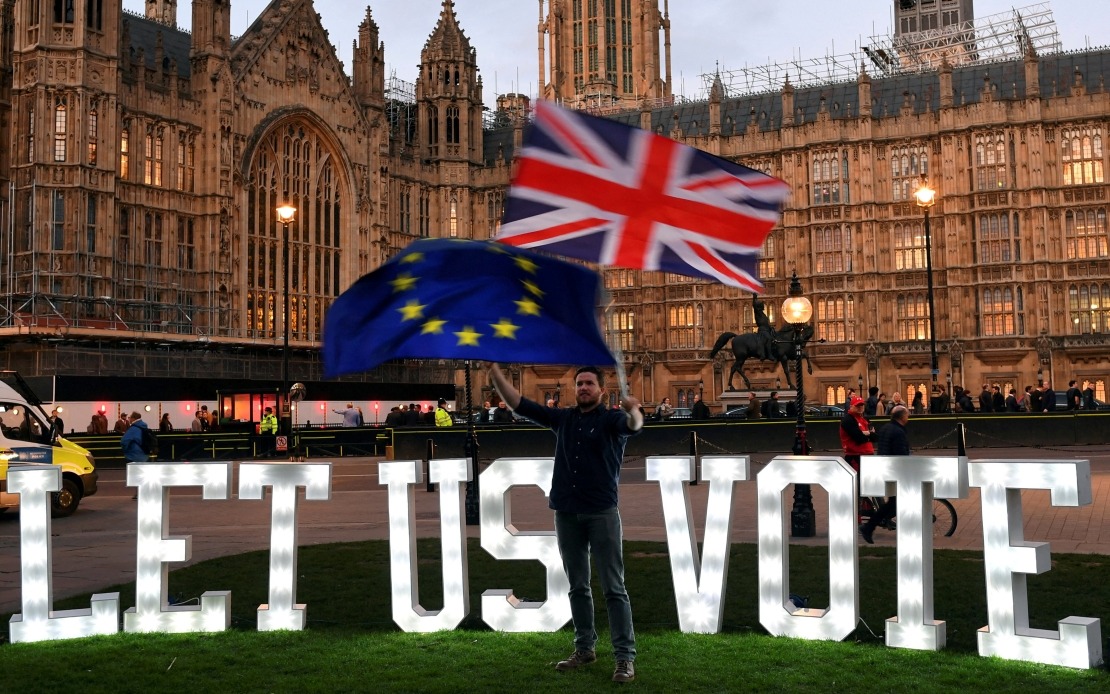
The prospect of the United Kingdom reversing its break with the European Union appears remote regardless of which political party leads the government going forward, according to Richard Balfe, a long-serving Conservative figure in the House of Lords. In comments to international media, Balfe suggested that while future administrations might make rhetorical gestures toward closer European ties, the fundamental decision to leave will remain intact. The assessment reflects a hardening consensus among Westminster's political establishment that Brexit, now a decade old, has become an entrenched feature of British politics unlikely to be undone through standard democratic processes.
Balfe's characterization of potential EU re-entry efforts as "halfhearted" and ultimately destined to fail carries particular weight given his standing within Conservative circles. His dismissal of the possibility comes at a moment when the Labour Party, which has historically been more sympathetic to European integration, faces an internal leadership contest. Prime Minister Keir Starmer announced his resignation as party leader on June 23, pledging to remain in office until a successor is chosen. The election process for his replacement will commence on July 9 and conclude before Parliament reconvenes in September, creating several months of political uncertainty at the height of summer.
The timing of Balfe's remarks is significant, coinciding precisely with the tenth anniversary of the 2016 Brexit referendum. On that date a decade ago, 52 percent of British voters chose to leave the European Union, setting in motion a process that formally concluded on January 31, 2020, ending 47 years of continuous membership. The intervening period saw extended negotiations over withdrawal terms, trade arrangements, and the rights of citizens on both sides of the Channel. These protracted discussions left deep scars on British politics and society, fracturing communities and damaging relationships with traditional European partners.
The transition arrangements that followed Britain's formal exit gradually unwound the extensive framework of EU law and regulation that had governed British life for decades. Throughout 2020, a temporary period maintained existing EU rules while allowing simplified travel procedures, providing breathing room for businesses and individuals to adapt. That grace period ended on December 31, 2020, marking the final dissolution of Britain's regulatory alignment with the bloc. The subsequent implementation of the Trade and Cooperation Agreement on January 1, 2021, created the institutional basis for Britain's new relationship with the EU, built on negotiated frameworks rather than membership.
The economic consequences of this separation have proven substantial and measurable. Analysis from prominent financial publications has documented a marked decline in Britain's status as a major trade and investment hub since departing the union. Complex new regulatory requirements, customs procedures, and documentation demands have created friction in commercial relationships with European counterparts. Investment in British companies has become more complicated as firms struggle with supply chain disruptions and additional compliance costs. These structural economic challenges have persisted and deepened as businesses adapted to the new trading environment.
Balfe's broader assessment suggests that even as Labour potentially assumes a larger role in shaping Britain's direction, the party will lack the political will or capacity to overturn the Brexit decision. His prediction that the government will "muddle along" reflects a view that British politics has become consumed by managing the consequences of exit rather than reconsidering the decision itself. This characterization implies a government reactive rather than proactive, constrained by the complexity of potential re-entry negotiations and fearful of reigniting the divisive referendum debate that continues to haunt British society.
The peer's additional observation that Britain will ultimately "follow Washington's lead" introduces a geopolitical dimension to his analysis. This suggests that Britain's foreign policy trajectory is increasingly oriented toward the United States rather than Europe, potentially reflecting both the transatlantic relationship's historical depth and a recognition that European reintegration is incompatible with closer American alignment. For Malaysia and Southeast Asian nations with interests in European markets and politics, this assessment indicates that Britain will remain a secondary player in shaping EU policy, unable to influence bloc decisions from within as it once did.
The prospect of Labour leadership change adds another layer of complexity to Britain's European future. While the Labour Party has historically favored closer European engagement compared to the Conservative Party, internal divisions over Brexit remain evident. A new Labour leader inheriting office in autumn will face a range of pressing domestic challenges—economic sluggishness, public service pressures, and social discontent—that may leave limited political capital for ambitious European policy initiatives. The appetite for revisiting Brexit, whether through campaign messaging or actual policy implementation, appears limited across the political spectrum.
For regional observers in Southeast Asia, Britain's apparent commitment to remaining outside the EU carries implications for trade relationships and diplomatic positioning. A Britain firmly oriented toward transatlantic partnerships and increasingly distanced from European structures may prove a more unpredictable trading partner for ASEAN nations. Meanwhile, Britain's reduced influence within Western policymaking circles could affect how regional concerns are represented in international forums where both British and European voices historically carried weight. The divergence of British and European interests post-Brexit creates a more fragmented landscape for nations seeking to navigate great power relationships.

