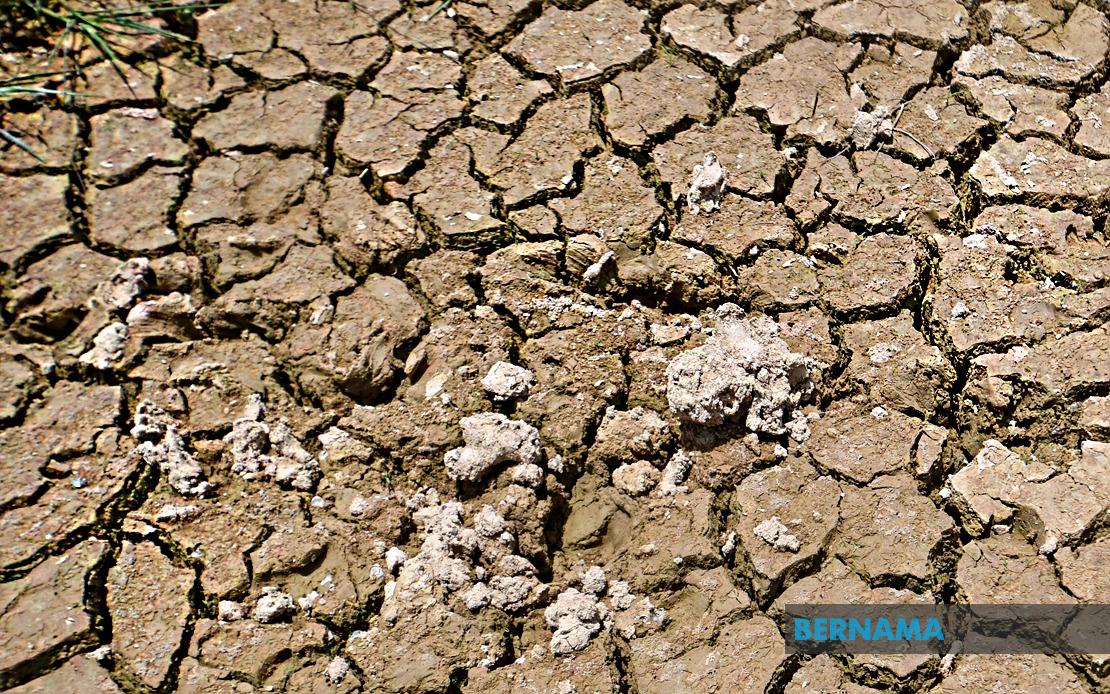
The rapid intensification of drought and desertification represents one of the most pressing environmental crises facing BRICS nations, a threat that demands urgent and coordinated response given the bloc's outsized importance to global food security and development. These interconnected phenomena strike at the heart of regions where hundreds of millions of people depend on agriculture, freshwater supplies, and functioning ecosystems for their livelihoods. The severity of the challenge is underscored by the fact that BRICS countries—China, India, South Africa, Brazil, Russia, Iran, and the United Arab Emirates—collectively represent more than half the world's population while controlling vast tracts of agricultural land, critical freshwater reserves, and irreplaceable forest ecosystems that serve as global carbon sinks.
The scale of global drying has reached alarming proportions according to recent data from the United Nations Convention to Combat Desertification (UNCCD). Between 1990 and 2020, approximately 77.6 per cent of the world's land surface experienced progressively drier conditions than the preceding three decades, a shift that reflects both the accelerating pace of climate change and the cumulative impact of human land-use decisions. This trend carries profound implications not merely as an environmental issue but increasingly as an economic and social crisis that threatens food systems, displaces populations, and exacerbates resource competition across vulnerable regions. Experts recognise that desertification has transcended narrow categorisation as a purely ecological problem, becoming instead a multifaceted development challenge that intersects with poverty, migration, and geopolitical stability.
Within the BRICS grouping, the manifestations of this crisis vary significantly by geography and climate zone. China, despite implementing anti-desertification programmes continuously for over fifty years and investing heavily in afforestation initiatives, still confronts the reality that approximately 27 per cent of its territorial expanse remains classified as desert or severely arid land. This persistence reflects both the magnitude of the challenge and the need for innovation beyond traditional tree-planting approaches. India and South Africa face mounting stress on their water availability, soil health, and agricultural productivity, with desertification risks compounded by intensifying heat waves and acute water scarcity that directly undermine food security across densely populated regions dependent on stable harvests.
Brazil presents a distinct but equally concerning pattern, where rising drought frequency in the north-eastern and semi-arid zones has disrupted agricultural productivity and created food security concerns. More alarming still are the expanding water shortages and wildfire risks that now plague previously reliable ecosystems including the Amazon rainforest and Pantanal wetlands, regions whose stability matters far beyond Brazilian borders given their role as global climate regulators. Russia's challenge differs from classical desertification patterns, instead combining water resource stress, climatic unpredictability, and soil degradation in vulnerable zones, with southern regions increasingly exposed to drought despite the country's possession of vast water-rich territories. Meanwhile, Iran and the United Arab Emirates occupy naturally hyper-arid regions where extreme water scarcity constitutes an existential constraint on development and population sustainability.
Addressing these cascading threats requires technological sophistication and strategic infrastructure investment. Hydraulic engineering projects, including dams, reservoirs, and water distribution networks, have emerged as primary tools for stabilising water availability across seasonal cycles and mitigating the impacts of climate variability. Egypt demonstrates this approach through the Al-Hammam Plant, the world's largest agricultural wastewater treatment facility, which produces 7.5 million cubic metres of cleaned water daily as part of the ambitious New Delta initiative aimed at converting portions of the Sahara into productive agricultural land. Such projects signal how technological solutions can partially offset natural constraints, though they must be implemented within broader frameworks of environmental sustainability and equitable resource allocation.
The BRICS grouping has begun formalising institutional responses through the BRICS Environment Working Group (EWG), which coordinates environmental policy and priorities across member nations. This cooperation has been substantially reinforced through the New Development Bank (NDB), an institution established specifically to mobilise development financing outside traditional Western-dominated structures. The bank has already approved more than 120 projects worth approximately US$40 billion directed toward infrastructure development and sustainable development initiatives, representing a significant commitment to deploying capital toward environmental restoration and climate resilience across the bloc. This financial commitment demonstrates recognition that combating desertification and drought requires sustained, multi-billion-dollar investment across multiple decades.
Beyond the New Development Bank, BRICS nations have embraced newer collaborative initiatives aimed at raising global awareness and accelerating restoration efforts. The Silk Road Caravan initiative, launched by the UNCCD in 2026, travels through Eurasian territories drawing international attention to land degradation challenges and the critical importance of rehabilitating rangeland ecosystems that support millions of pastoralists and wild species. The initiative culminates at the 17th Conference of the Parties to the UNCCD (COP17) scheduled for August in Ulaanbaatar, Mongolia, a venue choice that reflects the centrality of Central and East Asian drought challenges to global environmental politics. Additionally, the BRICS Partnership for Land Restoration, formally launched in 2025, represents a commitment to supporting ecosystem restoration across mangroves, riverbanks, and wetlands—natural systems whose rehabilitation can simultaneously address desertification, enhance carbon sequestration, and support biodiversity conservation.
Experts increasingly emphasise that conventional responses prove insufficient to the scale and pace of the crisis. Environmental specialists stress the necessity for coordinated action across BRICS nations, substantial increases in climate and environmental financing, rigorous application of scientific approaches to land and water management, and accelerated development of smart agriculture technologies that maximise productivity while minimising resource extraction. These intersecting imperatives demand sophisticated policy alignment and genuine political commitment from governments whose development agendas sometimes prioritise short-term economic expansion over long-term ecological sustainability. The tension between growth and conservation becomes particularly acute in BRICS economies where large populations press against finite water and arable land resources, creating constituencies that resist conservation measures.
The underlying drivers of expanding aridity threaten to intensify in coming decades regardless of climate policy actions implemented today. Global atmospheric warming continues unabated, and numerous climate models project that several BRICS regions will experience progressively drier mean conditions and more volatile precipitation patterns. Simultaneously, population growth across BRICS nations drives escalating demand for freshwater and agricultural production, intensifying extraction pressures on natural aquifers, river systems, and rainfall-dependent ecosystems already stressed by climatic shifts. This combination of climatic pressure and human demand growth creates a squeeze that conventional water management alone cannot resolve, necessitating fundamental transformation in how agricultural, industrial, and domestic water systems operate across the bloc.
For Malaysia and other Southeast Asian nations, the BRICS drought and desertification challenge carries distinct implications. Should major BRICS agricultural producers experience sustained productivity declines due to water stress and soil degradation, the resulting disruptions to global food supply chains would reverberate through regional economies that depend on imports of grains, oilseeds, and other commodities. Regional water security could also face indirect pressure if climate patterns shift in response to large-scale land-use changes in major BRICS territories. Beyond these systemic linkages, Malaysia has opportunities to contribute expertise in tropical ecosystem management, sustainable agriculture, and water resource innovation to BRICS collaborative initiatives, while learning from drought management experiences in arid BRICS regions. The crisis ultimately underscores that environmental degradation in distant regions eventually produces consequences for all nations through climate disruption, food system instability, and resource competition.
The window for effective intervention remains open but narrows steadily as desertification advances and critical ecosystems approach irreversible degradation thresholds. Success requires that BRICS nations move beyond incremental policy adjustments toward transformative change encompassing agricultural practices, water management philosophy, ecosystem restoration investment, and international cooperation frameworks. The financial and technological capacity exists within the BRICS bloc to mount an adequate response; the critical question becomes whether political will and institutional coordination can align to deploy these capabilities before degradation accelerates beyond management capacity. The stakes extend far beyond the BRICS nations themselves to encompass global food security, climate stability, and the preservation of natural systems upon which all human societies ultimately depend.

