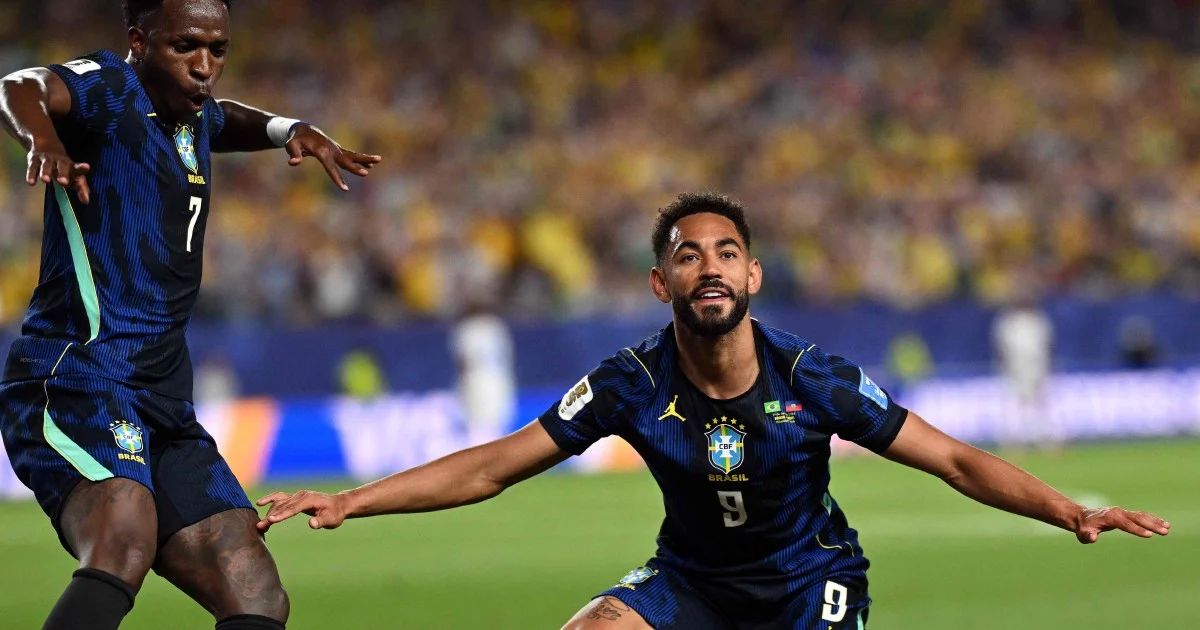
Brazil delivered a comprehensive performance against Haiti in Philadelphia on Friday, winning decisively 3-0 and re-establishing momentum in their World Cup campaign. The victory represents a crucial inflection point for the South American powerhouse, whose earlier matches had generated considerable scrutiny about their tournament trajectory. Forward Matheus Cunha was the standout performer, netting twice in a display that showcased the technical quality and attacking prowess expected from a team of Brazil's calibre and pedigree.
The emphatic margin of victory carries particular significance for Brazil's progression toward the knockout stage. In World Cup group competitions, such dominant results accumulate goal difference, a critical tiebreaker that frequently determines advancement between teams level on points. By registering a three-goal victory, Brazil substantially improved their arithmetic position and moved perceptibly closer to securing one of the available last-32 slots, reducing the mathematical permutations required for qualification.
Cunha's brace underscores Brazil's depth in attacking personnel and tactical flexibility. The Atlético Madrid player's finishing prowess and movement in the Haiti penalty area demonstrated the clinical execution that separates tournament contenders from pretenders at this competitive level. His contributions exemplify how Brazil's squad construction provides head coach Dorival Júnior with multiple offensive options across various tactical configurations. This versatility becomes increasingly valuable as the tournament progresses and opponents adjust their approaches.
For Haiti, the result represents a sobering reality check. The Caribbean nation's participation in World Cup finals remains a relative rarity in their football history, and facing a Brazilian side at full intensity exposes the gulf between established powerhouses and emerging football nations. Haiti's defensive vulnerabilities were systematically exploited, raising questions about their capacity to compete effectively in subsequent group matches against more elite opposition. Their tournament trajectory now depends heavily upon securing positive results in remaining fixtures against opponents more similarly matched in technical ability.
Brazil's revival assumes contextual importance within the broader tournament narrative. The five-time World Cup champions carry historical expectations and domestic pressure to perform at their accustomed standard. Previous unconvincing displays had generated debate among Brazilian football commentators and supporters regarding tactical coherence and player form. This commanding victory against Haiti quiets such criticism temporarily and provides the psychological confidence necessary for teams navigating tournament football, where successive matches occur in condensed timeframes with minimal preparation periods.
The Philadelphia venue underscores this tournament's geographic footprint across North America. The fixture's location in a major American metropolitan centre reflects FIFA's strategic positioning of World Cup matches to maximize commercial reach and broadcasting exposure in the United States market. For regional fans in Southeast Asia, such scheduling positions them in distinctly challenging time zones, though the significance of Brazil's progression ensures media coverage regardless of inconvenient viewing circumstances.
Matching strength matters considerably in tournament football, and Brazil's overwhelming control of this encounter—evidenced by the scoreline and underlying performance metrics—provides tactical lessons for their coaching staff. Understanding which positional combinations, pressing triggers, and attacking sequences generate sufficient dominance against structured defensive blocks becomes instructive as Brazil prepares for opponents who will certainly prove far more challenging than Haiti. Such matches function as technical laboratories where emerging players gain experience and established performers rediscover rhythm.
Cunha's performances across multiple matches will likely determine whether Brazil sustains this momentum through subsequent stages. Individual brilliance frequently catalyzes tournament success at football's highest level, and identifying which attacking players enter peak form becomes a defining coaching consideration. The former Hertha Berlin player's confidence after scoring multiple goals typically translates into enhanced decision-making and positioning in subsequent fixtures, creating momentum that extends beyond statistical accumulation.
Brazil's qualification trajectory now hinges upon results in remaining group matches and how competitive mathematics unfold across their section. The three-point victory against Haiti positions them favourably, though the intensity of group-stage football ensures no margin for complacency. Teams occasionally stumble unexpectedly against opponents perceived as vulnerable, a cautionary lesson Brazilian football administrators understand thoroughly from previous tournament disappointments.

