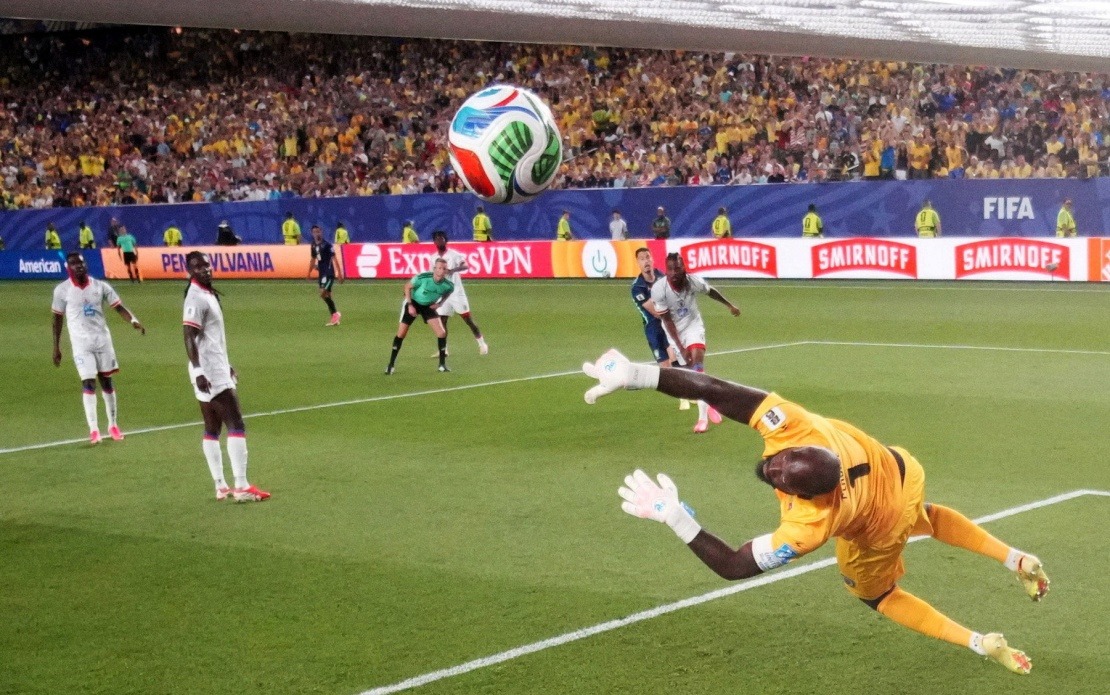
Brazil delivered a masterclass in attacking football on Friday, dispatching Haiti with a comprehensive 3-0 victory at Philadelphia Stadium to maintain their strong start in the race towards the 2026 FIFA World Cup finals. The South American powerhouse controlled proceedings from kickoff, establishing their superiority early and leaving the Caribbean nation with virtually no avenue back into the contest. With this emphatic triumph, Brazil has successfully consolidated their position atop Group C while simultaneously confirming Haiti's exit from the tournament, marking the first team to be eliminated from qualification.
The decisive nature of the contest became apparent within the opening quarter-hour, when Brazil's attacking prowess began to overwhelm Haiti's defensive organisation. Matheus Cunha spearheaded the assault, recording a clinical brace within a three-minute window to put the match beyond doubt before many supporters had settled into their seats. His opening strike arrived in the 23rd minute, followed swiftly by a second in the 26th, establishing a commanding lead that fundamentally altered the complexion of the encounter and suggesting an avalanche of goals might follow.
The Brazilian momentum continued unabated through the remainder of the first half, with the team's fluid movement and crisp passing overwhelming their opponents. Vinicius Junior, operating with customary flair and incision, added gloss to the performance by converting in the third minute of first-half stoppage time, ensuring Brazil would retreat to their dressing room with an insurmountable three-goal advantage. This flurry of finishing prowess—three goals across 47 minutes—demonstrated why Brazil remains one of world football's most formidable attacking units, capable of dismantling opposition defences through combination play and clinical finishing.
Haiti's defensive frailties were laid bare throughout, offering negligible resistance to Brazil's relentless attacking play. The Caribbean outfit appeared outclassed from the opening exchanges, struggling to impose any meaningful structure or threat against their illustrious opponents. Their inability to contest Brazil's midfield dominance meant they were perpetually chasing the ball, struggling to build any coherent attacking sequences or sustain meaningful possession.
From a tactical perspective, Haiti appeared unable to adjust their approach despite falling three goals behind early. Rather than altering their formation or strategy to stem the bleeding, they continued along the same ineffective pathway, ultimately compounding their predicament. Brazil's superiority in every statistical category—from possession and passing accuracy to shot conversion—underscored the vast gulf separating these two nations in terms of footballing infrastructure and player quality.
The implications of this result reverberate beyond the immediate match outcome. Haiti's mathematical elimination represents a significant setback for Caribbean football's representation in the World Cup cycle, as the region has historically struggled to compete at the highest levels of international competition. Their early departure denies them the opportunity to accumulate experience against elite opposition and build momentum towards future tournaments, instead consigning them to early elimination before the campaign has genuinely gathered pace.
For Brazil, this victory builds upon their opening Group C fixture against Morocco, which concluded in a 1-1 draw. The South Americans now possess four points from their opening two matches, positioning them favourably in their pursuit of World Cup qualification. With momentum established and attacking potency clearly evident, Seleção appear well-positioned to progress through their group relatively comfortably, barring unexpected complications in their remaining fixtures.
The contrast in resources, player development systems, and international experience between Brazil and Haiti starkly illustrates the hierarchical nature of modern football. While Brazil can field multiple players operating at Europe's elite clubs and maintain a production line of talented individuals, Haiti's football infrastructure remains underdeveloped, constraining their ability to compete at the highest international levels. This disparity has long been a feature of Caribbean football, with the region's nations perpetually struggling against established football powers.
Looking ahead, Haiti will seek to salvage their campaign by claiming victories in remaining Group C fixtures, though their mathematical elimination suggests their focus may shift towards building foundations for future competitions. For Brazil and other regional powers, this encounter validates their status as continental heavyweights while underscoring the importance of consistent, ruthless execution against lesser-fancied opposition—a quality that often separates tournament winners from also-rans in competitive football environments.

