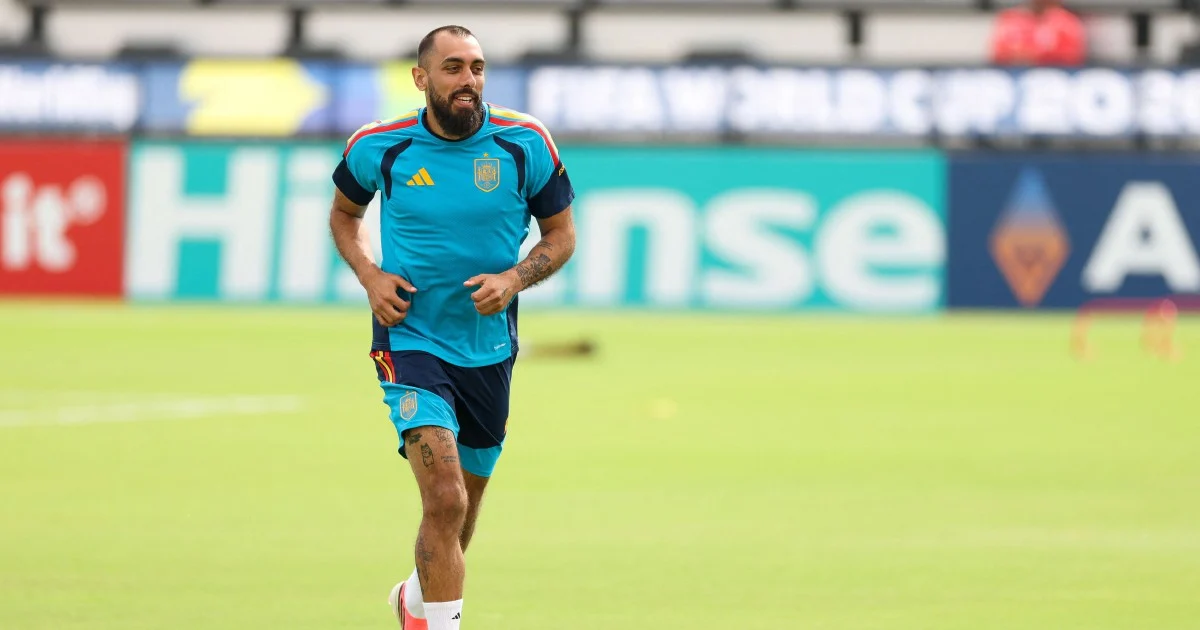
Borja Iglesias, the Spanish forward who featured prominently in Spain's World Cup campaigns, stands apart in professional football through his willingness to engage publicly with contentious social and political matters. His approach—which includes unconventional personal expression such as painting his nails—has positioned him as an outlier in a sport traditionally marked by cautious orthodoxy from its highest-profile performers. In a landscape where athletes frequently shy away from controversy, Iglesias has become synonymous with outspokenness, drawing both admiration and criticism for his refusal to remain silent on issues spanning geopolitics to equality.
The footballer's commitment to addressing injustice extends beyond performative gestures. His commentary on the situation in Gaza and his vocal opposition to homophobia within and beyond the sport reflect a deeper conviction that athletes possess both the platform and moral obligation to engage with world events. This stance distinguishes him from peers who maintain strict separation between their professional personas and personal convictions. For Southeast Asian audiences accustomed to seeing their own athletes navigate similar pressures around political neutrality, Iglesias' approach offers a contrasting model—one that prioritises conscience over commercial convenience.
Within Spanish football, Iglesias' visibility has coincided with broader European conversations about athletes' rights to express themselves beyond their sporting duties. The label "the alien of football," while sometimes deployed mockingly, captures how unconventional his behaviour appears within an industry where conformity has historically been rewarded. His nail painting and public statements challenge implicit hierarchies about what constitutes acceptable conduct for elite male athletes, particularly in a traditionally conservative sport dominated by machismo culture. This rebellion against unspoken dress codes and behavioural expectations carries implications for how younger players across Europe assess the costs of self-expression versus career advancement.
The timing of Iglesias' emergence as an activist-athlete coincides with shifting generational attitudes within football. Younger professionals increasingly view their platforms as vehicles for social commentary rather than purely as tools for sporting achievement. However, Iglesias remains relatively rare in the willingness to address geopolitical matters with the same directness he applies to domestic issues. His comments on Gaza in particular position him within a broader sporting discourse that has seen heightened scrutiny of athletes' statements following major global conflicts. In the Malaysian context, where athletes traditionally maintain careful political neutrality, Iglesias' model highlights the evolving expectations placed on international sports figures.
The reaction to Iglesias within Spanish football reveals the sport's cultural tensions regarding athlete activism. Traditional elements within the industry view his behaviour as distraction from on-field performance, while progressive observers see him as pioneering necessary change. This dynamic mirrors debates occurring across global football regarding social responsibility. For Spanish audiences and international observers alike, Iglesias represents a generational shift wherein professional footballers feel emboldened to exist more fully as complete human beings rather than one-dimensional entertainment products.
His approach to homophobia deserves particular attention given football's well-documented struggles with LGBTQ+ inclusivity. By speaking directly against discrimination, Iglesias contributes to a supportive environment for other athletes considering coming out or expressing non-conforming identities. Professional football has historically marginalised LGBTQ+ players through both explicit hostility and systematic silence. Iglesias' visibility offers counter-weight to these patterns, though individual activism cannot substitute for structural reform across leagues, clubs, and governing bodies. Southeast Asian football, similarly grappling with LGBTQ+ acceptance, observes these European conversations with interest, as regional attitudes slowly shift.
The economic dimension of athlete activism warrants examination. Iglesias' willingness to court controversy through his public positions suggests either significant financial security or principled indifference to sponsorship implications. Many athletes face genuine constraints around speech due to endorsement agreements and institutional pressures. Understanding Iglesias as operating from a position of relative privilege provides context without diminishing his contributions. His actions nonetheless expand the perceived boundaries of acceptable athlete conduct, potentially enabling others with fewer resources to follow similar paths.
Spain's football culture, shaped by diverse political traditions and historical memory, may provide particular context for Iglesias' approach. Spanish society has experienced various forms of political suppression and continues navigating questions of regional identity and national narrative. Within this backdrop, athlete activism carries different cultural weight than it might in nations with longer traditions of individual expression. Iglesias thus operates within specific national contexts while simultaneously addressing issues with international implications, particularly regarding Palestine and Middle Eastern geopolitics.
The future trajectory of athletes like Iglesias will significantly influence how professional football addresses social responsibility. Should his career flourish despite—or perhaps because of—his activism, it signals changing tolerance within the sport for players who refuse compartmentalisation between their professional and personal identities. Conversely, if institutional or commercial pressure constrains his voice, it would underscore persistent limitations on athlete expression. For Malaysian and broader Southeast Asian football communities watching international developments, Iglesias represents a potential model for how younger generations might claim space for fuller self-expression within professional sport while maintaining competitive excellence.

