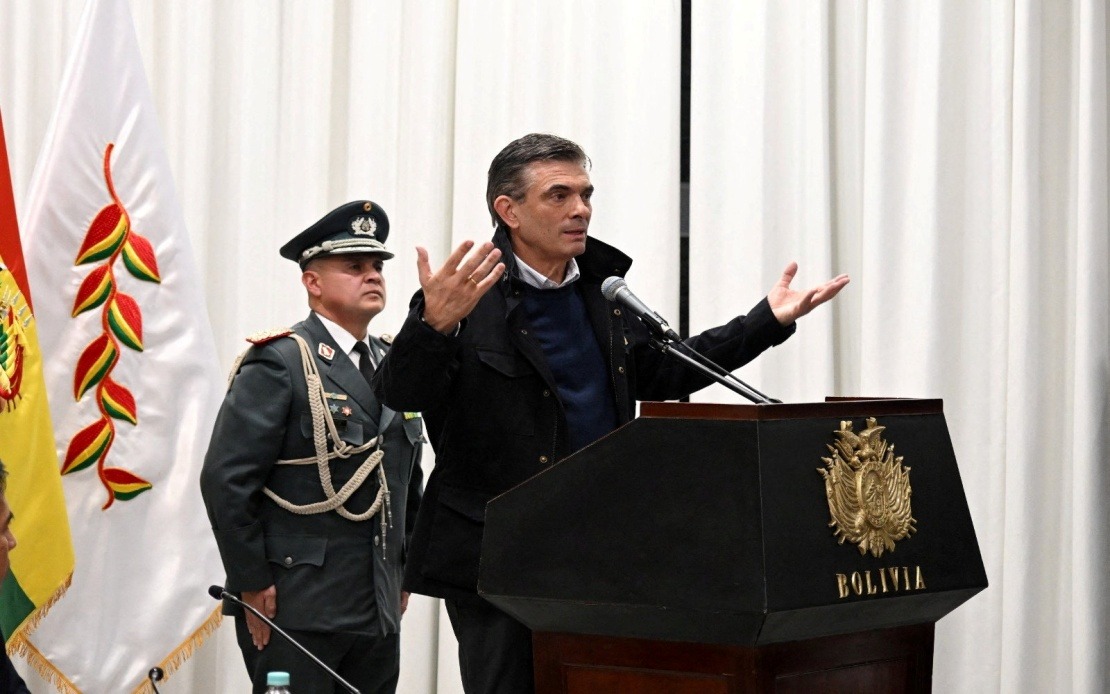
Bolivia faces a deepening political and economic crisis following Bolivian President Rodrigo Paz's declaration of a state of emergency, announced on Saturday in response to relentless protests and road blockades that have paralysed the nation for over 50 days. The emergency measure represents a dramatic escalation in the government's response to mounting civil unrest, granting authorities sweeping powers to restore order and reopen critical transport corridors that have been strangled by blockades.
The blockades, orchestrated by a broad coalition of workers' unions and farmers' organisations, have evolved from isolated labour grievances into a comprehensive challenge to Paz's government. Demonstrators have made his resignation their central demand, channelling widespread public anger over deteriorating living standards and deepening economic distress. The movement reflects genuine frustrations across Bolivian society, where inflation and wage stagnation have eroded household purchasing power and squeezed already vulnerable populations.
The humanitarian toll of the extended blockade has become increasingly severe. For families and businesses across affected regions, the disruption has created cascading shortages of essential goods including food, fuel, and medicines. Hospitals have struggled to obtain vital supplies, schools have shuttered their doors, and manufacturing and commercial activity has ground to a halt. The 50-day duration of these blockades demonstrates the extraordinary commitment of protest organisers and their capacity to maintain pressure despite mounting economic costs to the nation.
In a televised address to the nation, Paz articulated the government's position with stark language, declaring that citizens could no longer remain "hostages of blockades that prevent working, studying, receiving medical attention, supplying themselves, and bringing sustenance to their homes." This framing attempts to pivot public sympathy toward the government by emphasising the collateral damage inflicted on ordinary Bolivians who had no role in the initial disputes. The president's appeal to basic rights and necessity suggests a calculation that prolonged crisis has shifted the political centre of gravity.
The formal declaration of a state of exception removes constitutional and legal restrictions on executive authority, enabling the deployment of military forces to forcibly clear blockaded roads and restore supply chains. This represents a consequential threshold in civil-military relations, introducing armed personnel into what has remained largely a civilian protest movement. Historical precedent in Latin America demonstrates that military interventions in domestic disputes can rapidly escalate tensions and risk violent confrontation, potentially radicalising protest movements and deepening political divisions.
For regional observers in Southeast Asia, the Bolivian situation offers instructive lessons about the fragility of political systems facing combined economic and organisational pressures. The capacity of workers' organisations and agricultural groups to sustain coordinated action across seven weeks reflects institutional strength that many developing democracies struggle to contain. The decision to resort to emergency measures, while understandable from an administrative perspective, carries reputational and constitutional risks that extend beyond immediate crisis management.
The economic backdrop to these protests cannot be overlooked. Rising living costs represent the fundamental driver of discontent, with ordinary Bolivians experiencing diminished real incomes and reduced access to basic necessities. This pattern echoes similar crises across Latin America and developing economies globally, where structural economic challenges translate into political volatility. Without addressing underlying inflation and wage dynamics, emergency declarations may suppress visible protest while leaving root causes intact, creating conditions for renewed unrest when immediate military pressure is relaxed.
The diverse composition of the protest movement—spanning industrial workers, agricultural producers, and ordinary citizens—indicates that opposition to Paz's government extends across class lines and economic sectors. Farmers and miners represent constituencies with particular economic grievances, while urban workers have broader concerns about purchasing power. This breadth of support suggests that the crisis reflects genuine systemic pressures rather than narrow factional disputes, complicating any solution that relies purely on security measures.
The international dimension of Bolivia's crisis deserves consideration. Bolivia's position within Latin American geopolitics, its natural resource endowments, and its regional relationships influence how the crisis unfolds and resolves. The declaration of emergency will attract scrutiny from international observers concerned with democratic governance and human rights compliance. Regional bodies and trading partners may impose diplomatic costs for heavy-handed responses to civilian protest, potentially constraining Paz's freedom of action despite the formal emergency powers granted by the declaration.
Looking forward, the sustainability of emergency measures remains uncertain. Military deployments can temporarily suppress visible blockades, but they cannot resolve the economic grievances animating the protests. Success will ultimately depend on whether the government can simultaneously restore order while engaging substantively with protest leadership on underlying demands. The history of emergency declarations suggests that their effectiveness typically proves temporary unless paired with concessions addressing underlying grievances or political settlement acceptable to major protest constituencies.
The Bolivian government's emergency declaration marks a critical juncture in which the state has chosen enforcement over negotiation as its primary response mechanism. While this may restore short-term stability and restore supply chains, the political consequences will extend well beyond the immediate crisis. How Paz manages the transition from emergency governance back to normal democratic procedures, and whether he addresses the economic pressures fuelling discontent, will determine whether this emergency measure proves a turning point toward stability or merely a prelude to deeper political conflict.

