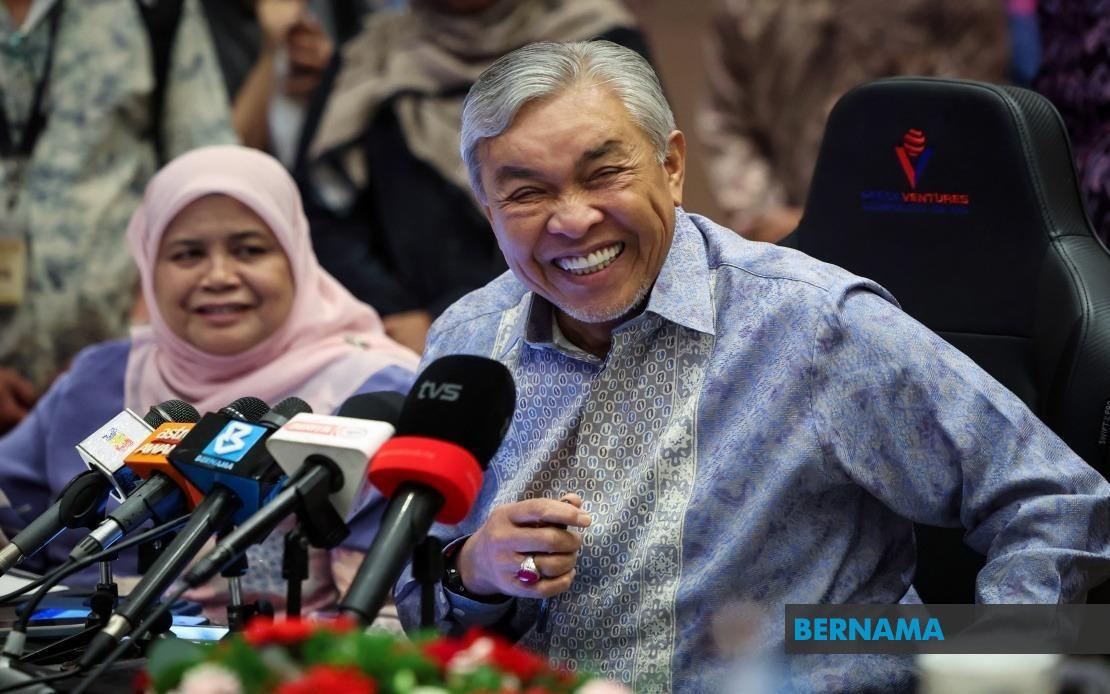
Barisan Nasional leadership has moved to quell persistent speculation about political instability, with Deputy Prime Minister and BN chairman Datuk Seri Dr Ahmad Zahid Hamidi declaring the coalition's unwavering commitment to the Unity Government through the completion of the 15th Parliament. Speaking in George Town on July 23 following the 61st Coordination Meeting between rural development ministers and state officials, Ahmad Zahid firmly rejected suggestions of backdoor manoeuvres to undermine the current administration, emphasising that BN's position has remained steadfast since the Yang di-Pertuan Agong's directive established the Unity Government after the 2022 General Election.
The explicit denial of any "Bangkok Move" or "Dubai Move"—colloquial terms for covert political machinations—reflects growing anxiety within Malaysian political circles about the stability of the power-sharing arrangement between BN and Pakatan Harapan under Prime Minister Datuk Seri Anwar Ibrahim. Ahmad Zahid's choice to address these rumours directly underscores the sensitivity surrounding BN's participation in what many observers initially viewed as an uneasy coalition of necessity. The coalition's commitment, he stressed, represents a conscious choice to prioritise institutional stability over short-term political advantage, a calculation that acknowledges the unpredictability that would accompany a sudden collapse of the government.
For Malaysian readers monitoring the precarious balance sustaining the current administration, Ahmad Zahid's statement carries practical weight. The five-year term of the 15th Parliament provides a defined endpoint that BN has voluntarily accepted, essentially constraining the coalition's ability to withdraw support without triggering constitutional crisis. This temporal anchor may serve as a stabilising force in an environment where minor shifts in parliamentary mathematics could theoretically threaten the government's viability. BN's acceptance of this timeframe suggests recognition that navigating to a fresh election rather than forcing a mid-term change offers more predictable outcomes for the coalition's future positioning.
The remarks also carry implications for Malaysia's broader regional standing. Prolonged political uncertainty or repeated speculation about government stability can undermine investor confidence and complicate economic policymaking at a time when Southeast Asia faces interconnected challenges from geopolitical tensions and economic volatility. A credible commitment to institutional continuity, if maintained, allows the Anwar administration to pursue longer-term development initiatives with greater certainty about execution. This consideration resonates beyond Putrajaya's corridors, affecting how neighbouring governments and international partners assess Malaysia's reliability as a regional anchor.
Concurrently, Ahmad Zahid addressed complications emerging within BN's own ranks during the Negeri Sembilan state election campaign. A polling district centre in Klawang suspended operations in apparent protest against BN's decision not to field a candidate for the contested state seat, reflecting grassroots frustrations within party machinery when strategic decisions diverge from local expectations. Ahmad Zahid characterised the matter as manageable, noting discussions with Negeri Sembilan UMNO chief Datuk Seri Jalaluddin Alias and suggesting resolution within the nine-day campaign period remaining. The incident, while ostensibly tactical, illustrates the internal pressures that even coordinated leadership declarations must navigate when filtered through party structures and member expectations.
The three-cornered contest in Klawang—featuring Pakatan Harapan's Bakri Sawir, Perikatan Nasional's Danni Rais, and Bersatu's Muhammad Adib Musa—exemplifies the fragmentation of Malaysia's political landscape beyond the Unity Government framework. The proliferation of candidates reflects the multiplication of political actors willing to contest seats, complicating electoral arithmetic and introducing unpredictability into outcomes that once followed more predictable patterns. For state-level politics, this diffusion of support bases necessitates coalition flexibility that sometimes conflicts with broader national unity arrangements.
Regarding broader political cooperation structures, Ahmad Zahid dismissed proposals for a "Perikatan Barisan Nasional" alliance with Perikatan Nasional as premature speculation rather than substantive negotiation. He clarified that such notions had circulated during campaign rhetoric but lacked formal discussion between party leaderships. This distinction—between rhetoric and institutional commitment—carries significance for Malaysian political observers attempting to gauge whether alternative alignments are genuinely under development or merely campaign-season posturing. The careful language employed suggests reluctance to foreclose future options while simultaneously maintaining current commitments.
The continuation of cordial personal relations between Ahmad Zahid and Prime Minister Anwar Ibrahim, despite their opposing campaign positions in Negeri Sembilan, illustrates how Malaysian political cooperation functions across institutional levels. The exchange of pantun—traditional Malay verse—between the two leaders, with Ahmad Zahid responding to Anwar's earlier composition emphasising unity and discipline, demonstrates that elite-level political relationships can accommodate disagreement on specific contests while maintaining foundational cooperation at the national level. This compartmentalisation, while sometimes appearing contradictory to outside observers, reflects sophisticated understanding of how multiethnic democracies manage coalition politics.
For the business community and foreign observers monitoring Malaysia's political trajectory, Ahmad Zahid's reassurances provide temporary stability anchors. The explicit timeframe until Parliament's end offers a planning horizon for investors and policymakers, even if uncertainty lingers beyond that boundary. Government stability directly impacts implementation of economic reform programmes, infrastructure development, and regulatory consistency—factors that ripple through Malaysia's economic ecosystem and influence regional perceptions of the country's institutional maturity.
However, the need to repeatedly affirm BN's commitment suggests that scepticism persists within Malaysian political circles about the sustainability of the Unity Government. The frequency and emphasis of denials regarding potential defections or coups indicate that speculation has gained sufficient traction to warrant executive-level intervention. This underlying anxiety, even when officially denied, suggests that participants in the Unity Government continue to harbour doubts about each other's reliability and commitment. The psychological and institutional strains of coalition management remain beneath the surface of official declarations, managed rather than resolved.
Looking forward, Ahmad Zahid's position effectively locks BN into the current arrangement through Parliament's completion, eliminating one potential source of destabilisation. However, the coalition's internal tensions—exemplified by local-level disputes like the Klawang incident—suggest that managing disparate expectations within BN itself may present as significant a challenge as maintaining national-level cooperation with Pakatan Harapan partners. The degree to which BN's grassroots membership accepts this extended commitment without fracturing could ultimately determine whether Ahmad Zahid's declarations translate into sustained institutional stability or merely defer inevitable reckoning.

