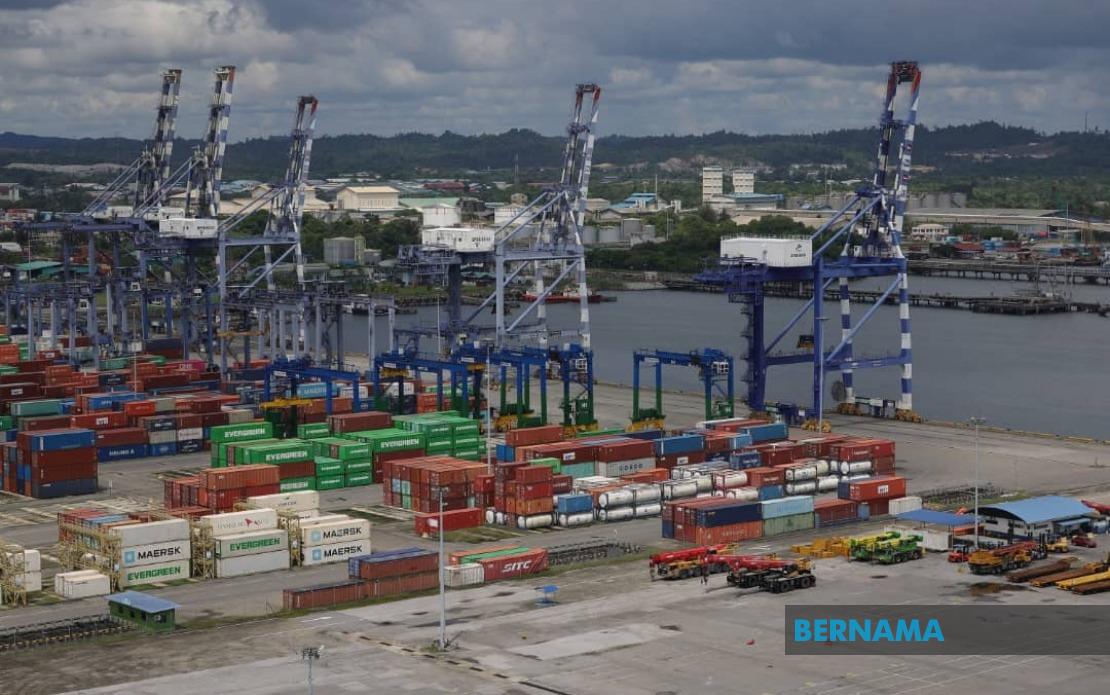
Sarawak's assumption of regulatory control over Bintulu Port stands as a watershed moment in implementing the Malaysia Agreement 1963, according to Datuk Mustapha Sakmud, Minister in the Prime Minister's Department overseeing Sabah and Sarawak affairs. The transition, formalised through a cheque handover ceremony in Bintulu attended by Prime Minister Datuk Seri Anwar Ibrahim and Sarawak Premier Tan Sri Abang Johari Tun Openg, underscores the federal government's commitment to recognising the constitutional rights of Malaysia's founding partners in the peninsula's eastern states.
For Sarawak, the handover carries symbolic and practical significance extending well beyond port operations. The move reaffirms the state's status as an equal partner in the Malaysian federation rather than a subordinate entity, a principle that remains contentious in some federal-state relations discussions. Mustapha framed the transfer as evidence that MA63 provisions can be operationalised through genuine collaboration, creating mutual benefits rather than zero-sum competition between Putrajaya and the state capitals. This characterisation attempts to reshape the narrative around decentralisation efforts, positioning them not as federal concessions but as strategic national investments.
Bintulu Port's evolution reflects broader economic shifts transforming Sarawak's regional role. Once primarily known as the gateway for Malaysia's liquefied natural gas exports, the facility is repositioning itself as a comprehensive industrial, logistics and green energy complex. This transformation aligns with global momentum toward decarbonisation and clean manufacturing, sectors where Sarawak possesses inherent competitive advantages that many other Malaysian regions cannot easily replicate. The port's handling of LNG continues, but its future trajectory increasingly centres on facilitating the transition to renewable energy-based production and export networks.
Sarawak's hydroelectric capacity provides the foundation for this green industrial strategy. With abundant renewable power resources, the state can attract manufacturers and technology companies seeking low-carbon operational certifications increasingly demanded by international buyers and investors. Multinationals operating in carbon-constrained markets or facing supply chain pressures to reduce their environmental footprint find Sarawak's energy profile compelling. Bintulu's deepwater infrastructure and established logistics networks amplify this appeal, offering companies the rare combination of reliable clean energy and world-class port facilities in a single jurisdiction.
The strategic positioning of Bintulu within Asia-Pacific trade corridors enhances its significance for regional investors. As supply chains continue fragmenting and reshuffling in response to geopolitical tensions and pandemic-related vulnerabilities, alternative manufacturing and export hubs gain importance. Sarawak's location along major shipping routes to China, Japan, South Korea and Southeast Asian markets makes it accessible to producers serving these economically vital regions. Port autonomy under state control may facilitate faster decision-making and customised service offerings compared to previous federal administration arrangements, potentially improving competitiveness against other regional ports.
The MA63 implementation framework has historically proven contentious, with various disputes over resource rights, immigration powers and revenue sharing frequently tested in courts and political forums. Bintulu Port's transfer demonstrates that practical pathways for resolving longstanding constitutional ambiguities exist when political leadership demonstrates will. The success of this particular handover may encourage resolution of other outstanding MA63 issues, though significant complexities remain regarding oil and gas revenues and certain administrative functions. For Malaysia's overall stability and federal cohesion, demonstrating that constitutional partnerships can yield concrete benefits serves important political purposes beyond economic considerations.
Mustapha's framing of MA63 implementation as strengthening rather than weakening federal authority addresses persistent anxieties within certain federal bureaucratic circles about decentralisation. By emphasising that greater autonomy for Sabah and Sarawak enhances national federation capacity and regional positioning, he recontextualises what some view as power loss into capability enhancement. This rhetorical strategy attempts to build consensus among federal institutions and peninsular political actors who might otherwise resist further constitutional recognition of state rights. Whether such reframing proves persuasive will depend on tangible economic results flowing from devolved authority.
For Malaysian investors and businesses, Sarawak's enhanced control over Bintulu creates both opportunities and uncertainties. State-level port management potentially offers more responsive regulatory environments and streamlined approvals for ventures aligned with Sarawak's development priorities. However, different governance approaches between federal and state authorities could create coordination challenges for companies operating across multiple Malaysian ports or requiring federal-state collaboration. Investors will monitor whether state control of Bintulu generates competitive advantages that offset any complications arising from fragmented governance structures.
The broader regional implications merit attention, particularly for Southeast Asian nations evaluating Malaysia's federal structure and Sarawak's development trajectory. Successful green industrial development in Sarawak could establish a regional model for leveraging renewable energy endowments into manufacturing competitiveness. Alternatively, if state autonomy leads to policy inconsistencies or regulatory complications, it might discourage companies from investing in decentralised governance arrangements. Other ASEAN countries with federal or quasi-federal systems will observe Sarawak's experience as a case study in balancing constitutional devolution with economic efficiency.
The timing of Bintulu Port's transfer reflects broader political dynamics within Malaysia's ruling coalition. With Prime Minister Anwar Ibrahim emphasising inclusivity and addressing historical grievances of peripheral regions, the MA63 implementation agenda gained momentum during his administration. Securing Sarawak's cooperation through tangible constitutional recognition serves coalition-building purposes alongside economic objectives. However, sustained momentum for further MA63 implementation will require continued political commitment that could face pressures from competing federal priorities or opposition from actors benefiting from existing centralised arrangements.
Moving forward, Bintulu's performance as a state-controlled port will significantly influence public perception of devolution and federalism in Malaysia. Strong economic growth, job creation and investment inflows stemming from state autonomy would validate arguments for further constitutional recognition of state rights. Conversely, operational difficulties, service degradation or governance lapses would reinforce concerns among centralisation advocates. The stakes extend beyond Sarawak, potentially shaping whether Malaysia moves toward more genuine federal partnerships or maintains patterns of federal dominance despite constitutional text suggesting otherwise.

