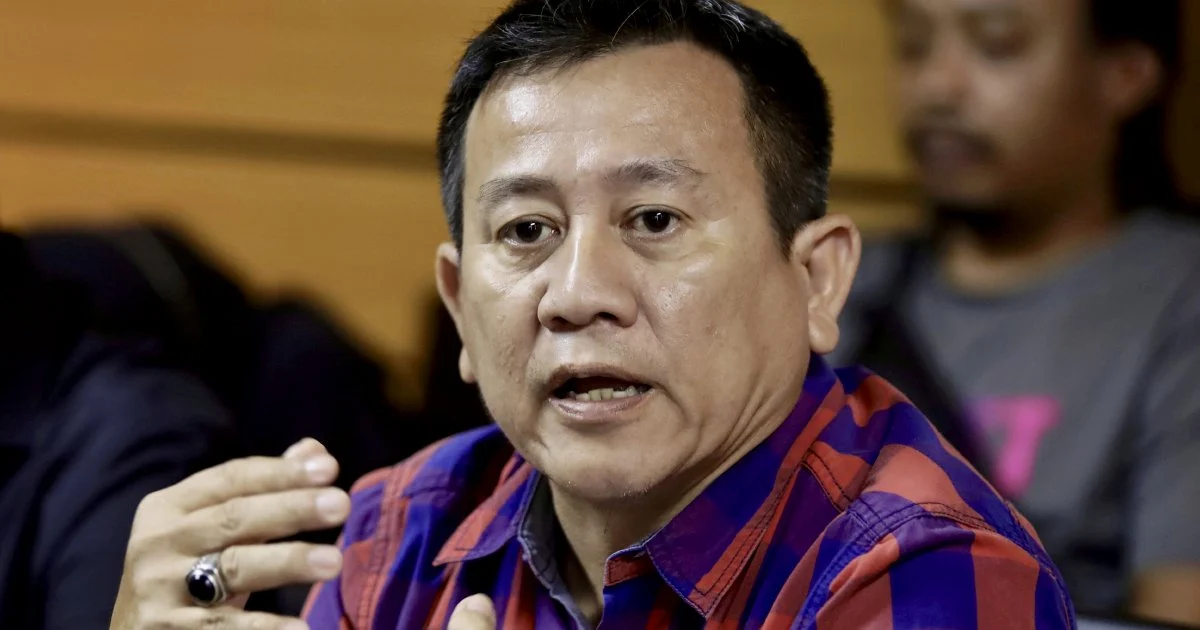
The political landscape within Perikatan Nasional appeared to shift sharply when Bersatu's information chief Datuk Tun Faisal Ismail Aziz publicly advocated for Pas to sever ties with the opposition coalition. His remarks, delivered in Kuala Lumpur, represent a significant public rupture within the PN alliance and signal deepening fractures between key component parties.
Tun Faisal's intervention suggests a fundamental disagreement over the direction and coherence of the three-year-old coalition. Perikatan Nasional, comprising Bersatu, Pas, and several smaller parties, has struggled to maintain unified messaging and strategic alignment since its formation in the aftermath of the 2020 political realignment. The coalition has served as the primary opposition to the Pakatan Harapan-led government, though its effectiveness has been constrained by internal divisions and competing organisational cultures.
The Bersatu information chief's call for Pas to depart independently or establish alternative political arrangements reflects wider tensions about coalition leadership and policy direction. Such a move would fundamentally restructure Malaysia's opposition politics, potentially fragmenting the combined electoral force that PN currently represents. For Malaysian readers accustomed to the relative stability of two-coalition politics since 2018, this development represents a destabilising moment that could reshape parliamentary mathematics.
Pas, the Pan-Malaysian Islamic Party, commands substantial electoral support particularly in rural areas and among conservative constituencies. The party's continued membership in PN has often created strategic complications for Bersatu, which positions itself as a multiethnic, nationalist alternative to Umno. Ideological differences between Pas's Islamist framework and Bersatu's emphasis on inclusive nationalism have periodically surfaced in policy debates and public positioning.
The timing of Tun Faisal's remarks carries significance within Malaysia's current political cycle. Parliament remains closely divided, and coalition configurations directly determine executive stability and legislative capacity. Any substantial realignment among major opposition parties inevitably affects the government's operational environment and policy implementation prospects. The call for Pas to reconsider its PN membership thus extends beyond factional disputes to encompass broader questions about parliamentary governance and executive accountability.
Southeast Asian political observers have noted that coalition volatility presents particular challenges for regional economic policy coordination and diplomatic positioning. Malaysia's role within ASEAN and participation in regional economic frameworks depend partly on political stability and continuity of government policy direction. Instability within the opposition alliance potentially creates uncertainty regarding Malaysia's medium-term strategic commitments and institutional development priorities.
For Pas leadership, the Bersatu challenge presents a complex calculation. Remaining within PN provides electoral synergies and parliamentary coordination mechanisms that independent operation would compromise. Conversely, withdrawal could allow Pas to pursue distinct Islamist-focused messaging without accommodating Bersatu's secular-nationalist framework. Alternative coalition arrangements with other parties would require rebuilding diplomatic infrastructure and negotiating unfamiliar organisational relationships.
The broader PN constituency faces profound implications from this internal pressure. Smaller parties within the coalition depend substantially on PN's collective electoral machinery and parliamentary resources. Pas's potential departure would weaken the overall coalition structure and force remaining members to recalibrate their strategic positioning relative to both the government and potential alternative alignments. This instability potentially benefits established parties like Umno, which commands its own organisational resources and electoral reach.
Bersatu itself operates from a position of relative organisational vulnerability compared to Pas's established grassroots presence. The party emerged from defections within Umno and requires coalition partners to achieve significant parliamentary representation. Tun Faisal's public call for Pas to depart thus represents either confidence in Bersatu's ability to build alternative alliances or desperation regarding internal coalition management. Either interpretation suggests PN's cohesion has substantially deteriorated.
The political economy of Malaysian coalition politics depends substantially on negotiations regarding ministerial positions, resource allocation, and policy priority sequencing. Unresolved tensions over such arrangements frequently generate precisely the kind of public criticism now emanating from Bersatu. Tun Faisal's intervention may therefore reflect failure of behind-the-scenes negotiation mechanisms to address fundamental disagreements about coalition governance.
Regional and international observers monitoring Malaysian politics will likely interpret this development as evidence that opposition forces remain insufficiently consolidated to pose credible alternative governance. While such fragmentation might appear advantageous to incumbent government figures, persistent opposition instability ultimately undermines democratic institutional quality and creates space for even more divisive political mobilisation.
For Malaysian citizens seeking coherent political alternatives and policy choices, PN's demonstrated inability to maintain internal discipline presents frustration. Opposition coalitions require sufficient internal discipline and strategic alignment to offer credible governing platforms. Tun Faisal's public challenge to Pas membership thus reflects PN's systemic failure to construct arrangements satisfying component parties' core interests and strategic ambitions, ultimately weakening Malaysian democracy's competitive character.

