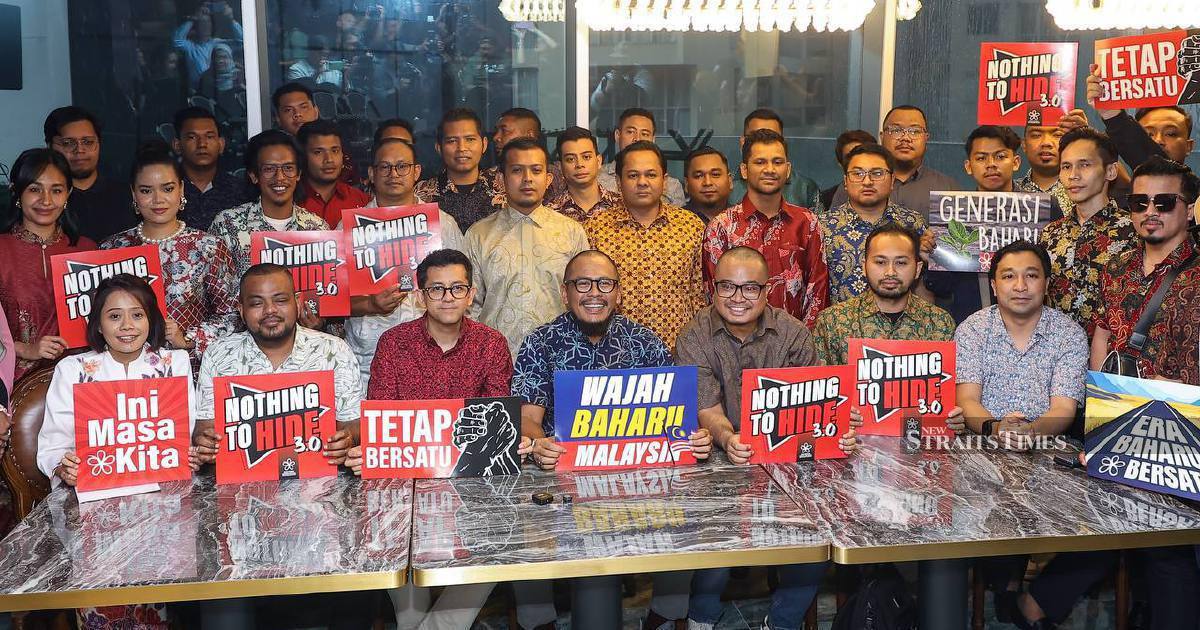
The leadership of Bersatu remains confident that recent tensions with PAS, its ally in the Perikatan Nasional coalition, can be resolved through sustained dialogue and commitment to their shared political project. Kota Siputeh assemblyman Mohd Ashraf Mustaqim Abdul Munir has publicly voiced this optimism, employing a household metaphor to capture the nature of the current impasse between the two Islamist-leaning parties that together form a substantial bloc within Malaysia's fractious political landscape.
Ashraf's characterisation of the Bersatu-PAS relationship as resembling that of a married couple navigating domestic friction while maintaining a shared living arrangement carries significant weight in Malaysian political discourse. The comparison suggests that underneath surface disagreements lies a foundational commitment to coexistence and mutual benefit, a narrative that both parties have reason to promote given their interdependence within the PN framework. By framing recent disputes as temporary rather than structural, Bersatu is signalling to party members, supporters, and the broader electorate that the coalition remains viable and worth defending against both internal critics and opposition challenges.
The Perikatan Nasional alliance emerged as a significant political force following the 2020 general election, bringing together PAS, Bersatu, and several component parties into a coalition that has controlled federal government. The partnership, however, has proven unstable, marked by competing visions for Malaysia's direction, disputes over ministerial portfolios, internal leadership struggles, and fundamentally different approaches to governance and Islam's role in the state. These tensions have periodically erupted into public view, creating uncertainty about the coalition's longevity and governance coherence.
Recent friction between Bersatu and PAS has centred on matters of party autonomy, resource allocation, and strategic direction. Both parties possess significant grassroots support and claim to represent authentic Islamic values, yet they differ in their governance philosophies and political strategies. Bersatu, newer to electoral politics and more urban-aligned, has sometimes pursued technocratic approaches that jar with PAS's more theologically rooted governance model. These differences, when magnified through personality clashes and institutional rivalries, have created visible cracks in the PN facade.
The household metaphor employed by Ashraf carries implications for understanding how Malaysian politicians conceptualise coalition politics. Rather than viewing alliances as purely transactional arrangements dissolvable when terms are unmet, the married couple framework suggests permanence, shared fate, and mutual obligation. This rhetorical choice matters because it shapes expectations among supporters and provides political cover for leaders who might otherwise face accusations of weakness or disloyalty when accommodating coalition partners' demands. Malaysians accustomed to seeing alliances collapse overnight may find reassurance in language emphasising deeper commitment.
Within the Bersatu party specifically, maintaining harmony with PAS holds considerable strategic value. Bersatu's political survival has depended substantially on its PN positioning, particularly given internal leadership contests and limited independent electoral machinery compared to more established parties. An explicit endorsement of relationship-rebuilding efforts with PAS thus serves multiple functions: it reinforces Bersatu's stability narrative, demonstrates leadership commitment to coalition preservation, and addresses concerns among party members worried about isolation or marginalisation within PN structures.
The broader context for these repair efforts involves Malaysia's ongoing political fragmentation. With no single party commanding decisive parliamentary majority, coalition stability directly affects government effectiveness and policy implementation. Both Bersatu and PAS benefit from avoiding public ruptures that might encourage defection of individual politicians, trigger by-elections, or prompt coalition restructuring that disadvantages either party. The couple metaphor implicitly acknowledges that despite periodic quarrels, both parties recognise that separation would be costlier than continued cohabitation with managed disagreements.
However, optimistic rhetoric should be assessed against structural incentives shaping coalition behaviour. Competition for electoral appeal in overlapping constituencies, disputes over nomination processes, and divergent international relationships all create persistent sources of friction unlikely to dissipate through dialogue alone. The married couple analogy, while evocative, potentially obscures whether these tensions represent manageable personality conflicts or substantive incompatibilities in governance vision that marriage counselling—or coalition diplomacy—cannot resolve.
For Malaysian observers watching PN dynamics, Ashraf's comments signal that senior coalition figures are actively invested in maintaining appearances of unity, even if disagreements persist at operational levels. Whether such confidence proves warranted will depend on whether Bersatu and PAS can negotiate concrete compromises on contested issues without either party experiencing unacceptable losses of autonomy or influence. The coming months will test whether the married couple can indeed stay together under the same roof.

