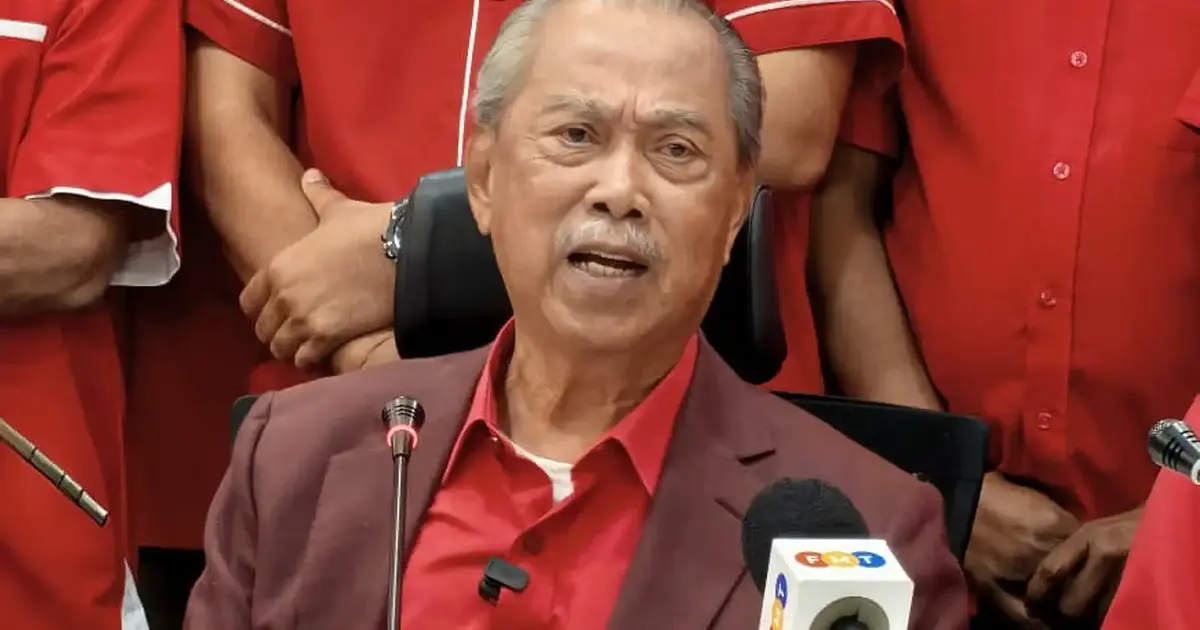
Former Prime Minister Muhyiddin Yassin has declared that his party Bersatu is fully prepared to engage PAS in a comprehensive political contest across all arenas, marking a significant escalation in tensions within the Malay-Muslim political landscape. The announcement signals deepening rifts within the Perikatan Nasional coalition as both parties jostle for dominance and electoral advantage in crucial state-level contests.
Muhyiddin's combative rhetoric reflects the deteriorating relationship between Bersatu and PAS, two major players in the PN alliance that emerged as a significant political force following the 2018 general election. The willingness to openly challenge PAS across multiple fronts suggests that internal party dynamics and leadership succession concerns have superseded the strategic unity that once bound these organisations together. For Malaysian observers, this fracture within PN could fundamentally reshape the political competition in upcoming elections and alter the balance of power among Malay-based parties.
The contentious relationship between these two parties carries implications beyond their internal rivalry. PAS has positioned itself as the guardian of Islamic governance and Malay-Muslim interests, commanding substantial support in rural and semi-urban constituencies particularly in the northern and eastern states. Bersatu, by contrast, has cultivated a technocratic image and broader appeal across different demographic groups. This philosophical and strategic divergence has created numerous friction points regarding party direction, coalition partnerships, and policy priorities.
Muhyiddin's statement regarding PN's participation in the forthcoming Johor and Negeri Sembilan elections reflects a crucial strategic choice. Johor, as Malaysia's second-largest state by population and economic output, represents a critical battleground where electoral performance will significantly influence each party's standing within the broader coalition and their negotiating position for national-level politics. Negeri Sembilan, whilst smaller, occupies strategic importance in the central region and carries symbolic weight in terms of Malay-Muslim party performance.
The decision to contest under the PN banner rather than as individual parties carries procedural and political significance. It suggests that despite tensions, both parties remain formally committed to the coalition structure, though their competitive approach within that framework signals a shift towards electoral rather than cooperative politics. This arrangement allows Bersatu to maintain coalition credibility whilst simultaneously positioning itself to maximise seat gains and demonstrate independent political viability.
For Malaysian voters and political analysts, this development presents a complex scenario. The fragmentation of traditionally unified Malay-Muslim political forces could benefit non-Malay based parties and those pursuing cross-communal political strategies, particularly in mixed constituencies. Conversely, it might intensify competition within specific demographic segments, potentially leading to wasted votes and reduced overall representation for some communities if vote splitting becomes pronounced.
The timing of Muhyiddin's declaration carries additional weight given Malaysia's recent political instability and the broader question of institutional legitimacy. State elections provide important opportunities for parties to establish grassroots credentials and test electoral machinery independent of federal political machinations. Success or failure in Johor and Negeri Sembilan will likely influence strategic calculations heading towards any subsequent general election.
Historically, Bersatu has struggled with identity and positioning within the Malaysian political ecosystem. Originally formed in 2016 as a vehicle for Muhyiddin's political ambitions following his dismissal as Johor Menteri Besar, the party has attempted to occupy the middle ground between UMNO's establishment conservatism and PAS's religious-political platform. This contested positioning has made Bersatu vulnerable to accusations of opportunism and has complicated coalition negotiations.
PAS, meanwhile, has consolidated considerable organisational capacity and ideological clarity. The party commands disciplined party structures, particularly in states where it holds executive authority, and maintains strong connections with religious institutions and networks. This structural advantage could prove decisive in state-level contests where ground organisation and constituency-level mobilisation determine outcomes.
The broader context of Malaysian politics suggests that such intra-coalition competition might reflect deeper structural changes in how Malay-Muslim representation is being contested. Traditional patterns of elite consensus and coalition discipline have given way to more fluid and competitive relationships. Whether this represents a temporary tactical divergence or signals fundamental realignment remains uncertain, with significant implications for Malaysia's political stability and direction.
Muhyiddin's hardline rhetoric also serves domestic party management functions. Declaring readiness for comprehensive political contest against PAS allows him to demonstrate leadership resolve to Bersatu's grassroots membership and reassure party faithful that their interests receive priority over abstract coalition principles. Such positioning can strengthen his authority within Bersatu as the party navigates internal consolidation and membership growth.
For Southeast Asian regional observers, Malaysia's internal party dynamics carry relevance as examples of how coalition politics operates within competitive electoral democracies. The tension between coalition discipline and electoral competition reflects broader challenges facing multi-party political systems throughout the region, particularly where confessional or ethnic-based party structures predominate.
The coming Johor and Negeri Sembilan elections will provide crucial indicators of whether Bersatu can translate Muhyiddin's combative positioning into electoral gains, or whether PAS's organisational advantages and clearer political messaging will dominate the contest. The results will substantially influence both parties' strategic calculations and the future viability of the PN coalition as currently constituted.
%22%2F%3E%3C%2Fpattern%3E%3C%2Fdefs%3E%3Crect%20width%3D%22100%25%22%20height%3D%22100%25%22%20fill%3D%22url(%23ph1g9tbg)%22%2F%3E%3Crect%20width%3D%22100%25%22%20height%3D%22100%25%22%20fill%3D%22url(%23ph1g9tbp)%22%2F%3E%3Ctext%20x%3D%2250%25%22%20y%3D%2250%25%22%20text-anchor%3D%22middle%22%20dominant-baseline%3D%22central%22%20fill%3D%22rgba(255%2C255%2C255%2C0.95)%22%20font-family%3D%22Georgia%2C%20'Times%20New%20Roman'%2C%20serif%22%20font-weight%3D%22700%22%20font-size%3D%22226%22%20letter-spacing%3D%22-0.02em%22%3EPolice%3C%2Ftext%3E%3C%2Fsvg%3E)
%22%2F%3E%3C%2Fpattern%3E%3C%2Fdefs%3E%3Crect%20width%3D%22100%25%22%20height%3D%22100%25%22%20fill%3D%22url(%23ph4z3nag)%22%2F%3E%3Crect%20width%3D%22100%25%22%20height%3D%22100%25%22%20fill%3D%22url(%23ph4z3nap)%22%2F%3E%3Ctext%20x%3D%2250%25%22%20y%3D%2250%25%22%20text-anchor%3D%22middle%22%20dominant-baseline%3D%22central%22%20fill%3D%22rgba(255%2C255%2C255%2C0.95)%22%20font-family%3D%22Georgia%2C%20'Times%20New%20Roman'%2C%20serif%22%20font-weight%3D%22700%22%20font-size%3D%22136%22%20letter-spacing%3D%22-0.02em%22%3EPAS-Bersa%E2%80%A6%3C%2Ftext%3E%3C%2Fsvg%3E)