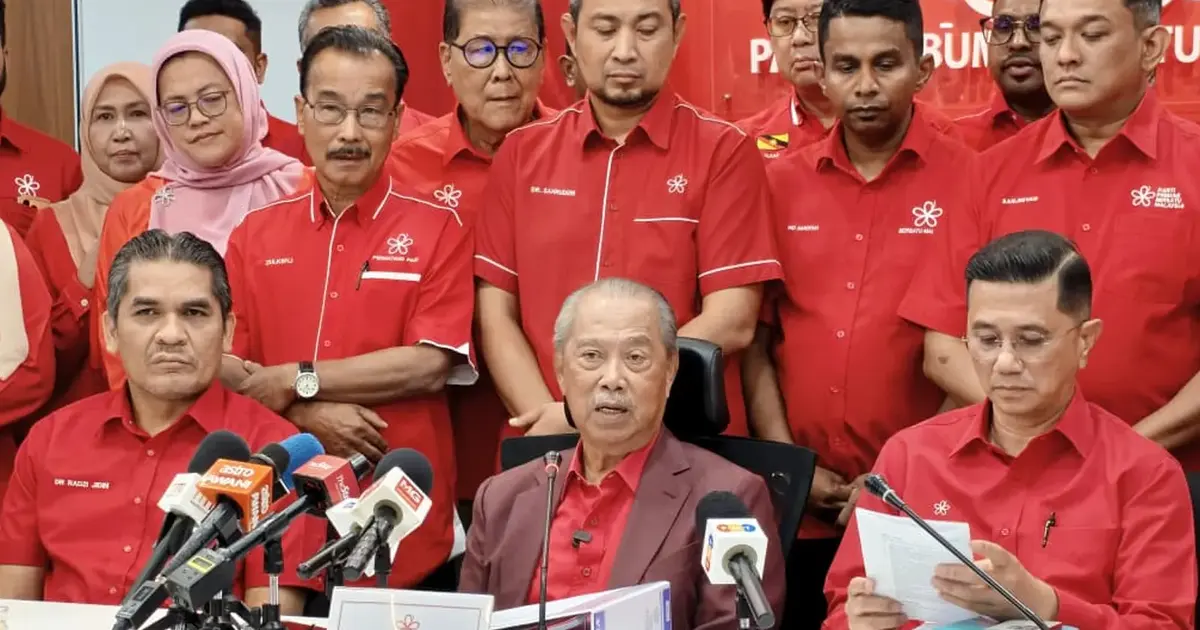
Bersatu will maintain its position within the Perikatan Nasional coalition framework, according to party president Muhyiddin Yassin, who emphasised that the party's continued membership is grounded in the broader public's acceptance and support for the alliance's political direction. The declaration comes amid ongoing coalitional dynamics in Malaysian politics, where various parties continue to negotiate and assess their strategic positions following recent electoral performances and shifts in parliamentary configurations.
Muhyiddin's statement reflects Bersatu's assessment that staying within PN represents the most viable path for the party to influence national governance and advance its political agenda. Since its formation, Bersatu has positioned itself as a centrist, reform-oriented force within Malaysia's political landscape, and the party leadership appears convinced that the PN framework offers the best vehicle for maintaining relevance and shaping policy outcomes across key issues affecting Malaysian voters.
The reaffirmation of Bersatu's commitment to PN carries significance for the broader stability of Malaysian coalition politics. In recent years, Malaysia's political environment has been characterised by fluid alliances and shifting parliamentary majorities, with parties frequently reassessing their positions based on electoral outcomes, internal party dynamics, and calculations about which coalition offers greater electoral prospects. Bersatu's decision to remain signals continuity in one major coalition's composition, even as other parties continue exploring alternative arrangements.
Public sentiment regarding PN and its member parties has evolved considerably since the coalition's formation prior to the 2020 general election. Muhyiddin's invocation of public acceptance suggests that Bersatu's leadership sees polling data or voter feedback indicating that the PN framework retains credibility among significant segments of the Malaysian electorate. This perception is crucial for party morale and member retention, as continued perception of coalition viability affects a party's ability to attract candidates and campaign effectively.
The political context for Bersatu's decision includes the party's historical trajectory since its founding in 2016. Originally emerging from dissidents within UMNO, Bersatu rapidly ascended to prominence during the 2018 general election and subsequent coalition negotiations. The party's ability to maintain influence despite fluctuating electoral fortunes has depended substantially on its positioning within broader coalitional frameworks, making coalition membership a fundamental strategic consideration for party leadership.
For Southeast Asian observers, Bersatu's commitment to PN demonstrates how Malaysian political parties navigate the complex terrain of coalition politics in a multi-ethnic democracy. Unlike systems where parties operate independently until elections force coalition formation, Malaysia's parties frequently maintain formal alliances between electoral cycles, using these structures to influence parliamentary voting and legislative priorities. Bersatu's continued participation reflects recognition that extra-parliamentary coalition stability can translate into legislative influence.
The PN coalition itself comprises several significant parties alongside Bersatu, including PAS, which has emerged as a dominant force within the alliance. The coalition's overall direction and policy priorities are shaped through negotiations among these constituent parties, meaning Bersatu's continued membership implies acceptance of its voice being heard within these internal deliberations, even if the party does not always secure preference on every issue.
Muhyiddin's emphasis on public acceptance rather than internal party calculations is strategically significant, as it frames Bersatu's decision as responsive to voter sentiment rather than purely pragmatic political positioning. This framing matters for party credibility, particularly among voters who value consistency and principled alignment. By attributing the decision to public support, the party leadership grounds its choice in democratic legitimacy rather than mere coalition arithmetic.
The statement also reflects likely ongoing internal discussions within Bersatu about the party's direction and electoral prospects. While Malaysian parties sometimes experience internal factions advocating for different coalition arrangements, Muhyiddin's public affirmation of PN membership suggests that internal consensus, or at least leadership control, remains sufficient to maintain unified party positioning on this fundamental question. This consensus matters for executing coherent electoral strategies and maintaining parliamentary discipline.
Looking forward, Bersatu's continued PN membership will shape its approach to upcoming electoral cycles and parliamentary sessions. The party must balance its commitment to coalition stability with the need to maintain distinct identity and policy positions that differentiate it from coalition partners and appeal to specific voter constituencies. This balancing act has defined much of Malaysian coalition politics in recent years, where parties simultaneously claim coalition loyalty while emphasising their unique contributions and perspectives.
The regional implications of stable Malaysian coalitions extend beyond national politics, as Malaysia's internal political arrangements influence its foreign policy positioning, ASEAN participation, and broader regional stability. Coalitions that maintain coherence tend to enable more consistent diplomatic and policy engagement with neighbouring countries, whereas highly volatile political configurations can create uncertainty about Malaysia's strategic commitments and policy continuity.
Muhyiddin's affirmation ultimately reflects pragmatic politics: Bersatu leadership believes PN membership offers better prospects than alternative arrangements for the party's growth, policy influence, and electoral competitiveness. Whether this calculation proves correct will depend on coming electoral outcomes and the PN coalition's overall performance in delivering governance outcomes that resonate with Malaysian voters across the country's diverse regions and communities.