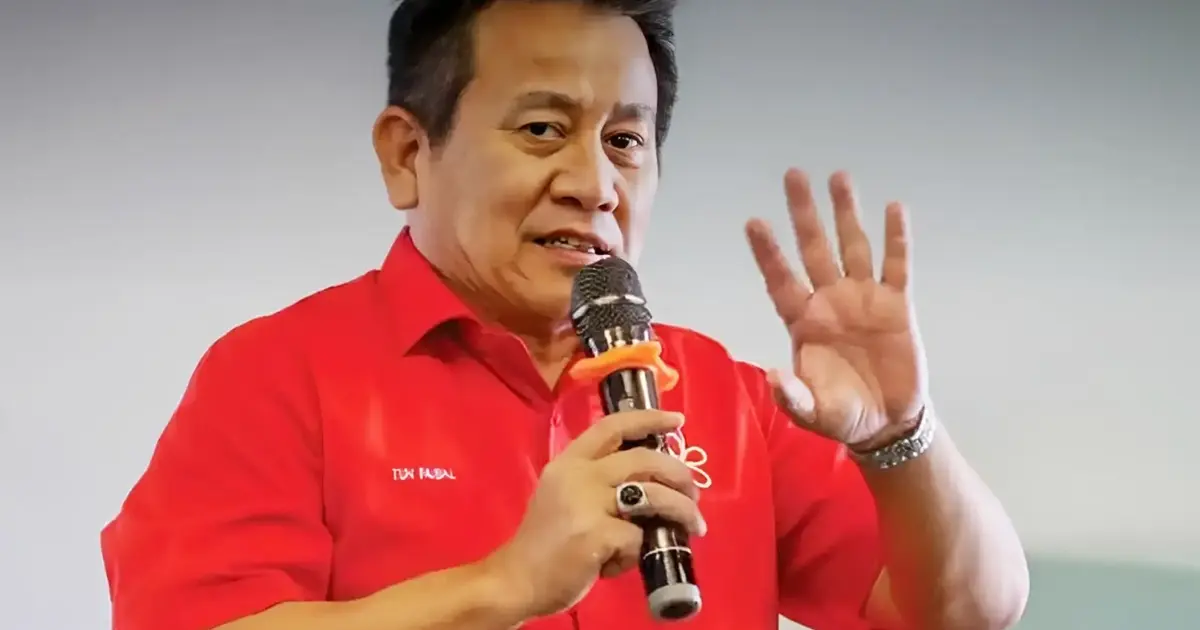
Bersatu chairman Tun Faisal Ismail Aziz has cast doubt on the strategic value of holding emergency meetings for the Perikatan Nasional coalition's Supreme Council, arguing that such gatherings serve little practical purpose if their outcomes depend on subsequent approval from the alliance's constituent parties. His comments underscore deepening tensions within the opposition coalition over decision-making authority and the distribution of power among its members, issues that have become increasingly fractious as the bloc seeks to strengthen its position against the governing Pakatan Harapan administration.
The Bersatu leader's critique appears rooted in a fundamental concern about the hierarchy of decision-making within Perikatan Nasional. When the Supreme Council reaches conclusions on significant matters—whether related to political strategy, coalition negotiations, or institutional governance—those determinations theoretically carry considerable weight. However, if those decisions must subsequently be submitted to individual component parties for their own approval processes, the Supreme Council's conclusions effectively become advisory rather than binding, rendering the top-tier gathering somewhat ceremonial in nature.
This structural ambiguity has troubled coalition partners for some time, particularly as Perikatan Nasional navigates complex political circumstances that often demand swift, coordinated action. The requirement for secondary endorsement from component parties introduces potential delays and creates opportunities for dissent that could undermine the coalition's negotiating position or public messaging. Tun Faisal's remarks therefore reflect a broader frustration with what he perceives as an inefficient governance mechanism that paradoxically reduces the authority of the coalition's highest decision-making body.
The Malaysian opposition landscape has become considerably more competitive over recent years, with both Perikatan Nasional and Pakatan Harapan working to consolidate support ahead of potential general elections. In this environment, organisational efficiency and decisive leadership become crucial advantages. Coalition partners who feel constrained by cumbersome approval procedures may question the utility of the entire governing structure, particularly when time-sensitive political opportunities arise that demand immediate, coordinated responses.
Bersatu's position within Perikatan Nasional has been subject to scrutiny following the party's trajectory through multiple political configurations. The party's leadership has consistently advocated for frameworks that maximise its influence while maintaining credible representation within broader coalitional arrangements. Tun Faisal's latest comments should be understood partly through this lens—Bersatu has invested considerable political capital in Perikatan Nasional and naturally seeks organisational structures that reflect that commitment and investment.
The question of decision-making authority becomes particularly acute when examining how other major political coalitions have structured their governance. Pakatan Harapan, despite its own internal complexities, has developed mechanisms for rapid decision-making that allow component parties to retain veto power while preventing complete gridlock. Whether Perikatan Nasional requires similar reforms remains a subject of legitimate debate among its constituent organisations and observers of Malaysian politics.
Tun Faisal's intervention also reflects broader questions about what coalition membership should entail. Should component parties retain substantial autonomy over their participation in coalitional decisions, or should Supreme Council rulings carry presumptive binding authority? Different parties naturally prefer different arrangements, depending on their relative size, organisational capacity, and political priorities. Smaller partners may favour frameworks that preserve their independent voice, while larger parties might prefer systems concentrating authority in top-level bodies where their representation is proportionally stronger.
The practical implications of this structural issue extend beyond theoretical governance discussions. Emergency meetings convened to address pressing political developments require clarity about whether conclusions reached will actually guide coalition behaviour or whether component parties will require additional time to deliberate before committing themselves. If the latter scenario proves typical, the value of calling emergency sessions diminishes substantially, suggesting that alternative coordination mechanisms might better serve the coalition's interests.
For Malaysian readers observing opposition politics, these internal tensions carry significance beyond Perikatan Nasional's organisational health. The opposition coalition's capacity to function coherently affects the broader competitive balance in Malaysian politics and influences the quality of parliamentary scrutiny directed toward government policy. An opposition alliance hampered by governance inefficiencies potentially benefits the ruling coalition, while a streamlined and decisive opposition provides voters with a meaningful alternative.
Looking forward, Perikatan Nasional leadership faces decisions about whether to formalise clearer hierarchies of decision-making authority or to embrace more distributed, consensus-oriented models that require extensive consultation among component parties. Each approach carries distinct advantages and disadvantages depending on the coalition's strategic objectives and the composition of its membership. Tun Faisal's challenge to the current system, however implicit, suggests that the status quo may not adequately serve the coalition's operational needs as political competition intensifies.
The comments from the Bersatu chairman also raise questions about whether component parties feel genuinely included in Supreme Council deliberations or whether some parties view those forums as venues where larger partners impose predetermined conclusions. Addressing such perceptions would require not merely reforming formal approval procedures but also fostering stronger communicative and collaborative practices within the coalition's upper echelons. Whether Perikatan Nasional's leadership recognises this imperative and acts upon it will significantly influence the alliance's effectiveness as a political force in coming years.

