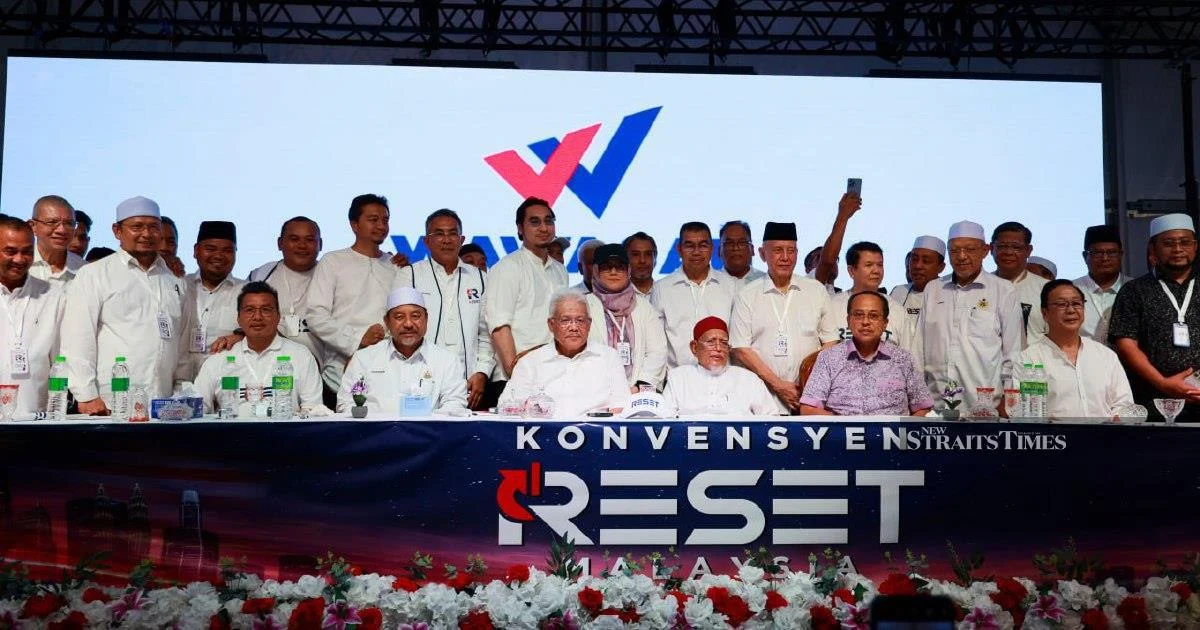
Perikatan Nasional faced fresh internal turbulence yesterday as Bersatu levelled serious questions about the procedural validity of an emergency Supreme Council meeting convened Monday night, during which Wawasan's entry into the opposition coalition was approved. The move highlights deepening tensions within PN's power structure and raises fundamental questions about how major coalition decisions are being made at a time when the bloc is seeking to position itself as a credible alternative to the Anwar Ibrahim-led federal government.
Bersatu's challenge to the PN chairman's handling of the Wawasan admission underscores the fragile nature of the three-year-old coalition, which comprises Bersatu, PAS, and Perikatan component parties. Since its formation in 2021, PN has struggled to maintain unity, with recurring disputes over leadership, resource allocation, and strategic direction frequently erupting into public conflicts. The admission of new members, particularly one with Wawasan's political positioning, typically requires careful coordination among coalition partners to prevent destabilisation.
The emergency nature of Monday night's meeting itself suggests the PN chairman may have sought to bypass normal deliberative processes. Standard coalition procedures usually mandate advance notice to member parties, detailed agendas circulated beforehand, and sufficient time for parties to consult internally before voting on consequential matters. By invoking emergency protocols, the PN leadership attempted to expedite a decision that would normally invite extensive debate among coalition stakeholders, particularly given Wawasan's distinct political origins and potential impact on PN's ideological positioning.
Bersatu's intervention indicates that at least one major coalition component feels sidelined from decision-making that affects the entire bloc's trajectory. As PN's founding party and consistent electoral contributor, Bersatu possesses significant leverage within coalition structures, and its willingness to publicly question the chairman's actions suggests growing disaffection with how power is being exercised at the top. This dynamic mirrors earlier disputes within PN, including disagreements over coalition leadership and seat negotiations for state and federal elections.
Wawasan's entry into PN represents a potentially significant shift in the coalition's composition and electoral strategy. The party brings its own political machinery, voter base, and organisational infrastructure, which could strengthen PN's electoral prospects in certain constituencies. However, such expansion also risks diluting the coalition's ideological coherence and creating new internal rivalries over party positions, candidacies, and resource distribution. These practical concerns likely underpin Bersatu's scepticism about admitting a new member without comprehensive discussion.
The legality question raised by Bersatu also touches on constitutional and procedural governance within political coalitions. Most coalition agreements specify protocols for major decisions, including membership changes. If the PN Supreme Council operates under documented guidelines that require specified notice periods or voting thresholds for extraordinary meetings, the chairman's emergency convocation could indeed violate these procedures. Such violations, even technical ones, can provide grounds for challenging decisions or creating precedent for future unilateral actions by the chair.
From a Malaysian political perspective, this internal PN conflict comes at a crucial juncture. With federal elections potentially approaching, the opposition coalition's stability directly impacts its viability as a government alternative. Malaysian voters typically demand coherent, unified opposition movements, and visible infighting undermines PN's credibility and electoral appeal. The Anwar administration can exploit coalition divisions to weaken opposition messaging and reassure wavering voters that maintaining the current government provides greater stability than transitioning to a fractious alternative.
Bersatu's public challenge also reflects broader power dynamics within PN that extend beyond this single admission. The party may be asserting its prerogatives against perceived overreach by the PN chairman, sending a signal that major coalition decisions cannot be unilaterally imposed without consultation. This assertion of collective decision-making principles, if successful, could reshape how PN operates internally, shifting power back toward member parties and away from the central leadership.
The outcome of this dispute will likely influence how Wawasan functions within PN and whether other potential coalition additions face similar procedural scrutiny. If Bersatu's challenge forces the coalition to revalidate the Wawasan admission through more transparent processes, it establishes precedent for future membership decisions. Conversely, if the PN chairman successfully defends the emergency meeting as procedurally legitimate, it reinforces centralised decision-making authority and may embolden further executive actions within the coalition.
Looking ahead, PN's leadership must balance rapid response capabilities for strategic opportunities against the legitimacy concerns that arise from bypassing normal coalition consultation. The coalition's credibility as a potential government depends partly on demonstrating institutional discipline and procedural integrity. Public disputes over how decisions are made, while occasionally unavoidable in multi-party coalitions, can create impressions of chaos or autocratic governance that damage electoral prospects.

