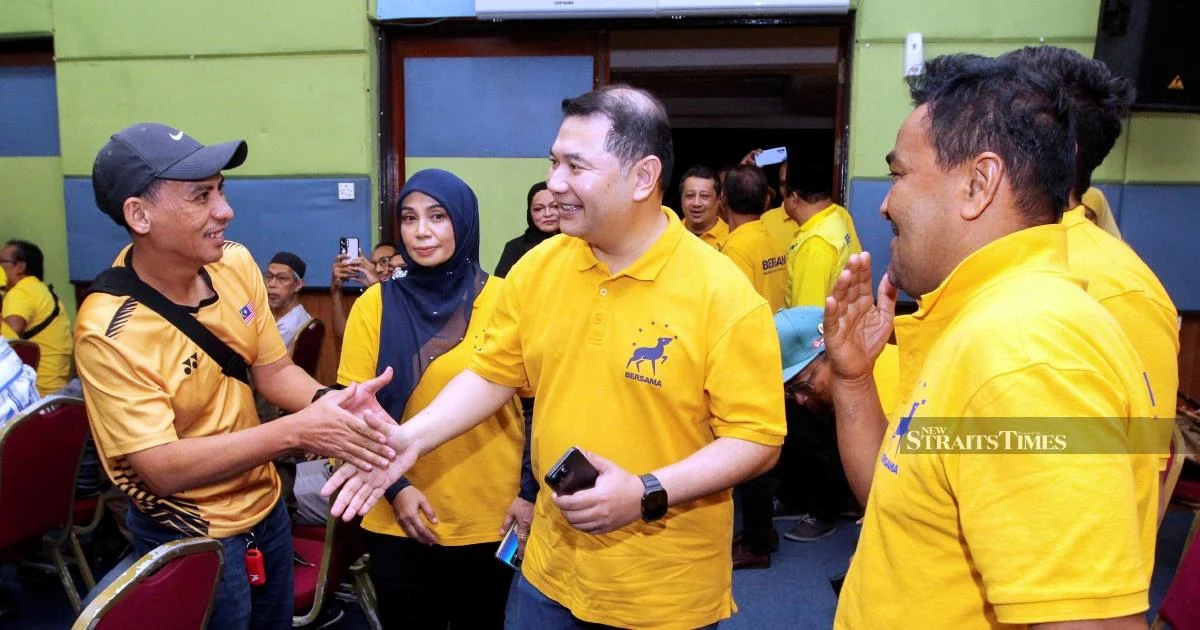
Parti Bersama Malaysia has decided to forego the hierarchical divisional and branch model that has long characterised Malaysian political organisation, instead adopting a technology-driven platform that executives believe better reflects contemporary political engagement. The decision represents a fundamental reimagining of how a political party can structure itself in the digital age, moving away from the geographical and administrative divisions that have been standard practice across the country's political landscape for generations.
The app-based system will operate under central management rather than being delegated to regional structures, allowing party leadership to maintain direct oversight and coordination across the entire membership base. This departure from tradition reflects broader organisational trends where digital platforms enable flatter hierarchies and more direct communication channels between leadership and grassroots members. For a newly established party like Bersama, the decision avoids the institutional inertia that often characterises older political movements while creating opportunities for rapid scaling and adaptation.
Party leaders, including Rafizi, have framed this technological approach as more suited to contemporary Malaysian politics, where mobile penetration rates exceed 140 percent and digital literacy has become increasingly commonplace across urban and semi-urban constituencies. By building party operations around a smartphone application rather than physical administrative units, Bersama aims to reduce overhead costs associated with maintaining divisional offices and branch structures while improving communication efficiency between leadership and members.
The implications for Malaysian politics are significant. Traditional party structures have long served as crucial conduits for ground-level political activity, from organising ceramah to mobilising voters during elections. By centralising operations through digital infrastructure, Bersama signals confidence that app-based coordination can replicate or exceed these functions. However, this approach also assumes consistent digital access and familiarity among all party members, which may present challenges in rural areas or among older demographic segments.
The centralised digital model also grants party leadership considerable control over messaging, resource allocation, and member activities. Unlike decentralised divisional structures where regional leaders often exercise significant autonomy, a centrally managed app allows headquarters to standardise party activities and ensure cohesive strategy implementation. This concentration of power represents a trade-off between efficiency and local responsiveness, potentially limiting the capacity of regional leaders to adapt party positions or activities to local conditions and sensitivities.
From an electoral perspective, this structural choice presents both advantages and vulnerabilities. On one hand, Bersama could mobilise supporters more rapidly through direct digital notifications and coordinate campaigns with unprecedented speed and precision. The app can serve as a data collection tool, enabling the party to analyse member preferences, engagement patterns, and demographic distribution in real time. On the other hand, Bersama lacks the established grassroots infrastructure that older parties have spent decades building, and digital dependency creates vulnerabilities if technical issues disrupt platform access during critical periods.
The decision also reflects generational shifts in Malaysian politics. Younger voters and digital natives may find app-based party structures more intuitive and accessible than traditional bureaucratic hierarchies. However, this approach risks alienating traditional party loyalists and older voters who expect conventional party structures and personal relationships with divisional or branch leaders. Building party cohesion across this generational divide will require careful management and complementary offline engagement strategies.
Regionally, Bersama's structural innovation may prompt other Malaysian parties to reconsider their own organisational models. Established parties like Umno, PKR, and DAP maintain substantial divisional and branch networks that employ thousands and organise regular activities. Whether these older parties will adopt similar digital systems remains uncertain, as doing so would require dismantling decades-old structures and potentially alienating entrenched party officials. Nevertheless, Bersama's experiment offers a real-world test case for how digital infrastructure can replace or supplement traditional party machinery in the Southeast Asian context.
The technical implementation of such a system will prove crucial to its success. The app must be user-friendly, secure against hacking or data breaches, and capable of handling substantial membership volumes without technical failures. It must also accommodate the diverse needs of party members across different regions and demographic groups, from grassroots activists seeking mobilisation tools to senior leaders requiring analytical dashboards. The quality of the platform's design and functionality will significantly influence whether members engage with it or default to informal networking outside official channels.
Legal and regulatory considerations also merit attention. Malaysian election law and party registration requirements do not typically mandate specific organisational structures, offering Bersama flexibility. However, the party will need to demonstrate to the Elections Commission and relevant authorities that its digital system provides adequate transparency, financial accountability, and member protection. Establishing clear protocols for digital governance, ensuring data privacy, and creating mechanisms for member redress will be essential for legitimacy.
Bersama's structural choice ultimately reflects confidence in Malaysia's digital ecosystem and belief that contemporary politics can be managed through technology rather than physical institutions. Whether this model proves sustainable and effective will depend on consistent app functionality, genuine member engagement, and the party's ability to deliver tangible political results. For Malaysian politics more broadly, Bersama's experience will illuminate both the potential and pitfalls of ditching traditional party structures in favour of digital-first alternatives.

