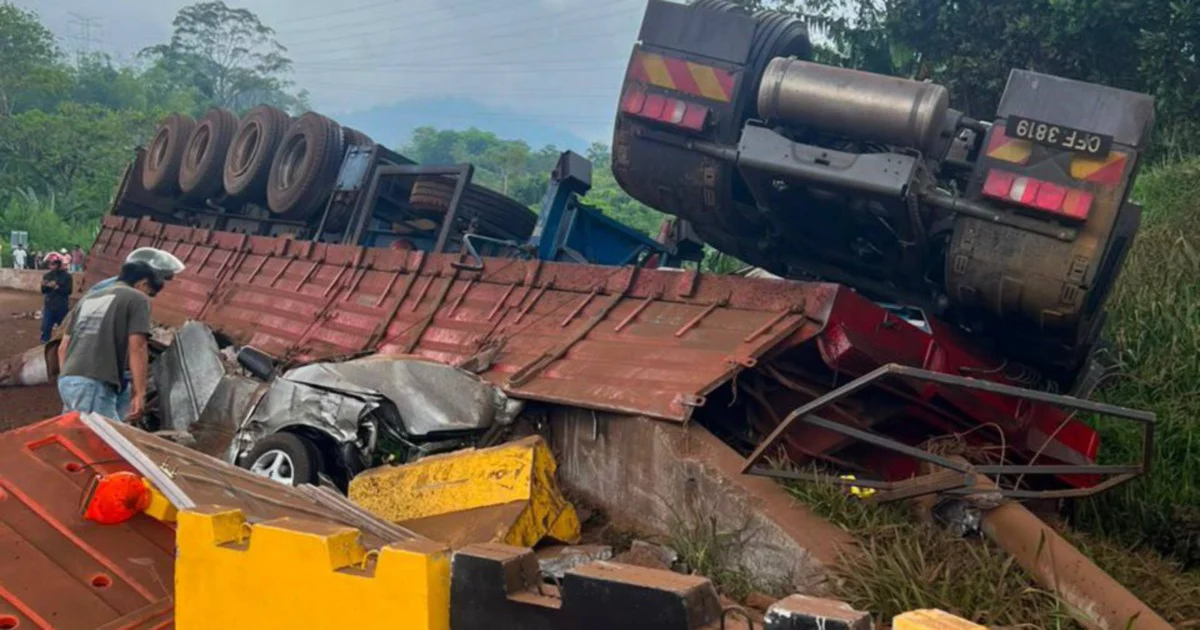
The trailer operator at the centre of a catastrophic traffic accident on Karak Expressway near Bentong has regained his freedom following his release on police bail, according to authorities in Pekan. The incident, which occurred on June 14, resulted in the deaths of four individuals and triggered a significant investigation into the circumstances that led to the collision. His temporary release marks a procedural step in the legal process as investigators and prosecutors prepare their case for court proceedings.
The June 14 collision represents one of the more serious traffic fatalities documented on the expressway in recent months, raising fresh concerns about road safety on this vital corridor connecting the Pahang region to the Klang Valley. The incident claimed four lives, making it a tragedy of considerable magnitude that has drawn attention to driving standards and vehicle maintenance practices among commercial operators on Malaysian highways. The Karak Expressway, a crucial arterial route, frequently witnesses heavy commercial traffic, and such catastrophic incidents underscore the inherent risks when large vehicles and high speeds converge on the same stretch of road.
The decision to release the driver on bail reflects standard investigative procedures in Malaysian traffic fatality cases, where authorities must gather comprehensive evidence before determining whether charges will be filed. Police bail in such circumstances typically permits the accused individual to remain at liberty while remaining subject to specific conditions and reporting requirements. This arrangement allows law enforcement agencies to conduct thorough examinations of the accident scene, vehicle condition, and other relevant factors without the need to maintain custodial detention during the preliminary investigation phase.
The investigation into the incident encompasses multiple technical and procedural dimensions. Authorities will likely examine the trailer's mechanical condition, including brake systems, tyre condition, and maintenance records, to establish whether mechanical failure contributed to the accident. Driver conduct factors such as speed, fatigue, attention span, and compliance with traffic regulations form another critical investigative element. Additionally, road conditions at the time, visibility, weather patterns, and potential involvement of other vehicles require detailed analysis to reconstruct the sequence of events that resulted in the tragedy.
Traffic fatalities involving heavy vehicles carry particular investigative complexity due to the technical expertise required to determine causation. The force involved in collisions between trailers and smaller vehicles often produces catastrophic outcomes, and forensic analysis of vehicle damage, skid marks, and debris patterns provides crucial evidence about how the accident unfolded. Authorities in Malaysia have developed increasingly sophisticated methodologies for reconstructing such incidents, drawing on international best practices and working with vehicle engineering specialists to determine the probable cause.
The release of the driver on bail does not indicate innocence or guilt, but rather reflects the procedural stage of the investigation. In Malaysia's legal framework, bail decisions in traffic fatality cases balance the investigative needs against the rights of the accused to reasonable bail conditions. Prosecutors will determine whether sufficient evidence exists to support criminal charges once investigations are sufficiently advanced. The timeline for this determination varies depending on case complexity and the availability of forensic evidence.
For Malaysian motorists and road safety advocates, incidents of this severity on major expressways highlight the broader challenges facing highway safety management. The Karak Expressway carries substantial daily traffic volumes, including numerous commercial vehicles transporting goods between Peninsular Malaysia's northern and central regions. When catastrophic collisions occur, they disrupt traffic flow significantly and prompt renewed scrutiny of enforcement mechanisms, vehicle standards, and driver accountability within the commercial transport sector.
The commercial trucking industry operates under regulatory frameworks requiring regular vehicle inspections, driver licensing standards, and adherence to load limits and working hour restrictions. Whether the June 14 incident involved violations of these regulations remains a crucial investigative question. The involvement of a trailer specifically raises questions about the combined mass and braking capacity, which become particularly critical when descending major elevation changes or navigating curves at highway speeds.
Family members of the four deceased individuals and the broader road safety community now await the investigative conclusions and any subsequent charging decisions. Such tragedies frequently prompt recommendations for enhanced enforcement, improved signage, or infrastructure modifications on the affected expressway section. The police investigation will likely conclude with a comprehensive report documenting the probable cause, which then informs both the prosecution's case and any recommendations for preventative measures to reduce the risk of similar incidents occurring in the future.

