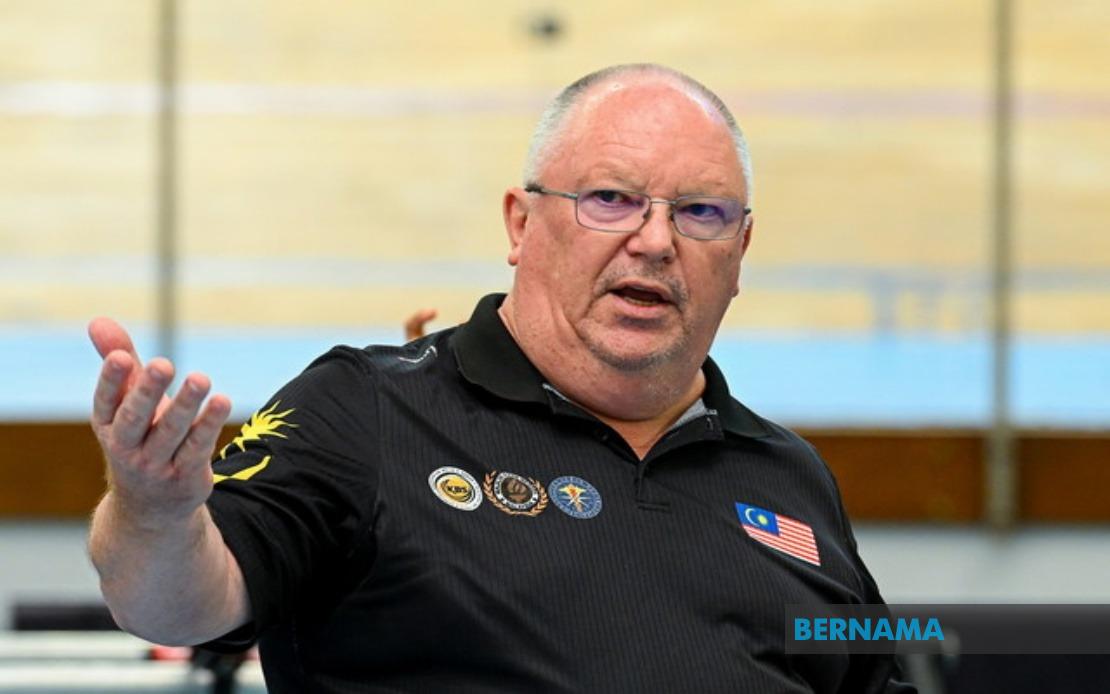
The Malaysian National Cycling Federation (MNCF) has moved to quash speculation about the future of its Technical Director John Beasley, with federation president Datuk Amarjit Singh Gill confirming that the Australian coach will remain in his position throughout the remainder of his current agreement. Speaking at a press conference in Kuala Lumpur on June 19, Amarjit stressed that reports circulating on social media claiming Beasley had resigned were misleading and had created unnecessary confusion among the public and cycling community. The 65-year-old Beasley, who has been instrumental in developing Malaysia's cycling programme over more than two decades, has only indicated his intention to step down after his contract concludes at the end of January 2027.
Amarjit explained that while Beasley had conveyed his desire to eventually move on from the role, this decision did not constitute an immediate departure from the federation. The clarification appeared designed to address mounting uncertainty that had gained traction in recent months, particularly in April when the matter began receiving wider attention. By publicly restating Beasley's commitment to remaining in post, the MNCF president sought to reassure stakeholders and the broader sporting community that the transition would be managed in an orderly fashion over the coming months.
The federation chief disclosed that discussions between MNCF leadership and Beasley had taken place just two days before the press conference, with both sides agreeing to prioritise the stability and focus of Malaysia's national cycling team. Given the critical juncture for Malaysian cyclists preparing for major international competitions, the two parties acknowledged that disruption to training and competitive preparations could prove costly. The upcoming Commonwealth Games and Asian Games represent significant opportunities for Malaysian riders to earn medals and enhance their standing on the continental stage, making continuity of coaching and strategic direction essential.
Amarjit emphasised the strength of relationships between Beasley and the national squad, noting that the cyclists have developed particularly close working connections with their technical director. The federation was acutely aware that external noise and uncertainty surrounding Beasley's future could undermine rider confidence and create psychological distractions during a sensitive preparation period. By issuing an unequivocal statement about Beasley's continuing role, the MNCF aimed to eliminate speculation that might negatively affect training intensity and mental readiness among competitors who are already operating under intense pressure to perform at elite international level.
Throughout his 21 years of service in Malaysia, Beasley has established himself as a transformative figure in the nation's cycling development. He has guided multiple generations of riders through increasingly competitive international environments and helped establish systematic training methodologies that have elevated Malaysian cycling's technical standard considerably. Recognising this legacy, Amarjit described Beasley as someone who merits the federation's full respect and whose decision-making regarding his personal future should be honoured. The federation has made clear it will not stand in the way of Beasley's planned transition, even as it seeks to maintain programme continuity and athlete welfare during the changeover period.
Interestingly, Amarjit did not rule out the possibility of Beasley continuing with the national programme in a different professional capacity beyond January 2027. This flexibility may become particularly relevant if national track cycling legend Datuk Mohd Azizulhasni Awang pursues competition at the Los Angeles 2028 Olympics. The prospect of retaining Beasley's expertise in a modified role demonstrates the MNCF's pragmatic approach to succession planning and its recognition that institutional knowledge and established relationships remain valuable assets even as formal positions change.
Underlying the federation's current challenges are allegations that certain individuals had attempted to manufacture friction between the MNCF and Beasley, potentially to undermine either party or serve undisclosed interests. Amarjit revealed that the federation had identified culprits involved in these destabilisation efforts and had already issued a formal show-cause letter to one individual, with a response received and further action under consideration. A second individual suspected of similar conduct is also being investigated, with the MNCF currently determining appropriate disciplinary measures. This enforcement action signals the federation's determination to protect its institutional integrity and prevent external actors from exploiting internal matters for factional advantage.
The MNCF president stressed that the federation maintains robust mechanisms for addressing legitimate grievances and complaints, and that all concerns must be channelled through official procedures rather than unofficial networks or social media campaigns. The federation has explicitly stated it will not tolerate attempts to sow conflict or circulate unsubstantiated allegations outside formal governance structures. This stance reflects broader concerns within sports organisations across Malaysia and Southeast Asia about maintaining professional standards and preventing rumour and factional behaviour from corroding institutional stability.
The resolution of the Beasley situation represents a test case for how Malaysian sports federations manage coaching transitions and protect athlete welfare when rumour and speculation threaten programme continuity. By moving decisively to clarify Beasley's status and identify those attempting to create disruption, the MNCF has sought to reassert control over its narrative and demonstrate competent crisis management. As Malaysia pursues competitive cycling success across multiple Olympic disciplines and continental competitions, the federation's ability to retain experienced technical leadership while planning thoughtful succession will prove increasingly important to sustaining performance gains achieved over recent years.

