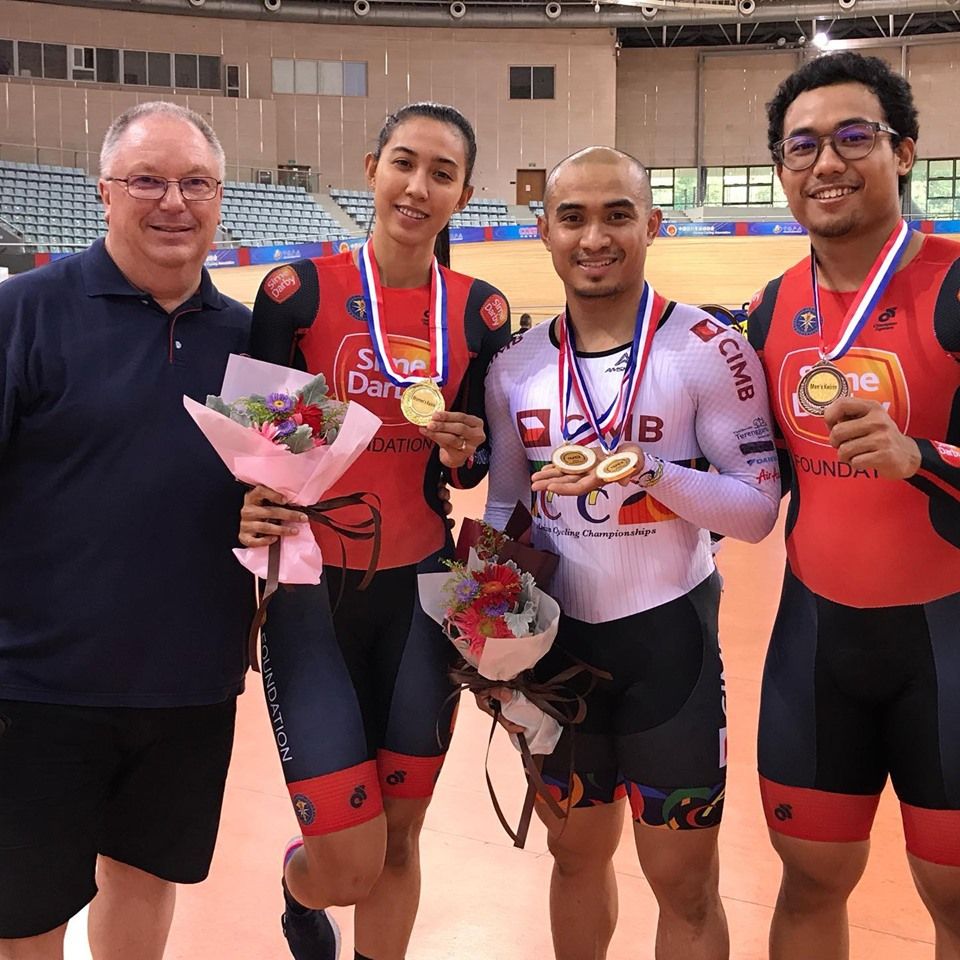
John Beasley appears poised to extend his involvement with Malaysian cycling in some capacity despite uncertainty surrounding his role as national technical director when his contract expires in January. The Australian coach, who has invested two decades in developing the nation's cycling programme, recently met with Malaysia National Cycling Federation president Datuk Amarjit Singh Gill in what both parties characterised as a candid and productive discussion about his future with the federation.
Amarjit revealed that Beasley expressed a willingness to remain engaged with Malaysian cycling, though several unresolved issues have caused him considerable frustration. The federation leadership, keen to retain Beasley's expertise and institutional knowledge, has decided to allow him space to consider his options rather than rush into a decision that could prove counterproductive. This measured approach reflects an acknowledgment that losing Beasley would represent a significant setback for a national programme that has benefited substantially from his long-term commitment and technical direction.
The crux of the discussion centred on Beasley's potential role should star sprinter Datuk Azizulhasni Awang continue competing beyond the Paris Games toward the Los Angeles Olympics in 2028. Amarjit posed this scenario directly to Beasley, emphasising that the federation envisioned an ongoing role for him in supporting the federation's elite athletes. Beasley's affirmative response to this proposition suggests a pathway forward that preserves his involvement while potentially shifting his responsibilities away from administrative duties that may have contributed to his frustrations. The implication is that Beasley could transition from technical director into a coaching or advisory position focused exclusively on high-performance athletes, an arrangement that might better suit both parties.
This development assumes particular significance in Malaysian cycling's regional context. Beasley's expertise has been instrumental in establishing training methodologies and competitive standards that have elevated Malaysian cyclists' performance internationally. The loss of such institutional knowledge would disrupt continuity in technical programmes and athlete development pipelines that have taken years to construct. His potential transition to a specialised coaching role rather than administrative management could actually enhance his effectiveness by removing bureaucratic impediments while maintaining his direct influence over the athletes themselves.
Central to the current impasse has been what Beasley previously characterised as intolerable internal politics within Malaysian cycling circles. His frustrations appear to have been exacerbated by officials working against federation interests, creating an environment that prompted Beasley to consider departing entirely. Rather than accept this outcome, Amarjit has moved decisively to address the root causes of discord by identifying and taking action against individuals believed responsible for recent controversies involving Beasley and the federation.
The MNCF has already issued a show-cause letter to one official implicated in the tensions, signalling that organisational accountability is now being enforced. A second individual has been identified for potential future disciplinary action, indicating that the federation leadership is committed to restoring professional standards and eliminating the political maneuvring that has undermined institutional functioning. This crackdown reflects Amarjit's broader assertion that coaching and administrative staff must adhere to established rules, regulations, and proper channels for addressing grievances rather than conducting covert campaigns that damage organisational credibility.
Amarjit's stance on internal conduct is unambiguous: the federation will not countenance behaviour that contravenes its governance framework or circumvents established protocols for raising concerns. For officials and coaches operating within Malaysian cycling, this message carries clear implications about expectations regarding professional conduct and adherence to organisational discipline. The federation's willingness to take formal action against those who operate outside these parameters suggests a genuine commitment to structural reform, not merely rhetorical posturing about institutional standards.
The preservation of Beasley's involvement carries broader ramifications for Malaysia's cycling ambitions. High-performance athletes develop deep professional bonds and trust with their coaches over time, and such relationships cannot be rapidly reconstructed with replacement personnel. The specific technical knowledge Beasley brings to sprint training, biomechanics, and competitive strategy represents accumulated expertise that would take years for a successor to develop. Beyond individual athletes, Beasley's presence within the federation provides continuity in methodology and coaching culture that influences how Malaysian cycling programmes operate across multiple disciplines and competitive levels.
Looking forward, the resolution of this situation will likely establish precedent for how the MNCF handles internal conflicts and management of high-profile technical staff. Should Beasley remain in a restructured capacity and the federation successfully address the officials behind recent discord, it could signal institutional maturation in how Malaysian sports bodies manage governance and resolve disputes through legitimate channels rather than through informal political mechanisms. Conversely, any failure to follow through on promised disciplinary action would undermine the federation's credibility and invite future instability.
For Malaysian cycling athletes preparing for Olympic cycles and international competitions, the outcome matters considerably. A period of directional uncertainty or coaching instability could disrupt training schedules and competitive preparation during critical development windows. Beasley's remaining involved, even in a modified capacity, provides the continuity and stability that elite athletes require to maintain focus on their sporting objectives. The federation's apparent commitment to both retaining Beasley and addressing institutional dysfunction suggests an understanding that these objectives are interconnected and mutually reinforcing.

