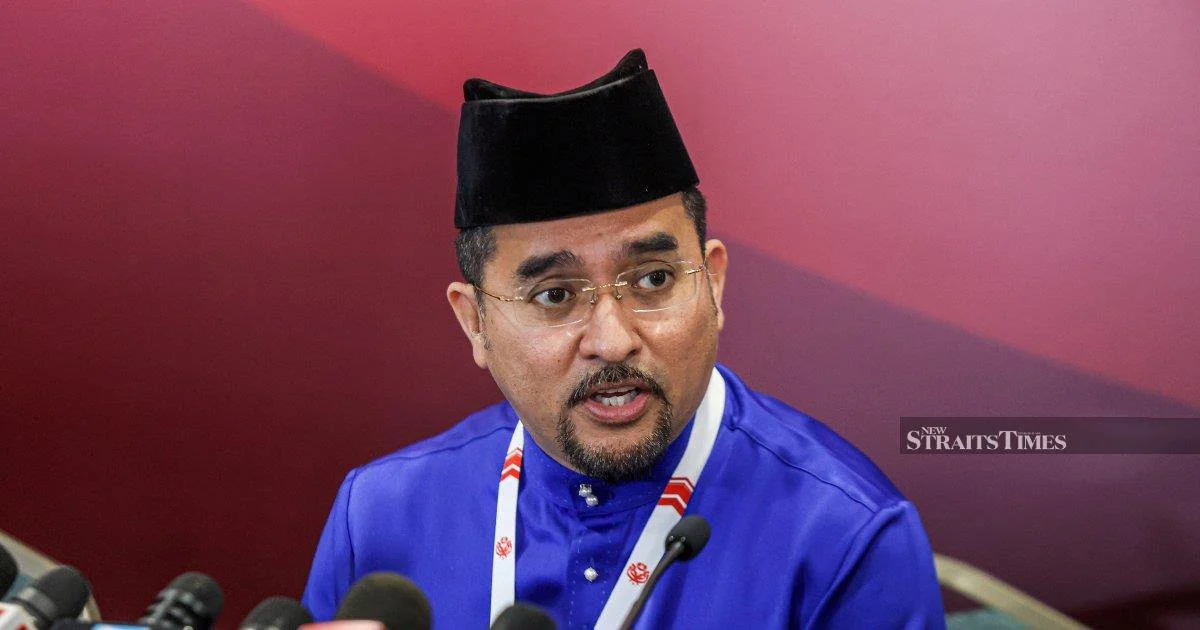
The Barisan Nasional coalition cited an intensive candidate vetting framework as the primary cause for delaying its candidate announcements ahead of the Johor state election. Umno secretary-general Datuk Dr Asyraf Wajdi Dusuki attributed the postponement to the need for comprehensive screening measures designed to ensure only qualified individuals receive the party's endorsement.
The timing of the announcement has become a focal point in Malaysian political discourse, with observers noting that electoral calendars demand careful orchestration of party machinery. For BN—which dominates Malaysian politics through three major partners in Umno, the Malaysian Chinese Association (MCA), and the Malaysian Indian Congress (MIC)—the coordination required to present a unified slate across multiple constituencies reflects the complexity of managing a broad coalition.
Vetting processes in Malaysian political parties typically examine candidates' financial standing, personal conduct, educational credentials, community involvement, and allegiance to party principles. Such evaluations are intended to shield parties from embarrassment caused by problematic nominees who might attract media scrutiny or invite public backlash. In Johor's context, where the state assembly comprises 56 seats, the administrative burden of screening dozens of potential candidates simultaneously represents a substantial undertaking.
The delay underscores a broader tension within Malaysian politics between maintaining campaign momentum and exercising due diligence. Parties must balance the desire to announce candidates early—thereby establishing name recognition and allowing grassroots mobilisation—against the imperative to conduct thorough background checks. For BN, which seeks to reclaim ground lost to Pakatan Harapan in recent electoral cycles, the stakes of fielding credible candidates are particularly high.
Johor holds special significance within Malaysian federalism as a bastion of BN support and a powerhouse within Umno's territorial influence. The state has historically served as a testing ground for national party strategies and a source of parliamentary talent. Recent electoral trends have nonetheless prompted concern among BN strategists about voter sentiment in urban areas and younger demographic groups who have demonstrated willingness to support opposition coalitions.
The rigor applied to candidate selection reflects evolving party standards in Malaysian politics. Decades of scandals involving elected representatives—ranging from misappropriation of funds to character controversies—have prompted major parties to implement more sophisticated vetting frameworks. BN's decision to prioritise thoroughness over speed signals institutional learning and an attempt to rebuild public confidence through higher-calibre nominations.
From a governance perspective, stringent candidate evaluation benefits Malaysian democracy by raising the quality of legislative representation. When parties invest resources in comprehensive screening, they ostensibly filter out candidates with undisclosed liabilities or questionable credentials. This approach contrasts with rapid-fire nominations that prioritise party connectivity or historical claims over substantive qualifications, though critics argue that political considerations inevitably influence the selection process regardless of vetting intensity.
For Malaysian voters in Johor and across Southeast Asia observing the election, the delay carries symbolic weight. It suggests that BN views this contest as significant enough to warrant careful preparation rather than hasty candidate announcements. In competitive electoral environments, such deliberation can communicate seriousness to the electorate and project organisational competence—factors that influence voting preferences alongside policy platforms and candidate personality.
The announcement delay also reflects the structural complexity of managing consensus among BN's constituent parties. Beyond Umno's internal evaluations, the coalition must coordinate with MCA and MIC to determine seat allocations, negotiate candidate placements, and balance representation across different communities. This multi-party negotiation layer adds temporal complexity that single-party opponents do not necessarily face, though coalition structures theoretically offer advantages in broadening electoral appeal.
The broader implications extend to campaign strategy and messaging. BN candidates announced later in an election cycle benefit from observing opposition positioning and tailoring their platforms accordingly. However, they sacrifice the opportunity to shape initial narrative framing and establish early visibility in key constituencies. The timing calculus ultimately depends on whether BN believes the quality gains from thorough vetting outweigh the tactical advantages of early announcement momentum.
For Malaysian political observers, the vetting process controversy illustrates how internal party mechanics increasingly influence public perception and electoral dynamics. Voters increasingly scrutinise not merely what candidates promise but the processes through which parties select and vet their representatives. In an era of heightened political awareness and social media amplification, any delay in candidate announcements invites speculation and media commentary that parties must actively manage through transparent communication.
Looking forward, BN's commitment to rigorous vetting in Johor may establish precedent for future electoral cycles, either encouraging other parties to adopt similar standards or prompting criticism if the screened candidates subsequently encounter controversy. The effectiveness of these vetting procedures will ultimately be measured against both the calibre of elected representatives and the party's electoral performance in this closely watched contest.

