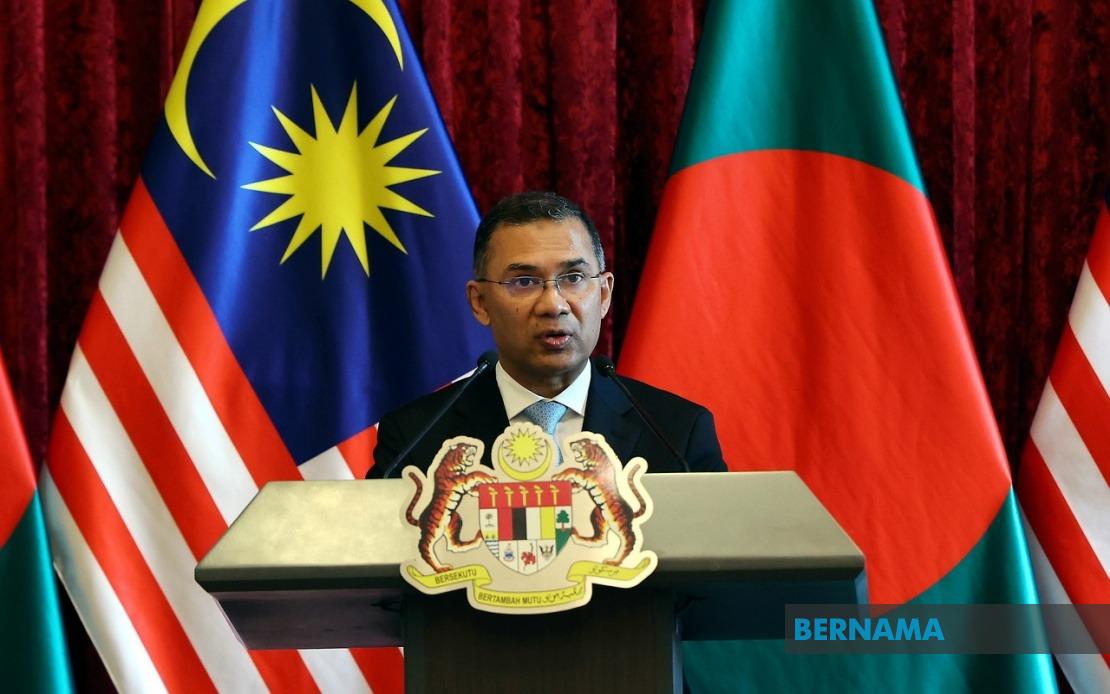
Bangladesh is making a strategic push to strengthen its position within Southeast Asia's institutional architecture, with Prime Minister Tarique Rahman announcing the country's formal aspiration to become an ASEAN Sectoral Dialogue Partner during talks with Malaysian Prime Minister Datuk Seri Anwar Ibrahim in Putrajaya on June 22. The declaration marks a significant step in Bangladesh's broader regional integration strategy, reflecting Dhaka's recognition that deeper engagement with ASEAN is essential for its economic and geopolitical interests in an increasingly interconnected Southeast Asian marketplace.
Rahman's visit produced tangible diplomatic outcomes, with both governments formalising their commitment through three separate agreements. A Memorandum of Understanding on Cultural Cooperation was signed alongside two Exchanges of Notes covering Counter-Terrorism Research and Investment Promotion and Facilitation. These instruments, while appearing routine on the surface, represent practical mechanisms for translating political goodwill into actionable cooperation across multiple sectors—a recognition that bilateral relations require institutional scaffolding to remain robust beyond individual government tenures.
Beyond the immediate bilateral dimension, Rahman articulated Bangladesh's keen interest in acceding to the Regional Comprehensive Economic Partnership, one of the world's largest trade agreements currently encompassing ten ASEAN members plus China, Japan, South Korea, Australia, and New Zealand. For Bangladesh, RCEP membership would represent a watershed moment, granting the country preferential access to a market encompassing over two billion people and approximately 30 percent of global GDP. The potential economic implications are substantial, particularly for Bangladesh's textile and apparel sectors, which could benefit from simplified tariff structures and supply chain integration across the region.
Malaysia's demonstrated support for Bangladesh's regional integration efforts carries particular weight given Kuala Lumpur's influential voice within ASEAN's decision-making structures. Rahman specifically acknowledged this backing, recognising that Malaysia's endorsement of Bangladesh's sectoral dialogue partnership aspirations could expedite institutional acceptance across the broader ASEAN membership. This political choreography underscores the reality that regional integration gains momentum when anchor countries actively champion the ambitions of non-member neighbours, particularly those with significant economic heft and strategic location.
The bilateral trade relationship between Malaysia and Bangladesh provides concrete evidence of the economic interdependence underpinning these diplomatic initiatives. In 2025, two-way commerce reached RM12.18 billion (US$2.84 billion), positioning Bangladesh as Malaysia's 28th largest trading partner globally and second-most significant commercial partner within South Asia after India. This ranking reflects the fundamental role Bangladesh plays in Malaysia's regional trade networks, a status that will likely deepen should the country secure closer ASEAN alignment.
Malaysia's export portfolio to Bangladesh reveals the complementary nature of the two economies. Malaysian exports totalling RM10.08 billion (US$2.35 billion) are predominantly dominated by petroleum products, reflecting Bangladesh's energy-intensive industrial base and growing demand from its manufacturing sector. This petroleum dependency, however, also signals Bangladesh's vulnerability to commodity price volatility—a consideration that makes RCEP membership potentially valuable as a mechanism for diversifying trading relationships and reducing exposure to single-partner trade shocks.
Conversely, Bangladesh's exports to Malaysia, valued at RM2.10 billion (US$500 million), concentrate heavily on textiles, apparel, and footwear—precisely the sectors where Bangladesh commands global competitive advantage. Malaysia functions as both a destination market and a transhipment hub for Bangladeshi textile exports destined for broader Southeast Asian consumption. Deeper integration through RCEP would potentially streamline these supply chains, reducing tariffs and non-tariff barriers that currently fragment regional textile production networks.
For Malaysian stakeholders, Bangladesh's institutional advancement within regional frameworks carries implications across multiple dimensions. Enhanced ASEAN dialogue mechanisms would broaden platforms for addressing transnational challenges—maritime security, counterterrorism, cybercrime—that affect both countries. The Counter-Terrorism Research agreement signed during Rahman's visit exemplifies this practical cooperation imperative, particularly given that both nations face similar terrorism-related challenges emanating from extremist networks operating across South and Southeast Asia.
Bangladesh's RCEP aspirations also intersect with Malaysia's own strategic interests in supply chain diversification. As companies increasingly seek alternatives to traditional manufacturing hubs, Bangladesh's lower labour costs and abundant workforce present compelling relocation opportunities for Malaysian firms seeking to optimise production footprints. Formalised trade arrangements through RCEP would reduce transaction costs associated with such relocations, facilitating smoother capital and technology transfer.
The cultural cooperation framework represents a softer dimension of bilateral engagement that nonetheless carries strategic significance. Enhanced people-to-people contacts, educational exchanges, and tourism flows strengthen the societal foundations upon which durable state relationships rest. Rahman's extension of a personal invitation to Prime Minister Anwar and his spouse to visit Bangladesh signals confidence in bilateral momentum and anticipates deeper institutional visits that typically precede major policy initiatives.
Bangladesh's positioning within regional institutions reflects broader geopolitical currents reshaping South and Southeast Asian dynamics. As India's dominance within South Asia remains undisputed, countries like Bangladesh increasingly pursue multivectoral foreign policies that deepen Southeast Asian engagement without diminishing South Asian commitments. ASEAN dialogue partnership status would grant Bangladesh formal voice in regional discussions while maintaining its South Asian moorings—a sophisticated balancing act that several emerging powers pursue.
The dialogue partnership pathway offers Bangladesh a graduated integration model potentially more feasible than full ASEAN membership, which demands comprehensive institutional alignment and often triggers intra-ASEAN burden-sharing disputes. As a sectoral dialogue partner, Bangladesh could participate in specific functional domains—economic cooperation, counterterrorism, maritime security—without the sweeping institutional obligations membership entails. This pragmatic approach acknowledges that institutional architecture must evolve incrementally, accommodating new members as existing frameworks demonstrate capacity to integrate diverse stakeholders successfully.
Moving forward, Bangladesh's success in formalising closer ASEAN engagement and securing RCEP membership will substantially reshape the regional trading architecture. Malaysia's supportive stance positions Kuala Lumpur as a valuable partner for Dhaka's integration ambitions, while simultaneously expanding Malaysia's own sphere of economic influence within South Asia's largest Muslim-majority nation. The bilateral agreements signed in Putrajaya represent foundational steps in a relationship trajectory oriented toward deeper institutional cooperation spanning trade, security, and cultural domains.

