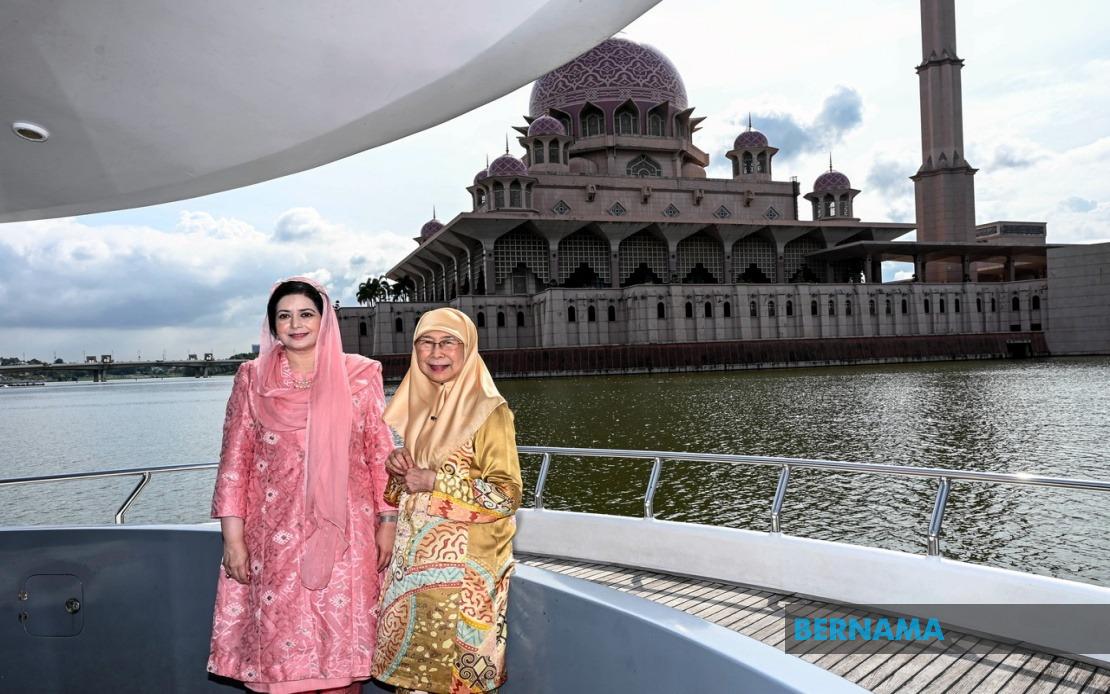
Dr Zubaida Rahman, spouse of Bangladesh Prime Minister Tarique Rahman, experienced the natural and architectural splendour of Putrajaya through a leisurely lake cruise on Saturday morning, marking a cultural highlight during the visiting dignitary's official stay in Malaysia. The excursion, which commenced at 9:30 am, allowed her to absorb panoramic vistas of the federal administrative centre's most recognisable structures from the tranquil waters of Putrajaya Lake, a centrepiece of the purpose-built capital's landscape design.
The Prime Minister's wife received a formal welcome from Datin Seri Dr Wan Azizah Wan Ismail, wife of Malaysian Prime Minister Datuk Seri Anwar Ibrahim, alongside Hannah Yeoh, who serves as Minister in the Prime Minister's Department overseeing Federal Territories affairs. The presence of these senior Malaysian figures underscored the diplomatic significance attached to the Bangladeshi delegation's presence. Throughout approximately one hour spent aboard, Dr Zubaida engaged in substantive conversation with her Malaysian hosts whilst taking in the architectural vistas that define Putrajaya's waterfront environs, establishing personal rapport that extends beyond formal state ceremonies.
The Bangladesh Prime Minister and his wife commenced their journey to Malaysia on Sunday evening, embarking on a two-day official state visit calibrated to reinforce the longstanding partnership between Dhaka and Kuala Lumpur. This visit assumed particular importance as it constituted Tarique Rahman's inaugural official bilateral excursion since his assumption of executive office in February 2026, signalling Malaysia as a priority destination in his early diplomatic calendar. The invitation from Anwar reflected deliberate efforts to broaden collaboration frameworks and explore fresh avenues of mutual advantage across multiple sectors.
Bilateral engagement between the two South Asian and Southeast Asian neighbours extends well beyond ceremonial functions. Bangladesh currently ranks as Malaysia's 28th-largest trading counterpart globally, a designation that masks the strategic depth of their economic relationship. The quantifiable trade dimension reveals a cumulative annual value reaching RM12.18 billion, representing a substantial and mutually beneficial commercial partnership. Within the broader South Asian region, Bangladesh occupies second position exclusively to India in Malaysia's trade rankings, reflecting the island nation's significance to Malaysian economic interests and the complementary nature of their respective industrial bases.
The lake cruise experience served multiple diplomatic purposes beyond mere tourism. Such events facilitate informal settings where political leaders and their representatives can discuss sensitive matters away from formal negotiating tables, whilst simultaneously projecting an image of warmth and cultural exchange to domestic audiences in both nations. Putrajaya's deliberate architectural and environmental design—characterised by its symmetrical planning, monument-centred arrangements, and water features—conveys messages of modernity and purposeful governance to visiting dignitaries, effectively communicating Malaysian aspirations and development achievements.
The visit emerges within a context of strengthened Southeast Asian-South Asian engagement, reflecting broader regional geopolitical dynamics. Malaysia's emphasis on deepening ties with Bangladesh aligns with broader strategies to enhance regional interconnectivity and explore complementarities in areas ranging from trade and investment to cultural and educational cooperation. Bangladesh, as a nation of over 170 million inhabitants and an increasingly important manufacturing hub, represents significant potential for Malaysian businesses seeking expansion opportunities in South Asian markets.
The inclusion of cultural and recreational components in Tarique Rahman's visit demonstrates recognition that successful diplomacy encompasses more than contractual negotiations and policy discussions. Exposure to Malaysian heritage, natural environments, and contemporary urban planning serves to create positive impressions that translate into favourable public sentiment and political will conducive to deeper cooperation. The Putrajaya experience functions as a microcosm of Malaysia's development narrative and aspiration towards becoming a globally competitive economy with world-class infrastructure.
Cooperation frameworks between the nations extend across diverse domains including education, where Malaysian institutions increasingly attract Bangladeshi students; technology, where information technology and digital innovation partnerships hold promise; and manufacturing, where supply chain integration offers mutual benefits. The bilateral trade value of RM12.18 billion encompasses textiles, agricultural products, engineering goods, and an expanding services sector component. Enhanced institutional cooperation through this visit may catalyse further integration and expanded commercial activity.
Looking forward, the outcomes of this diplomatic engagement may manifest in concrete agreements spanning infrastructure development, educational scholarships, technology transfer initiatives, and expanded market access arrangements. Such visits establish the relational foundation upon which substantive bilateral mechanisms operate, transforming abstract commitments into operational realities. The personal connections forged during the Putrajaya lake cruise between Dr Zubaida and her Malaysian counterparts represent investments in sustained diplomatic partnerships that extend beyond individual administrations and electoral cycles.

