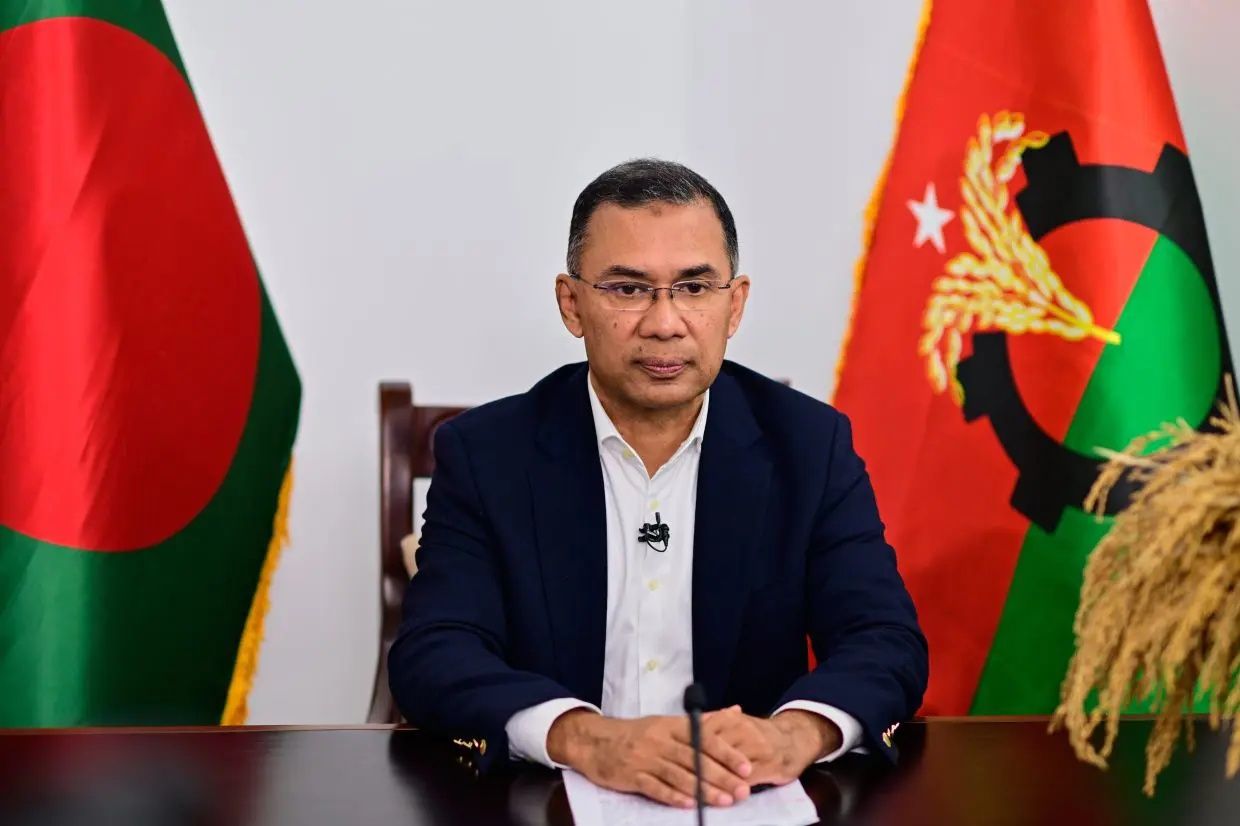
Bangladesh's newly elected Prime Minister Tarique Rahman is set to undertake his inaugural foreign visit by travelling to Malaysia on Sunday and China the following day, signalling a deliberate recalibration of Dhaka's diplomatic priorities away from its historically dominant neighbour India. The choice of destination reflects not only the current strains in Bangladesh-India relations but also the administration's determination to diversify its external engagements and cement economic partnerships beyond the subcontinent.
The sequencing of Rahman's journey carries substantial diplomatic weight. By selecting Malaysia as his first stop rather than India—a nation that geographically and historically dominates Bangladesh's foreign policy landscape—the new prime minister is sending a clear message about his government's strategic orientation. Bangladesh's foreign ministry has characterised the twin visits as a comprehensive economic diplomacy initiative designed to unlock new trade opportunities and infrastructure financing for a nation confronting significant development challenges.
Malaysia holds particular significance in Bangladesh's economic calculations. The Southeast Asian nation hosts approximately 800,000 Bangladeshi workers, representing more than a third of Malaysia's total foreign workforce. This substantial diaspora community constitutes both a humanitarian concern and an economic pillar for Bangladesh, generating critical remittances that underpin household incomes across rural communities. Rahman's visit will likely prioritise the welfare and working conditions of these expatriate communities whilst simultaneously exploring avenues for expanded bilateral trade and investment.
The Beijing leg of the tour opens the door to infrastructure financing and project development that could prove transformative for Bangladesh's water management and agricultural sectors. High on the agenda are discussions surrounding Chinese support for the protracted Teesta River Restoration Project, an ambitious initiative long delayed by diplomatic complications. The scheme encompasses comprehensive dredging operations, embankment reinforcement, and irrigation network construction designed to rehabilitate one of the region's critical waterways and unlock irrigation potential across northern Bangladesh.
The diplomatic landscape between Dhaka and New Delhi has fundamentally shifted following the political upheaval of 2024, when mass protests toppled the government of Prime Minister Sheikh Hasina, a figure closely aligned with Indian interests. Rahman subsequently won elections and assumed office in February after the interim administration that had managed the transition period relinquished power. Whilst outward indicators suggest normalisation, underlying tensions persist and continue to complicate bilateral engagement.
A central irritant remains the extradition question surrounding former Prime Minister Hasina, who has remained in hiding within Indian territory since fleeing Bangladesh during the revolutionary upheaval. Despite repeated appeals from Dhaka, Indian authorities have declined to surrender her, citing humanitarian grounds and maintaining her safety within its borders. This refusal underscores the divergence in how both nations view the 2024 transition, with India's sympathies lying with the displaced leader despite her unpopularity domestically.
Border management has emerged as another flashpoint in Bangladesh-India relations. Indian authorities have implemented a controversial policy of directing individuals classified as undocumented migrants across the frontier into Bangladesh, a practice that has generated significant friction. This unilateral approach to border population management has provoked complaints from Dhaka, which views the transfers as violations of bilateral protocols and sources of humanitarian concern for receiving communities.
Rahman's diplomatic repositioning also reflects deeper regional dynamics involving the great power competition between India and China for influence across South Asia. As the world's two most populous nations with competing geopolitical ambitions, Beijing and New Delhi have long jostled for regional predominance. Bangladesh, positioned strategically between these titans, represents a crucial prize in the broader contest for South Asian alignment. By prioritising engagement with China and Malaysia, Rahman is demonstrating that Dhaka intends to maintain agency in its external relations rather than default to any single partner.
The timing of this tour carries additional significance given the delicate domestic political context in Bangladesh. The new administration is still consolidating its authority following the upheaval that displaced Hasina's government. International engagement at this early stage serves multiple purposes: it validates the legitimacy of Rahman's newly constituted administration on the world stage, demonstrates capacity to advance national interests through diplomacy, and begins the work of securing external financing for development priorities that successive governments have struggled to address.
For Malaysia, the visit represents an opportunity to strengthen ties with a labour-exporting nation whose citizens constitute a vital component of its workforce. Beyond manpower questions, expanded trade corridors and potential investment flows could benefit both economies. For Bangladesh, deepening ties with Southeast Asia more broadly offers diversification away from South Asian dependence whilst positioning Dhaka as a constructive player in the broader Indo-Pacific region.
China's interest in Bangladesh extends beyond the Teesta project to encompass broader Belt and Road Initiative objectives and strategic positioning within South Asia. Infrastructure investments and project financing can anchor Beijing's influence whilst simultaneously addressing Bangladesh's chronic development funding gaps. The convergence of interests suggests both nations are prepared to advance mutually beneficial cooperation.
The broader implications of Rahman's maiden tour suggest that Bangladesh's foreign policy trajectory is entering a new chapter, one characterised by greater assertiveness and reduced gravitational pull from New Delhi. This recalibration does not signal outright antagonism toward India but rather a more balanced and pragmatic approach to managing external relationships. For regional observers, the tour signals that Bangladesh under new leadership intends to forge its own path through careful diplomatic manoeuvring and strategic partnership diversification.

