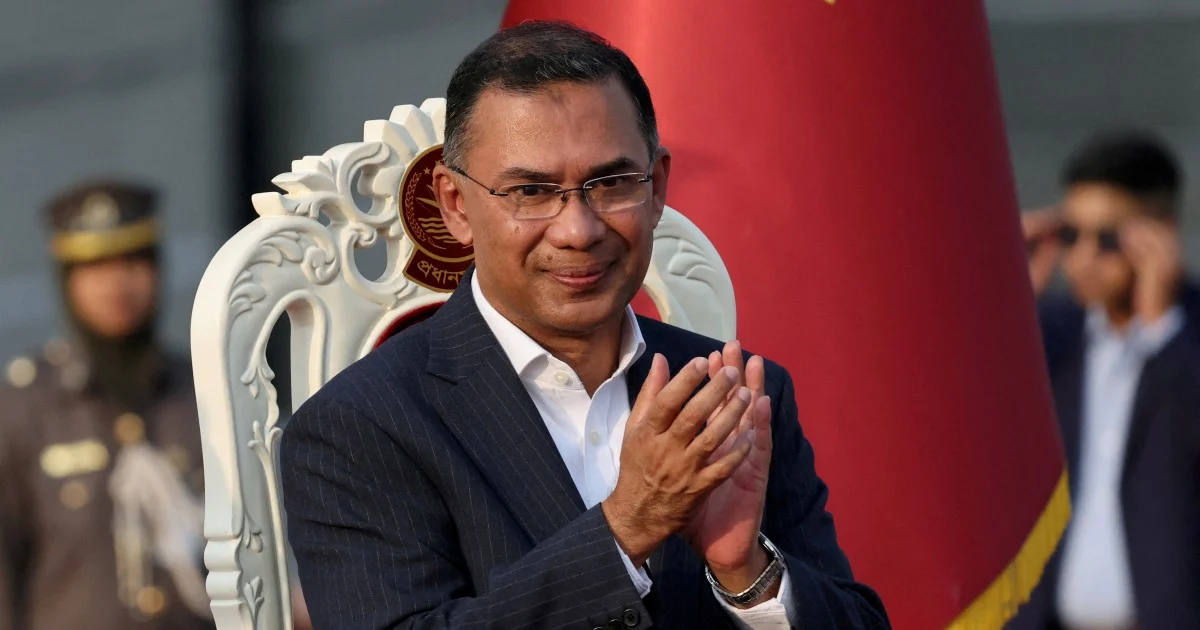
Bangladesh Prime Minister Tarique Rahman touched down at Sepang today, marking the beginning of a significant diplomatic engagement that underscores growing ties between Dhaka and Kuala Lumpur. The visit represents a carefully calibrated effort to reinforce the partnership between two important Southeast Asian and South Asian players, at a time when regional dynamics are shifting and nations are reassessing their international alignments.
The timing of Rahman's visit carries particular weight in the broader context of Bangladesh's foreign policy positioning. Following the dramatic political transition that brought his administration to power, Dhaka has been actively engaged in strengthening relationships across the region and beyond. Malaysia, as a fellow Muslim-majority nation and influential member of the Association of Southeast Asian Nations, holds strategic importance in Bangladesh's diplomatic architecture.
Bilateral relations between the two countries have historically centred on economic and people-to-people connections, with significant Malaysian investment in Bangladesh's manufacturing and energy sectors, alongside a substantial diaspora of Bangladeshi workers in Malaysia. This visit provides an opportunity to elevate these practical partnerships into a more comprehensive strategic framework, potentially spanning defence, technology, and cultural exchange.
During his time in Malaysia, Rahman is expected to hold substantive discussions with Malaysian leadership on matters ranging from trade facilitation to regional security concerns. The agenda likely encompasses discussions on enhancing market access for Bangladeshi exports, attracting further Malaysian investment into Bangladesh's economy, and exploring collaborative opportunities in emerging sectors such as renewable energy and digital innovation.
From Malaysia's perspective, the visit presents a chance to deepen engagement with a nation of 170 million people and strengthen ASEAN's collective influence in a region where geopolitical competition is intensifying. Bangladesh's strategic location at the intersection of South Asia and Southeast Asia, combined with its significant maritime interests in the Bay of Bengal, makes it a natural partner for Malaysian policymakers navigating increasingly complex regional challenges.
The bilateral relationship also reflects broader patterns of South-South cooperation that have gained prominence in recent years. Both nations share concerns about climate vulnerability, food security, and the impacts of global economic turbulence. Enhanced cooperation in these areas could yield tangible benefits for their populations while positioning them as leaders in tackling transnational challenges that transcend traditional diplomatic boundaries.
Cultural and educational exchanges are expected to feature prominently in discussions, particularly given Malaysia's established reputation in higher education and Bangladesh's growing emphasis on skills development. Joint initiatives in these domains could facilitate brain circulation, allowing talented Bangladeshi professionals to gain experience in Malaysia while contributing to Malaysian institutions, ultimately benefiting both economies.
The visit also signals Bangladesh's commitment to maintaining active engagement across multiple international partners despite complex domestic circumstances. Demonstrating effective diplomatic outreach helps project an image of stability and normalcy to international investors and trading partners, crucial considerations as Bangladesh navigates economic challenges and seeks to maintain its development trajectory.
For Malaysia, hosting high-level visitors from neighbouring regions reinforces its role as a credible diplomatic hub and economic anchor in Southeast Asia. The visit contributes to a dense network of ministerial and prime ministerial interactions that characterise contemporary Southeast Asian statecraft, where frequent engagement helps prevent misunderstandings and builds personal relationships that facilitate problem-solving at critical moments.
Second-track discussions between academics, business leaders, and civil society organisations may also feature, reflecting how modern diplomacy extends beyond formal government channels. Such interactions often generate innovative ideas for cooperation that official delegations subsequently formalise, creating momentum that extends beyond individual visits.
The visit occurs within a broader context of Malaysia's own diplomatic renewal under its current administration, which has emphasised Southeast Asian solidarity, Islamic cooperation, and pragmatic engagement with major powers. Bangladesh, similarly, has shown interest in balancing relationships across the Muslim world while maintaining strong connections with its Asian neighbours and Western trading partners.
Looking ahead, the substantive outcomes of this visit—whether reflected in joint statements, new agreements, or announced initiatives—will likely set the tone for bilateral relations over coming years. Both nations stand to benefit from deeper integration across multiple domains, from people-to-people exchanges to commercial partnerships and security cooperation, creating a foundation for relationship-building that transcends individual administrations.

