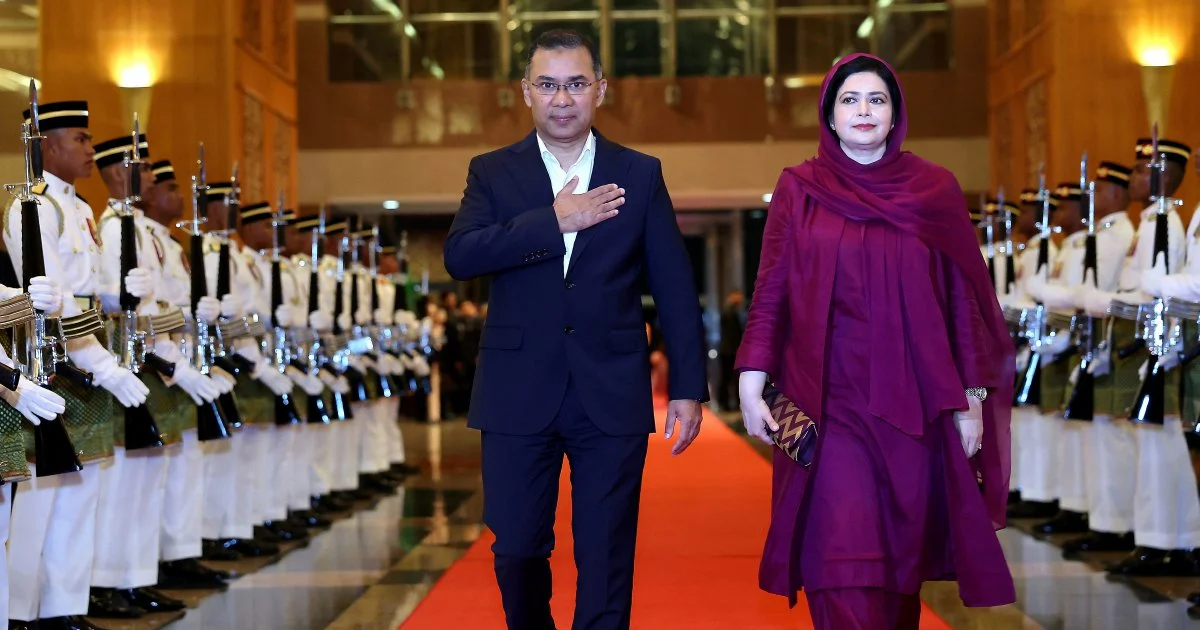
Bangladesh Prime Minister Tarique Rahman has made a direct appeal to Malaysian investors, encouraging them to recognise and seize emerging business opportunities within their country as the South Asian nation continues to strengthen its operating environment. The invitation underscores a wider effort by Dhaka to attract capital from the broader region, particularly from established Southeast Asian economies seeking new markets and growth avenues beyond their home territories.
The overture comes as Bangladesh transitions through a period of institutional renewal, with the government actively working to reshape regulatory frameworks and infrastructure to become more attractive to foreign capital. The emphasis on a business-friendly ecosystem reflects a strategic recognition that sustainable economic growth requires not only foreign direct investment but the right type of partnerships—those that bring technology, expertise, and management practices alongside capital injection. Malaysian firms, with their experience navigating regional markets and established supply chains across Asia, represent precisely the kind of investor Bangladesh hopes to draw.
From a Malaysian perspective, the timing of Rahman's outreach holds particular significance. The region's leading economies are actively diversifying their investment portfolios and production footprints to reduce dependency on any single market or nation. Bangladesh's lower labour costs, young and increasingly skilled workforce, and geographic position linking South Asia to Southeast Asia make it strategically valuable for Malaysian manufacturers and service providers contemplating expansion. The country's textile, pharmaceuticals, and light manufacturing sectors have already demonstrated capacity for growth, suggesting multiple entry points for Malaysian investors with relevant expertise.
The broader geopolitical and economic context matters here too. As supply chains recalibrate following global disruptions and trade tensions between major powers intensify, companies throughout Southeast Asia are looking to establish operations in neighbouring regions. Bangladesh represents a relatively untapped market compared to Vietnam or Thailand, where competition for investment and wages have already risen considerably. For Malaysian conglomerates in construction, energy, telecommunications, and consumer goods, Bangladesh offers potential for establishing significant market presence before saturation occurs.
Rahman's call for Malaysian interest also reflects Bangladesh's proactive diplomacy within South and Southeast Asia. Rather than waiting passively for investors to discover opportunities, the government is actively promoting the country at senior levels, recognising that investor perception and confidence require consistent, high-level messaging. The appeal to Malaysian investors specifically suggests Dhaka views Malaysia as a promising source of capital and expertise, particularly given Malaysia's established track record in managing regional investments and its cultural proximity to Bangladesh.
The investment climate Bangladesh is promoting encompasses several dimensions. Infrastructure development remains ongoing, with major projects in ports, electricity generation, and transportation networks gradually improving the operational efficiency available to foreign enterprises. Financial sector modernisation and digital payment systems have advanced substantially, reducing transaction friction. Regulatory changes aimed at simplifying business registration, expediting approvals, and clarifying tax frameworks signal an intention to reduce operational uncertainty—critical for multinational corporations evaluating long-term commitments.
For Malaysian investors specifically, sectoral opportunities abound. The pharmaceutical industry in Bangladesh has grown into a significant regional supplier, creating natural partnerships for Malaysian healthcare and wellness companies. The readymade garment sector, while facing international labour and environmental scrutiny, continues to offer manufacturing scale that Malaysian fashion retailers and brands might leverage. Infrastructure projects, from port modernisation to urban development, create opportunities for Malaysian construction firms and engineering consultants. Financial services, particularly Islamic finance given Bangladesh's Muslim-majority population and Malaysia's recognised expertise in this domain, represent another promising avenue.
However, investors considering Bangladesh must acknowledge the risks and challenges alongside opportunities. The nation's political landscape has historically experienced volatility, though the current government has signalled commitment to institutional stability. Infrastructural gaps remain, particularly outside major urban centres, potentially limiting where operations can efficiently function. Skilled labour availability, while improving, still requires investment in training and human resource development. Currency volatility and foreign exchange regulations demand careful financial structuring. Environmental and labour standards, though improving, require Western companies in particular to implement rigorous compliance frameworks.
The Malaysian investment response to Rahman's invitation will likely depend on sector-specific assessments and individual company strategies. Larger conglomerates with regional ambitions and sector expertise may be quickest to pursue formal opportunities, potentially establishing joint ventures or wholly-owned subsidiaries. Smaller and medium enterprises might explore supply chain integration, exporting inputs or components to Bangladesh-based manufacturers serving regional or global markets. Service providers in consulting, logistics, and digital technology will find natural opportunities assisting Malaysian firms establishing operations.
Regional integration dynamics also favour closer Bangladesh-Malaysia economic ties. BIMSTEC (Bay of Bengal Initiative for Multi-Sectoral Technical and Economic Cooperation) and SAARC frameworks, though underutilised, potentially facilitate bilateral trade and investment protocols. Bangladesh's membership in regional groupings creates networking opportunities for Malaysian investors seeking to expand across South Asia more broadly. Dhaka's port facilities and geographic location between South and Southeast Asia position it as a potential hub for Malaysian companies pursuing broader Asian strategies.
Rahman's invitation ultimately reflects a crucial juncture for Bangladesh. The country has achieved substantial economic progress over recent decades, moving beyond its traditional image as a low-wage garment exporter towards a more diversified, service-oriented economy. Yet realising that transition and sustaining rapid growth requires substantially more foreign direct investment and technological partnership than domestic capital alone can provide. Malaysian investors, with their regional experience, technological sophistication, and understanding of Asian market dynamics, can meaningfully contribute to that transformation while building profitable operations for themselves.
The coming months and years will reveal whether Malaysian business responds substantively to this invitation. Market conditions, exchange rates, regulatory certainty, and comparative opportunities elsewhere will all influence investment flows. Nevertheless, Rahman's overture marks an important moment in Bangladesh-Malaysia relations, signalling openness and institutional commitment to attracting precisely the kind of serious, long-term investors Malaysia can provide. For Malaysian companies with appropriate sectoral focus and risk tolerance, Bangladesh genuinely represents frontier territory in Asian expansion strategies.

