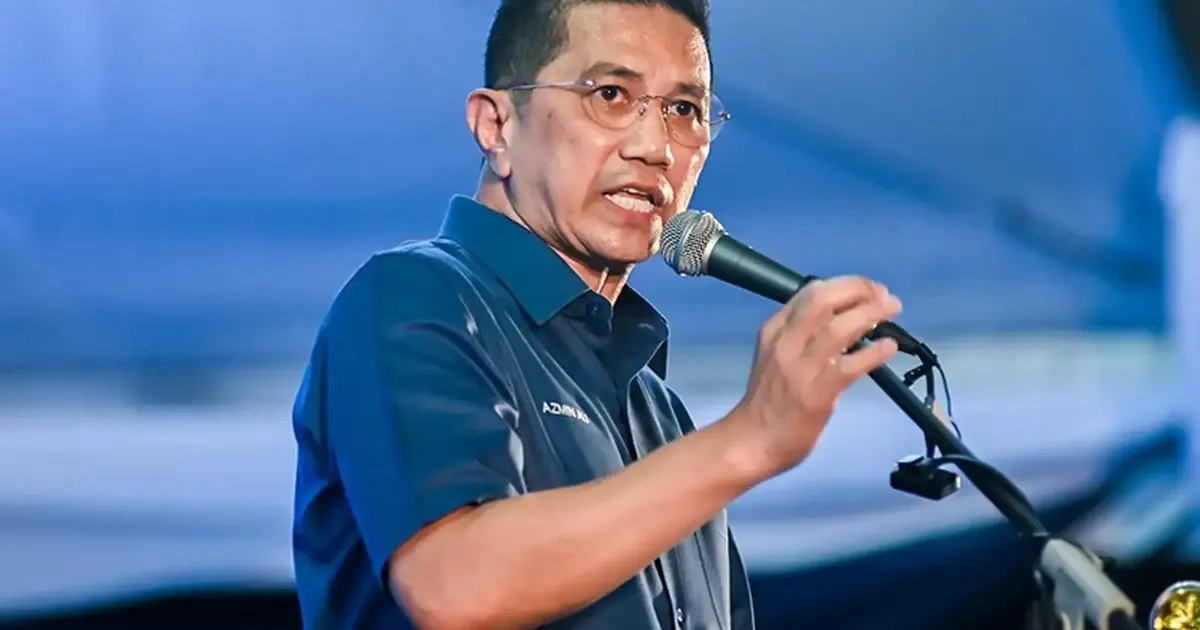
Azmin Ali's unique position within Malaysia's fragmented political landscape has drawn fresh scrutiny from analysts evaluating potential pathways toward reconciliation between Bersatu and Pakatan Harapan, particularly if the party's current leadership undergoes significant change. The Bersatu secretary-general's decade-long history as deputy president of PKR before his 2020 departure has positioned him as a figure with genuine institutional knowledge and personal relationships across both blocs, making him a plausible intermediary should political circumstances shift.
The speculation surrounding Azmin's role reflects deeper anxieties within Malaysian political circles about coalition stability and the persistent fragmentation that has characterized the post-2018 landscape. Bersatu, founded by former Prime Minister Mahathir Mohamad and subsequently led by Muhyiddin Yassin, has maintained a complicated relationship with Pakatan Harapan despite periodic cooperation during Malaysia's most volatile political moments. The suggestion that Azmin could bridge this divide underscores how personal networks and political history remain fundamental currencies in Malaysian politics, where factional relationships often transcend formal party structures.
Azmin's credentials within PKR remain substantial despite his departure from that party roughly four years ago. During his tenure as deputy president, he accumulated considerable influence within the party machinery, developed relationships with senior figures across Pakatan components, and gained exposure to the coalition's institutional dynamics. This background distinguishes him from other Bersatu figures who lack comparable experience navigating Pakatan's complex internal structures and decision-making processes. Analysts point out that any future reunification scenario would require individuals capable of understanding both the substantive policy disagreements and the personal tensions that have kept the two blocs apart.
The timing of such observations merits careful consideration within Malaysia's current political cycle. Bersatu has faced sustained questions about its electoral viability and long-term survival as an independent political entity, particularly following its mixed performance in recent state and federal elections. The party's reliance on tactical coalitions and seat-sharing arrangements suggests structural vulnerabilities that might eventually force difficult choices about its political future. Simultaneously, Pakatan Harapan continues navigating its own internal challenges, particularly around power-sharing formulas and representation of competing interests within its member parties.
Azmin's potential utility as a bridge figure rests partly on his ability to maintain credibility across divide lines without appearing to betray either camp. His current position as Bersatu secretary-general provides him formal standing within that party's hierarchy, yet his historical roots in PKR remain unmistakable. This dual grounding could theoretically allow him to participate in exploratory conversations without the baggage that might attach to other players. However, Malaysian political culture frequently punishes perceived disloyalty or opportunism, meaning any actual movement toward reconciliation would require extraordinarily careful political choreography and clear articulation of principled motivations.
The broader context involves understanding what reconciliation between these blocs might actually entail. Rather than simple merger or absorption, more realistic scenarios might involve cooperation on specific legislation, support agreements on particular constituencies, or renewed coalition building for electoral contests. Azmin's experience navigating PKR's internal politics during the coalition's formation phase gives him familiarity with the complex negotiations required to manage competing organizational interests and personality-driven factions. Such expertise would prove essential in any serious reunification effort.
Current Bersatu leadership, including Muhyiddin's tenure as party president, has emphasized the party's independent political identity and its role as a counterweight within Malaysia's broader coalition landscape. Any succession or transition in party direction would require careful management of these identity questions. Analysts suggest that a figure like Azmin, who understands both the ideological foundations Bersatu claims to represent and the practical imperatives driving PKR's formation, could potentially articulate a unifying vision that acknowledges past grievances while charting alternative futures.
The Malaysian political environment has demonstrated repeatedly that coalition architectures remain fluid and subject to rapid reconstruction based on electoral calculations, personality conflicts, and shifting factional balances. The fact that analysts are seriously discussing potential Bersatu-Pakatan reunion scenarios, even contingently, suggests that current arrangements may not represent permanent political settlements. Azmin's candidacy as a bridge figure in such scenarios reflects broader recognition that personal relationships and individual credibility continue shaping Malaysia's political possibilities in ways that institutional structures and formal party mechanisms alone cannot fully determine.
Movement in this direction would carry significant implications for Malaysian politics regionally and nationally. A reconstituted Pakatan including Bersatu would represent a substantially different political constellation than currently exists, potentially strengthening opposition capacity while fragmenting whatever counterweight Bersatu has provided to dominant coalitions. Conversely, if Bersatu's apparent strategic value diminishes through electoral performance or defections, the pressure for its members to seek alternative homes within larger political structures would naturally intensify, potentially validating the conversations analysts are currently conducting about figures like Azmin and their potential roles.

