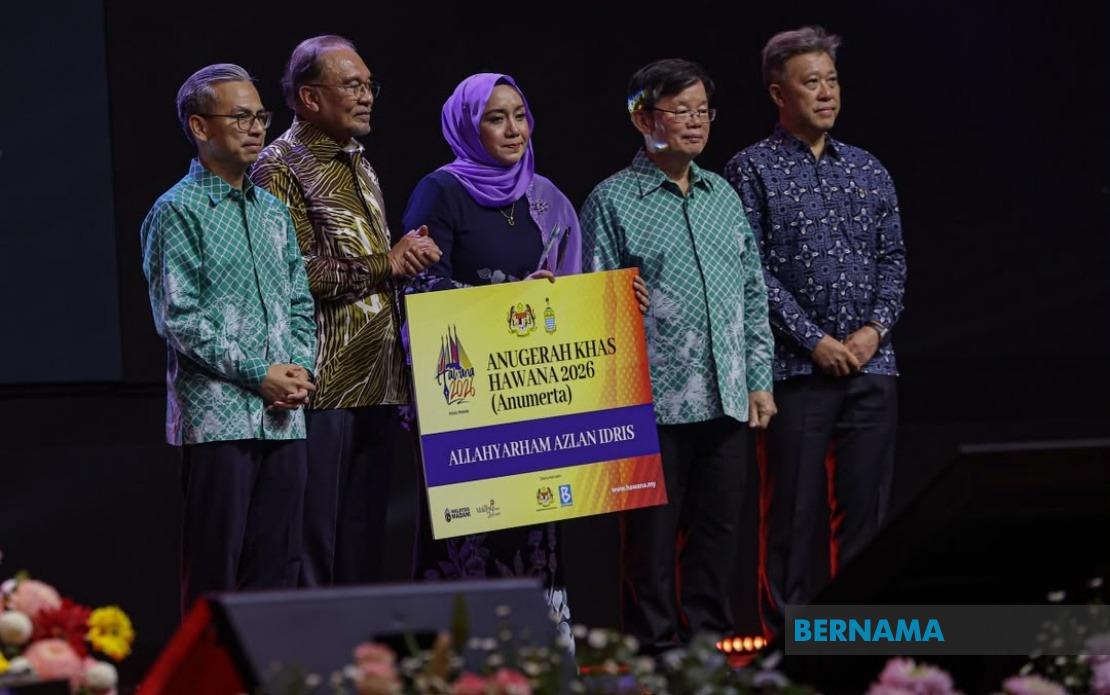
The late Azlan Idris, who shaped broadcast journalism in Malaysia through his decades-long career, has been posthumously honoured with the HAWANA 2026 Special Award in recognition of his substantial contributions to the media industry. Prime Minister Datuk Seri Anwar Ibrahim presented the accolade to Azlan's widow, Wan Syahrina Wan Abdul Rahman, during the main National Journalists' Day celebration held at PICCA@Arena Butterworth Convention Centre on June 20. The ceremony drew prominent figures from both the political and media spheres, including Penang Chief Minister Chow Kon Yeow, Communications Minister Datuk Fahmi Fadzil, and Malaysian National News Agency (Bernama) chairman Datuk Seri Wong Chun Wai.
Azlan passed away on January 15 at the age of 57, leaving behind a legacy that fundamentally influenced how broadcast news operates in Malaysia. His career trajectory reflected the evolution of Malaysian media itself, beginning with stints at major television networks including TV3, NTV7, and Channel 9 before his pivotal move to Bernama Radio. These early experiences in commercial and national broadcasting provided him with a comprehensive understanding of the industry's operational challenges and opportunities, knowledge that he would later leverage to build Bernama Radio from its inception.
The establishment of Bernama Radio in 2007 marked a turning point in the national news agency's scope and reach. As the founding chief of this radio service, Azlan was instrumental in conceptualising its structure, establishing editorial standards, and positioning the outlet as a credible source of news and information for Malaysian audiences. His work during this period demonstrated a commitment to expanding Bernama's traditional wire service operations into the broadcast medium, a move that required both strategic vision and operational expertise. The radio service that emerged under his stewardship became an integral component of the national news infrastructure, serving communities across Malaysia with round-the-clock news coverage.
Beyond his responsibilities at Bernama Radio, Azlan demonstrated a deep commitment to the broader journalism community through his involvement in organising National Journalists' Day celebrations. Between 2022 and 2026, he served as chairman of the main celebration committee for four consecutive HAWANA events, beginning with the 2022 gathering in Melaka. This extended involvement reflected his belief in the importance of recognising journalistic excellence and fostering solidarity among media professionals. His leadership during these celebrations helped establish traditions and frameworks that continue to guide the commemoration of journalism in Malaysia, underscoring his influence beyond his primary role at Bernama Radio.
The decision to grant Azlan the HAWANA 2026 Special Award acknowledges both the scope of his professional achievements and his role in institutional development. Special awards of this nature are typically reserved for individuals whose contributions transcend their immediate job responsibilities to influence the industry as a whole. In Azlan's case, this recognition validates his efforts to modernise Malaysian news broadcasting and his commitment to maintaining editorial standards in an evolving media landscape. The award serves as a testament to how one individual's dedication can shape the operational and cultural foundations of significant national institutions.
The timing of this posthumous honour, approximately five months after his death, reflects the time required for institutional reflection and decision-making. The award ceremony gathered senior representatives from Malaysia's leading media companies, indicating broad industry recognition of Azlan's stature. This gathering demonstrated that his impact extended beyond Bernama, resonating across the commercial and national media sectors where he had worked throughout his career. The presence of high-level government officials, including the Prime Minister, underscored the state's recognition of journalism and media institution-building as priorities worthy of senior-level acknowledgment.
For Malaysian journalists and media organisations, Azlan's legacy carries particular significance in an era of rapid technological change and evolving consumption patterns. His work in establishing and developing Bernama Radio occurred during a period when traditional broadcast media faced increasing competition from digital platforms and alternative news sources. The strategic choices he made regarding editorial direction and operational standards during Bernama Radio's formative years helped establish a model for sustainable, credible broadcast journalism that could compete in an increasingly fragmented media environment. His approaches to newsroom management, story selection, and audience engagement offer continuing lessons for contemporary practitioners navigating similar challenges.
The HAWANA 2026 Special Award also recognises Azlan's role in mentoring the next generation of broadcast journalists. Throughout his tenure at Bernama Radio, he was known for developing talent and establishing training programmes that strengthened the professional capabilities of staff members. This commitment to institutional knowledge transfer ensured that the standards and values he championed would persist beyond his own tenure. The journalists he trained and the systems he established continue to influence how Malaysian broadcast news is gathered, produced, and disseminated to the public.
From a regional perspective, Azlan's contributions to Malaysian journalism carry significance for Southeast Asia's broader media landscape. Malaysia's media institutions, including Bernama, operate within a regional context where news gathering and distribution are increasingly coordinated across borders. The professional standards and operational practices that Azlan helped establish at Bernama Radio have implications for how Malaysian journalism engages with regional news networks and international media partnerships. His work contributed to establishing Malaysia as a credible news source within regional media frameworks.
The posthumous award also raises questions about how Malaysian society values journalism and those who build media institutions. By honouring Azlan's contributions through a prominent national ceremony attended by the Prime Minister and other senior officials, the government signals that journalism and media development are valued components of national infrastructure. This recognition comes at a time when media professionals globally face increasing pressure from economic disruption, political interference, and shifting audience preferences. The award implicitly affirms that individuals who dedicate their careers to strengthening journalistic institutions deserve formal acknowledgment from the state and their peers.

